6 minutes ago
Joseph alerts: European countries that do not recognise Kosovo are helping Serbia
Periskopi(4 years ago)
(4 years ago)A report by the School for Advanced International Studies Institute of Foreign Policy (SAIS) and the Wilson Centre with headquarters in the United States points out that recognition of Kosovo by four NATO member states, which have not done so, would have to be used for resolving [...]
The report on the “theme from the convergence crisis: A strategy for dealing with instability at its source” proposes a new Western strategy for creating circumstances that would enable an agreement between Kosovo and Serbia.
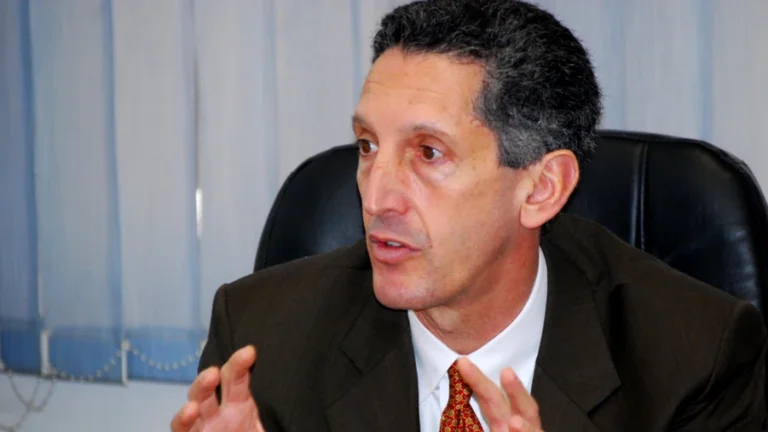
Analyst Edward Joseph said on Tuesday during a debate over this strategy that clearly “gota is not half filled” in the Western Balkans region, which is still in trouble. He said Serbia has ethno-nationalist aspirations towards three neighbouring states: Kosovo, Bosnia and Montenegro.
“The autocratic government in Belgrade is oriented towards nonliberal powers; Russia and China. Being in power for a decade, Vucic's (Alexander) regime has turned democracy back in Serbia. And Serbia is protected within the European Union by nonliberal European power: Hungary. We believe that these ties are not only tactical, to provide vaccines or investments, but reflect the character of the regime in Belgrade”, said Mr. Joseph.
He underlined that it does not mean that other countries do not have ethno-nationalist agenda, as is suppose to take “Greater Albania”, or sharing of “Herceg-bossing”, but such agendas are limited by Western orientation. Croatia and Albania are NATO countries, which complicates any goal for border change, he said.
But Serbia does not have such restrictions, rather it presents false balance between east and west, he said, underlining that it is incomprehensible where President Vucic finds the power to prevent neighbours and also confuse American and European diplomats, who call Serbia leaders in the region while it works with China and Russia.
“We believe Serbia has allowed influence towards Kosovo and through it towards the United States and the European Union. And these leverages connect with EU countries that do not recognise Kosovo's independence, four of which are NATO members”, said Mr. Joseph, stressing that the position of non-recognitional countries has enabled Serbia to hinder Kosovo's progress towards the EU and NATO.
He said the breakthrough is in harmonising the positions of four non-recognising countries' independence of Kosovo, Spain, Slovakia, Romania and Greece, with the majority of NATO member states already recognising Kosovo. He said Greece for its strategic reasons would be interested in recognising Kosovo.
“We believe this would have potential and rapid impact on Serbia, because Kosovo's path towards NATO, even through the partnership for peace, would lower Serbia's prospects, even eliminate them”, said Mr. Joseph.
He said a policy harmonisation would also create Serbia the opportunity to get out of the situation, while not implying creating space for the unification of Kosovo and Albania. He even said, the United States would have to threaten by sanctions any leader in Kosovo or Albania, who would promote the union between the two countries.
Iulia Joya, from Romania, currently teaching at Georgetown University, said Hungary's approach towards parts of Romania and the Hungarian minority is seen with concern from Bucharest, including the approach of Hungarian leader Viktor Orban with Russian President Vladimir Putin.
“I don't see Romania's position as inflexible or stubborn, but in light of the Romanian security perception”, she said, stressing that Kosovo occasionally turns out to be an issue that is not a priority for Romania. She expressed confidence that the United States and the European Union would be able to change its position, among other things, by providing security guarantees.
Jan Cingel, from the Slovakia-based Institute of Strategic Analysis, said his country is a case similar to Romania, since a Hungarian minority lives in it, while warning that Slovaks still have powerful prorus feelings, though it is hard to explain because of its past.
Lulzim Peci from the Kosovo Institute for Policy Map said NATO membership is Kosovo's strategic priority. He said China and Russia exert influence in the region, not because of their power, but “because certain countries have decided to open the door to that impact” and that the actions of the US and the EU are essential in the region.
In this context he said that the pre-January 2025 period, which coincides with the conclusion of US President Joe Biden's first mandate and the mandate of the current European Commission, is the time when the process of normalising Kosovo relations must be completed.
Igor Bandovic, from the Belgrade Centre for Security Policy, said there are no security risks in the Western Balkans, but problems inherited from wars, lack of democratic governance and, more essential, he said, the Western for a long time did not have any ambition for the Balkans.
He emphasized that, as he said, he did. Serbia's “leaders look towards Russia and China as a model of how to address the country”.
The authors of the study call for a united Western stance on Kosovo that would help curb Russian influence in other parts, including Bosnia and Herzegovina, which has been facing the worst crisis since the 1990s war ended. / VOA