2 minutes ago
French Professor: If Kurti and Vucinq remain in strict nationalist positions, dialogue will not succeed
Periskopi(5 years ago)
(5 years ago)Eminent European and International Policy Sciences Professor in “Science Po” in Paris, Christian Lequesne, in an exclusive interview for the Kosova Prees news agency said the dialogue would not succeed if Kurti and Vuciq remain in strict nationalist positions. Dialogue, which is expected to resume in half of June, [...]
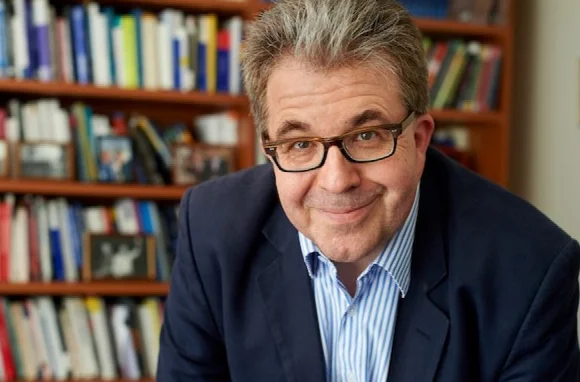
Eminent European and International Policy Sciences Professor in “Science Po” in Paris, Christian Lequesne, in an exclusive interview for the Kosova Prees news agency said the dialogue would not succeed if Kurti and Vuciq remain in strict nationalist positions.
The dialogue, which is expected to resume in half of June, is vital if the two countries want to move forward. Professor Lequesne does not think the success of the dialogue would lead to automatism granting candidate status for Kosovo, but he is confident that without dialogue no progress towards that goal will be made.
He also does not see as possible the granting of candidate country status for Kosovo if there is no movement of five European Union states that do not recognise Kosovo's independence.
Professor Lequesne also speaks of visa liberalisation for Kosovars and his country's skeptical stance on the issue.
INT PLOSE ERVIS:
Kosovaress: Dialogue between Kosovo and Serbia has been announced to resume these weeks, while the European Union has also regained its leading role in the process. As an EU foreign policy expert, do you think the EU has the potential to be a leader and to lead this process?
Professor LequesneYes, I do. EU has already taken on a crucial role in 2013 normalisation agreement (The Brussels Agreement). Of course, the other important actor is the US, viewing its role as a Kosovo defender. With Beden, relations between the EU and the US have improved on foreign policy issues. We can think that they will have no problem co-ordinating and co-operation in the Kosovo dialogue Serbia.
Kosovaress: The European Union's Prophet for Dialogue, Mr. Lajcak, made a tempting statement for Kosovo, promising that in the event of success in the negotiations process, Kosovo would receive EU membership candidate status. As an EU enlargement policy expert, do you see this only as a tempting promise, or can it really happen?
Professor Lequesne: There is nothing automatic because EU candidate status must be unanimously approved by EU member states. No one can yet say if every member state means yes. But what is certain is that without dialogue, progress towards candidate status is impossible. The problem is that dialogue depends on both sides. I am not sure that Belgrade, which has opened negotiations, is so interested that Pristina has the same treatment.
Kosovaress: The promising signals from the European leadership for Kosovo are linked to doubts that the new Kosovo leadership will be more difficult as a negotiating party, as it has warned greater vigilance about dialogue?
Professor Lequesne: It is the responsibility of Prime Minister Kurti and his cabinet to know whether they want dialogue or not. I understand they don't want dialogue at all. I understand the Kosovo government's desire to initially have negotiations with the Serb minority. But at a certain point, the agreement is possible only if there is a flexibility in Pristina and Belgrade. If Kurti and Vucic remain in strict nationalist positions, dialogue will not succeed.
Kosovaress: Consequently, should the European Union require the five member states that have refused to recognise Kosovo's independence to do so?
Professor Lequesne: Frankly, I don't see how it is possible to accept candidate status unless there is any movement from these five states. As you know, these EU member states refuse to recognise Kosovo's independence primarily for internal reasons, in particular by not giving ideas for emancipating their national minorities for three of them: Catalans in Spain, Hungarians in Slovakia and Romania. If large EU member states (especially France and Germany) want a movement, that question will certainly be an inside negotiation- The EU.
Kosovaress: In last year's interview, you told me that the EU would never accept Kosovo and Serbia as a member without recognizing each other's sovereignty. In your opinion, is this the main goal of the European Union to achieve a final solution to the problem between the two countries?
Professor Lequesne: It is not the main goal in the short term, because some EU member states do not want to rush to enlargement, for reasons dealing mainly with the reluctance of their public opinions. In my country, France, public expansion is far from viewed as a priority. But one thing is certain: The EU cannot accept new member states that do not recognise each other. This is a fundamental condition.
Kosovaress: How do you personally view the epilogue of dialogue and when there may be epilogues?
Professor Lequesne: I don't think the epilogue is for tomorrow. The EU has many internal reforms to resolve before considering an expansion in the future. So it'll take time. However, the EU's waiting strategy is not safe. If you promise and fail to do so, you create a lot of disappointment. You also create spaces for competitors. In the case of the Western Balkans, it is clear that the influence of Russia, China and Turkey benefits from the EU's delay. My concern is that these countries can provide economic assistance but are not interested in democratisation at all.
Kosovaress: Recently, from European MPs, but also from the governments of European Union countries, in this case by the German government, there are positive signals about visa liberalisation for Kosovars. While France has yet to give positive signals, the perception here in Kosovo is that France remains a blocking visa liberalisation state for Kosovars. Is that true?
Professor Lequesne: As in any EU member state, in France you have a strong debate on migration. Accepting new visa liberalisation seeks to take into account this internal restriction. On the other hand, I understand that Kosovars are going more to other EU member states than to France, especially in Germany and Austria. We also have Switzerland, which is an EU member state. So concretely, visa liberalisation can have limited effects in France. But surely France wants to first see the development of dialogue before accepting liberalisation. In this case, it's diplomatic reflex.
Kosovo: In your opinion, when can there be visa liberalisation for Kosovars, and when can Kosovo obtain the status of a candidate country?
Professor Lequesne: Excuse me, but I'm not reading on a crystal ball. It's impossible for me to give you a date. But what I'm sure is that the main condition of progress is dialogue between Pristina and Belgrade. If this dialogue doesn't move forward, nothing will change.
/Christian Lequesne is the official professor of European and International Policy Sciences, “Science Yes, Paris”,