15 minutes ago
A Bosnian Serb who switched identity joins Russia's fight against Ukraine
Periskopi(3 years ago)
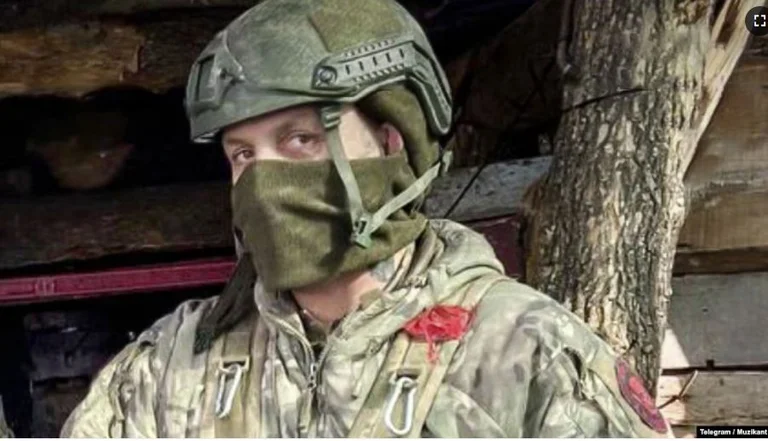
(3 years ago)Asked if you know the violin, “Sasha musician” gives two answers simultaneously “too much and nothing”. The violin images that are scattered through his posts from Russia and Ukraine, he says during a conversation, are a tribute to the Russian mercenary group acting as a brutal Kremlin combat force called Wagner, [...]
Asked if you know the violin, “Sasha musician” gives two answers simultaneously “too much and nothing”.
The violin images that are scattered through his posts from Russia and Ukraine, he says during a conversation are a tribute to the Russian mercenary group acting as a brutal Kremlin combat force called Wagner, the name of a German composer of the 19th century.
This 43-year-old, Bosnian and Herzegovina Serb, faithfully declared to the Russian “approach”, has joined Russia's fight against Ukraine.
I'm closely connected to Russia. Everything in me is Russian”, he said of the Balkan Radio Service Free Europe. I'm on the Russian side, yeah. Personally, I'll be home as soon as the deal is over and everything is Russian. All”
In numerous conversations on several platforms and two internet profiles, he spoke openly about joining Russia's fight against Ukraine.
Since November, his VContact posts have been a parade of camouflaged soldiers, packages of food and other supplies reportedly destined for Russian troops in Ukraine. And videos of masked individuals using military rifles and other weapons. All in support of Ukraine's unprotested invasion of Russia.
Bosnian intelligence sources told REL that, “Sasa musician” is one of seven Bosnian citizens on the battlefields of Ukraine.
Changing identity
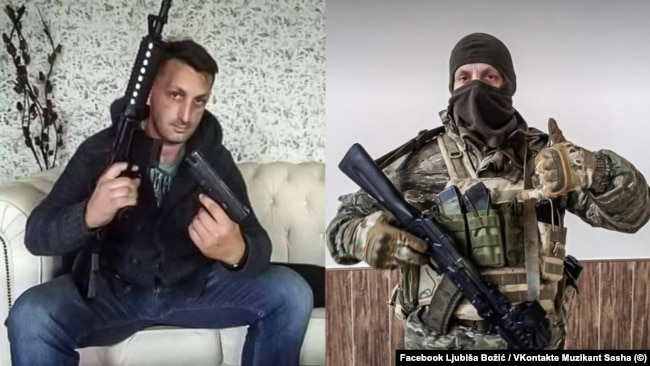
Data and intelligence sources in Bosnia and Herzegovina confirm “Sasa musician” is a 43-year-old man from Banja Luka, who was born like Ljubisa Bozic, but officially changed his name to Aleksandar Velirovic, amid continuing legal problems.
And two security sources in Bosnia, who spoke on condition of anonymity, because they were not authorized to speak publicly, told REL that Velirovic went to Ukraine in the spring of 2022, weeks after the unprohibited invasion of Kiev from Moscow began.
Speaking in internet conversation and correspondence over several months with REL, Velimovic refused to confirm that he had been in Ukraine for the past eight years.
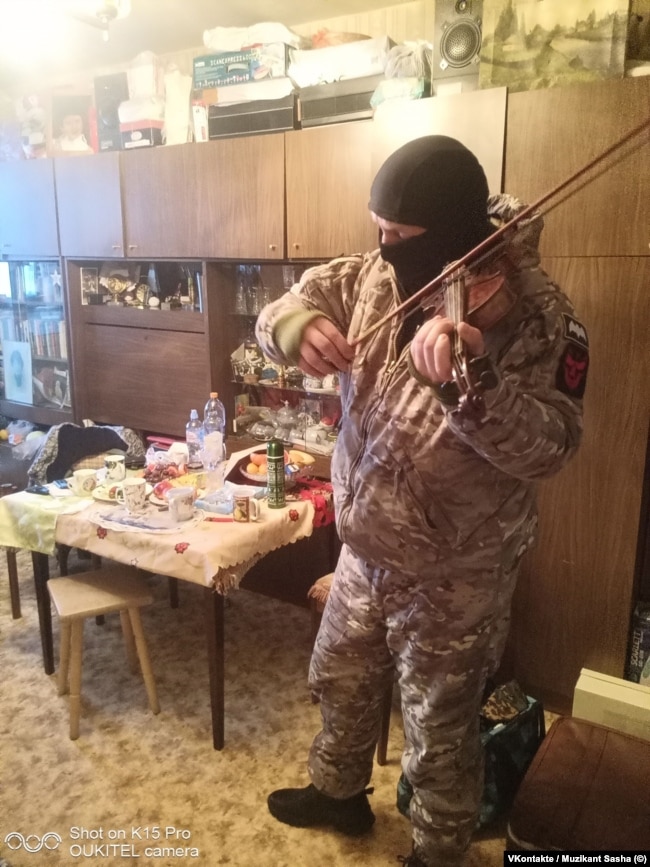
He said his job is to send aid, food and other supplies to the Russian Army. He also stated that he is not on the battlefield and that the photos and videos he publishes on social networks are there by chance and that they mean nothing.
I'm going back to Bosnia when there's no more border between us”, he added.
In a conversation, he asked why he was being contacted by a correspondent from the Federation entity who, along with the Serb majority Republika Srpska, makes up Bosnia and Herzegovina “when I'm from Republika Srpska”.
He also accused Radio Europe Free Radio correspondent of being “at SIPA”, a reference to the State Investigation and Protection Agency, the official Bosnian state police agency
Criminal Past
Velimirovic appeared in photos showing him on the battlefield with the Wagner symbol, but his military dress during his conversations with REL there was no obvious appointment.
He spent more than a decade in trouble with the law in Bosnia and Herzegovina, including a punishment for kidnapping in 2010 and an offence for insulting Muslims to a mosque in Banja Luka in 2016, so he was known for Bosnian police.
His third major clash with the law occurred in 2020, when he was detained at Sarajevo International Airport. He was later transferred by the state authorities of Bosnia and Herzegovina to the justice system in Republika Srpska, before being released, when a Banja Luka court said he was unable to determine which order” was being implemented.
The name change seemed to play a role in these issues.
SIPA agents, who usually handle cases of alleged participation in foreign conflicts, questioned him as suspects.
Bosnia's Prosecutor General's Office told the Balkan Free Radio Service that the order for the suspension of the case had been issued “because there was not enough evidence to carry out a 148x1> criminal work. Most of the evidence, he added, consisted of circumstantial details and “information hard to verify on social networks”.
A reliable source told Radio Europe Free that, after leaving for Russia, Velimirovic signed a contract with Wagner's group and was seeking Russian citizenship. But the REL couldn't verify it independently.
Wagner, the paramilitary force linked to the Kremlin, which along with its founder, Yevgeny Prigozhin, is under US sanctions and other Western sanctions, has declared “employee” seats in Russia Today Balkans, the Russian propaganda channel.
“I'm not stupid enough to go home now, where there will be a lot of questions”, Velirovic told REL.
Depressed for “rus”
Russian war planners are thought to have hosted easier and faster battles in subordination of Ukraine, but Ukrainian defenders, with western support, have hampered the invasion over 15 months.
Tens of thousands of Russian troops are believed to have been killed, with many others injured, forcing Putin to call a partial “mobile” to continue fighting with the support of Wagner mercenaries.
The United Nations has warned of a practice “alarmant” of the Wagner group recruiting Russian prisoners to fight in Ukraine. In March, the Office of the High Commissioner for Human Rights (OHCHR) outlined a scheme under which the prison's pardons were exchanged with joining the war. Wagner was also told that he recruits Russian and foreign nationals who suffered imprisonment for criminal acts.
It is difficult to say how many young people from the Balkans have gone to fight in Ukraine.
Bosnian law prohibits its citizens from joining foreign armies.
Bosnian prosecutors told the REL they were investigating seven Bosnia and Herzegovina citizens under suspicion of joining Russia's war forces. They refused to officially confirm whether Velimirovici is involved.
In Bosnia and Herzegovina, the highest profile issue for alleged fighting in Ukraine was the prosecution of Gavrilo Steviq, who was acquitted in March 2020 of all counts of war on anti-Kiev separatists.
He was charged with traveling through Belgrade to Moscow and Rostov-on-Don in Ukraine in 2014, where prosecutors believed he joined the former paramilitary unit “Jovan Saviq” in an area of Ukraine's Luhansk region that was occupied by Russia-backed separatists. Stevic, who has since had pro-rus activism, acknowledged that he had travelled to Ukraine “as a Yugoslav and idealist”, but claimed he never fought.
Ukrainian intelligence believes hundreds of Serbian citizens fought in eastern Ukraine along with separatists backed by Russia after 2014. More people reportedly have joined the Russian side since the start of the war in 2022, as the legal consequences have been slim and penalties have been pronounced in few cases.