31 minutes ago
Murphy: Bilateral recognition of Kosovo -- Serbia positive for their political, economic future
Periskopi(3 years ago)
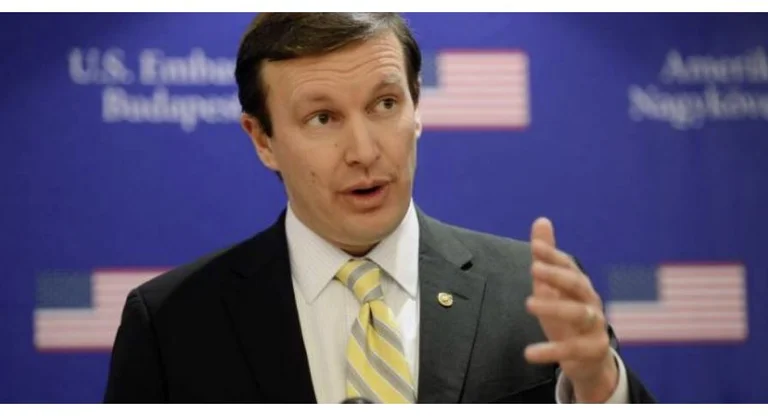
(3 years ago)US Senator Chris Murphy, said in an interview with Voice of America that the Kosovo-Serbia agreement is very important for the Euro-Atlantic future of both countries, the United States and Brussels, holding the keys to NATO and the European Union membership, he said, would continue to make it very clear that it would be [...]
US Senator Chris Murphy said in an interview with the Voice of America that the Kosovo-Serbia agreement is very important for the Euro-Atlantic future of both countries, the United States and Brussels, which hold the keys to NATO membership and the European Union, he said, would continue to make it very difficult for any country to join those organisations if differences are not exceeded between the parties. Murphy also said Serbia should join Western sanctions on Moscow due to its aggression in Ukraine.
Voice of America: Kosovo and Serbia have recently reached a reconciliation for implementing the European Union-backed agreement on normalising relations between them, and you mentioned this during the hearing with Secretary (Antony) Blinken. Are you optimistic that the parties will implement the agreement this time and what Washington and Brussels should do to make sure this happens?
Chris Murphy: I think it's a very important deal. I've spent a lot of time in the Balkans. I think it's a very important region for the United States. It's a region where we can't get peace as good. I've spent a lot of time with Albin Kurti and Aleksandar Vucic, and both have made, I think, very important moves for normalising relations between the two countries. The deal is not without political risk, but I think it is a risk worth taking. I believe that both sides are serious about implementing this agreement and I think it can be the cornerstone for continuing work to ensure that each country recognises and respects the citizens of the other country and that each nation's right to join international institutions to become a full member of the international community.
Voice of America: But what can Washington and Brussels do to make sure this happens? We know there has been an Brussels agreement since 2013. Some of its parts have not been implemented. What should they do to ensure that both Vucic and Kurt respect what they have vowed?
Chris Murphy: Well, after all, this is a decision by the leaders of Kosovo and Serbia. There is nothing final that Europe or the United States can do. We can offer encouragement. And of course, both countries think they see their future as integrated into the transatlantic alliance. Of course, both nations want to become part of the European Union. Kosovo sees its future in NATO. On the other hand, the United States and Brussels, which undoubtedly hold the keys to NATO membership and the European Union, will continue to make it clear that it will be very difficult for any country to join those organisations unless there is a breach of differences between Pristina and Belgrade.
Voice of America: But what kind of incentives or even consequences can I present to Washington on both sides to make sure they are implementing the agreement?
Chris Murphy: I don't think we'll present the consequences. We think it is in the best interest of Kosovo and Belgrade to implement this agreement. I don't think it's a good policy for foreign powers or entities to force countries to do something they don't want to do or think it's in their best interests. So I don't see this as an issue that the United States offers incentives and consequences. It's just not useful in my opinion. We must work with the leaders and electoral groups in Kosovo and Serbia to persuade them to do what is right for their countries. And mutual recognition is fair and positive both for the political and economic future of both countries.
Voice of America: How realistic is the idea of mutual recognition when, for example, the president of Serbia after the meeting in Ohrid said there are two red lines and that Serbia will never recognise Kosovo's independence and will never allow Kosovo to become a member of the United Nations? How realistic is it to expect this agreement to lead to mutual recognition at the end?
Chris Murphy: Well, let's go step by step. I understand that political leaders sometimes have to position themselves in certain ways, but I think that the fact that this agreement was realised shows that both Vucic and Kurti, who have electors who do not want reconciliation between the two countries, are willing to take risks, are willing to do the right thing to promote peace. There are kinds of things in the Balkans that leaders said would never happen, but then it happened, because you give them time, keep talking, keep building a way towards reconciliation and sometimes amazing things happen.
Voice of America: We know that Mr. Kurti, for example, has resisted the idea of forming the majority Serbian Communist Association and the US and the EU have insisted on that. Do you think Mr. Kurt will form the association? How important is its formation for normalising relations, and is there any danger that forming association leads to another Republika Srpska, as some critics say?
Chris Murphy: Listen, nobody wants another Bosnia. This should not be the future of the Serb majority municipalities' association. I talked to Mr. Kurt on several occasions and explained that in the United States, we have a strong federal government. We have a strong sense of American patriotism, but we also have strong state governments. We have also given people in Oklahoma and Connecticut the opportunity to create a future for themselves. That's the difference. I think there is certainly a way for Kosovo to establish a limited degree of self-government for those who are predominantly Serb municipalities and do so in a way that does not break up the country's structure. This is a pledge that has been made in Brussels and that Kosovo should do it properly. I'm glad this is part of this deal.
Voice of America: A more important aspect of this is that critics think the international community is ignoring issues with democratic processes in Serbia, as highlighted in numerous reports, for the sake of a deal with Vucic. Do you see this happening in this case?
Chris Murphy: Of course, I am concerned about the health of the political opposition in Serbia, about the degree of control the government in Belgrade exercises on the media. I have raised my concerns directly with Vucic and I will continue to do so. I think, as usual, the United States can do two things at the same time. We can work with the Serbian government to make them take a harsher stance in supporting Ukraine, to make them find their way towards reconciliation with Kosovo and make sure they understand that if they don't defend the rule of law, if they don't have a healthy democracy, then no matter how much progress they make in Ukraine or Kosovo, they will not enter the European Union, which I know is the goal of Alexander Vucic.
Voice of America: Since you mentioned Ukraine, you visited Serbia last time in April, and then you wrote that Serbia would have to choose because of Russian aggression in Ukraine, but since then Vucic has been sitting on those two proverbial chairs. He is backing UN resolutions for Ukraine, but still refuses to implement Western sanctions on Russia. Is it still important to make this choice, Europe or Russia for Serbia, and why?
Chris Murphy: It is important that Serbia make that decision on the Ukrainian issue. I think it is unrealistic to believe that Serbia will fully sever some kind of cultural and economic relationship with Russia, nor should we expect it to make a complete break. But on the Ukraine issue, Serbia must make a choice. Serbia must join Europe and the United States and implement the sanctions needed to send a joint message that this brutal act of aggression will not be tolerated.
Voice of America: What if she doesn't?
Chris Murphy: I think it is very difficult for Serbia to have a European future if it stands in opposition to the most important foreign policy effort of unconditional EU support for Ukraine.