6 minutes ago
Vienna Institute: Partial Membership Scene for Albania to EU
Periskopi(6 months ago)
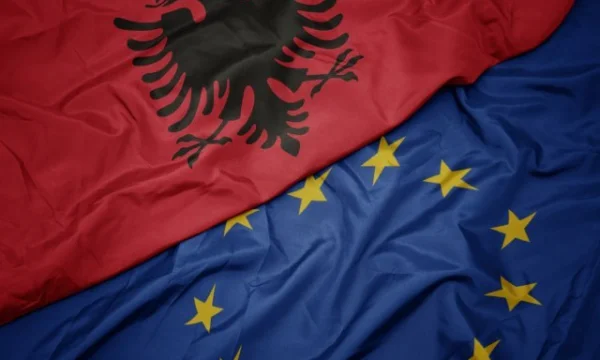
(6 months ago)Montenegro and Albania are the first in line for EU membership by all candidate countries. The accession of these countries is a realistic perspective and not as a result of EU favourability, a forum held by the Vienna International Institute for Economic Studies (wiwiw) examined these days. Participants pointed out [...]
The accession of these countries is a realistic perspective and not as a result of EU favourability, a forum held by the Vienna International Institute for Economic Studies (wiwiw) examined these days.
Participants noted that despite the favourable position, Albania has a disturbing focus of power, and Serbia's President Vucic may still create instability in Montenegro, against a scenario of partial membership in the EU is most likely in the next three years.
According to this scenario, partial membership means that a candidate country enters the economic and institutional union of the European Union, without yet being full-fledged political members (volte).
Under this scenario Albania will have access to the EU's internal market, be included in its economic policies, receive development funds and implement European legislation, while there will be no voting rights in the EU Council, there will be no European commissioners and there will be no full representation in the European Parliament, it writes. Monitor, broadcast Periscope.
According to this scenario Montenegro and Albania will be within the EU in economic and regulatory terms within the next three years, but for many more years they cannot be a political member of Union.
This model, according to Vienna analysts, aims to overcome the current enlargement paradox, where candidate countries are required to implement a large part of EU rules, but for years they do not benefit economically from the process.
With this form of membership, Albanian companies will have real access to the common European market, without tariffs and no non-tariff barriers, for foreign investors to treat the country as part of the EU's economic space and for the Albanian economy to integrate directly into European production and services chains.
At the same time, Albania could receive much greater funding than it receives today through pre-membership instruments, benefiting from the structural, agricultural and infrastructure funds that today are reserved only for member states.
On the part of the European Union, this is seen as a way of stabilising the Western Balkans, linking it strongly with the European economy and reducing the influence of other geopolitical actors, without being forced to make quick political decisions on full membership.
On the part of candidate countries, partial membership is seen as a way not to lose another decade in expectation, while the population emigrates and economies remain isolated from the world's largest market.
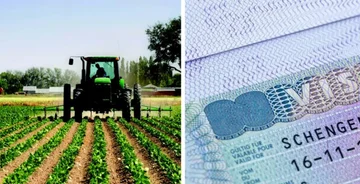
For the movement of people, partial membership in the EU means that citizens of a country like Albania have more rights to work, study and stay in EU countries, but not without restrictions. The model the EU is discussing is similar to what Norway or Switzerland has in some areas today, but more limited.
Vienna analysts confirmed that the Western Balkans have been waiting in line for a long time, stressing that profits from the EU's economic convergence have been quite slim. Moreover, strict fiscal policies in the region limit maneuvers.
Unlike Ukraine, the Western Balkans have been good enough in attracting foreign direct investment, and their overall prospects are positive, with a very stable macroeconomic situation. The most problematic issue here is lack of competitiveness, coupled with an urgent need for a better industrial policy. /Periscope/