a few seconds ago
The lack of judgment will produce legal effect on accused, not justice for victims
Periskopi(3 years ago)
(3 years ago)Establishing charges for the lack of judgment for punishing the perpetrators during the war in Kosovo is not expected to produce any legal effect on the accused, but not justice for the victims. That is how connoisseurs of the justice system and advocates of human rights. And the Special Prosecutor has already filed two charges [...]
From the Fund for Humanitarian Law, Bekim Blakaj considers that despite the difficulties the Special Prosecutor brings to justice the chief of war crimes, even judgment in absentia will not bring justice to the victims.
Even, Blakaj tells Kosovo that suffering the punishment for the accused will bring disappointment to victims or their relatives.
“Special Prosecutor and War Crimes Department do not have many solutions to prosecute war crimes suspects, since that co-operation does not exist between Serbia and Kosovo, then the overwhelming majority of those suspected of war crimes are not accessible to justice organs in Kosovo. Hence, the prosecution is trying to overcome this problem by raising charges in absence. However, I don't think that misjudgements will bring new quality, respectively, will bring justice to the victims. Of course some processes will end, but always the possibility that when convicts are arrested in absentia, they will have the right to review and a trial from the beginning and, on the other hand, even the victims cannot be fully satisfied, since even if the court finds that these persons who committed against them or their relatives will not hold the prison, that is yet another” disappointment, he points out.
And by the Council for Protection of Human Rights and Freedoms, they feel that judgment in absentia is being used more for political causes than to produce any legal effect.
KMDLNj chairman Behxhet Shala considers that this kind of judgment will produce no legal effect, even for the accused, but also war crimes victims in Kosovo.
According to him, effects are not expected because Serbia does not co-operate with Kosovo, both in many respects and in that of justice.
The indictment will still be established, but they will produce no legal effect, neither for victims nor for those who will be charged or in concrete cases will be tried before courts in Kosovo. This doesn't have any legal effect, the only effect is that those persons will not have the courage to come to Kosovo. So they won't come to Kosovo, but there will be no effects, because Serbia doesn't co-operate, cannot prove the evidence to convict someone, and I think it's more likely for need and for political reasons than it needs to ensure justice for victims. This will produce no effect on the accused, as there will be no satisphasation for the victims, who rightly seek and deserve justice”, says Shala
Gezim Shala from the Kosovo Institute for Justice states that judgment in absentia has positive aspects in the treatment of war crimes.
He stresses that the procedure of judgment in absentia cannot produce efficiency if their sentence is focused only on this kind of judgment.
The “in the concrete case can also be seen as a relatively positive aspect in relation to war crimes cases, yet still the judgment in the absence itself does not guarantee adequate treatment of these cases. We so far have an indictment, but there are the first two cases is that judgment in the absence is not an easy and applicable procedure on the part of the justice institutions, as well as on the other hand, we cannot count effectively if fighting war crimes, their sentence focuses only on judgment in the absence of“, says Shala.
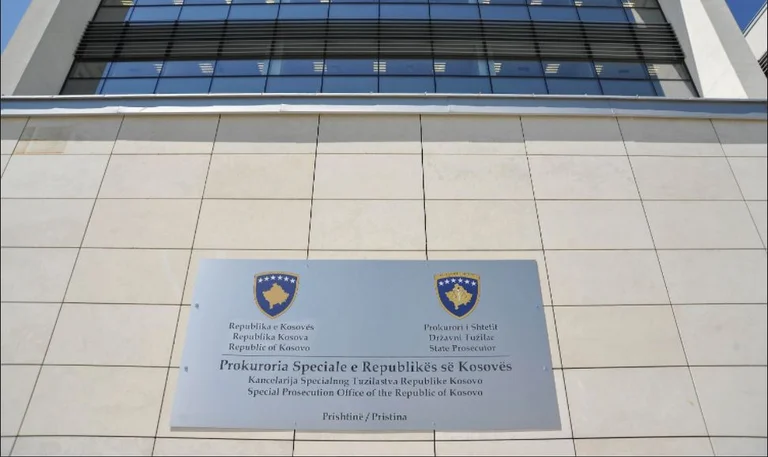
At the beginning of this month, Kosovo Special Prosecutors filed two counts in absentia against indictees C.A. and D.R. War crimes suspects in Kosovo during 1999.
In addition to these two counts, Kosovo Special Prosecutor Drita Hajdari's war crimes department leader Drita Hajdari has announced that new charges of trial in absentia will soon be established.
According to the prosecutor, Hajdari's lack of judgment represents fulfillment of justice for war crimes victims, as the committed crime is being documented.
In the last war in Kosovo, more than 13 thousand civilians have been killed and massacred, sexually raped 20,000 women and men, while more than 1600 people are still missing by force.