12 minutes ago
Why does the reduction of KFOR go beyond the military issue?
Periskopi(an hour ago)
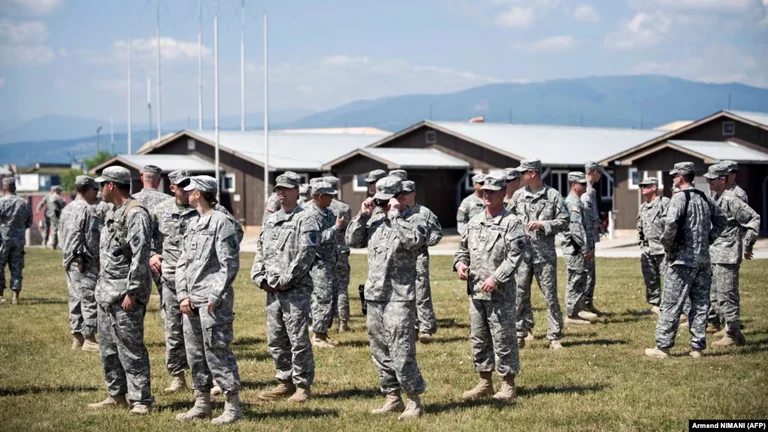
(an hour ago)The international military presence in Kosovo is entering a new phase, where the reduction is presented as reflecting reality on the ground.
Officials speak of stability and mature decisions based on continued security assessments.
But by the time global balances are on the move, those decisions are also important.
NATO announced on June 12th that, over the next year, it will make a gradual adjustment to its presence in Kosovo, reflecting on the assessment of a stable security situation in the country.
According to the Supreme Commander of Allied Forces in Europe, Alexandrus G. Grinkewich, this development relates to increasing the capacities of local security institutions, which have created space for the reduction of the KFOR mission.
The Alliance stressed that the changes would be careful, in line with conditions on the ground, and whether the situation requires it.
Asked by Radio Free Europe for concrete indicators on the ground, an official did not elaborate, calling into the confidential nature of operational and intelligence issues, but underlined that the situation is constantly monitored through different means, so that the mission remains adequate and effective.
For NATO Secretary General Mark Rutte, this is good news.
When we look at the security situation in Kosovo, we see that, in general, last year it has continued to improve. Therefore, it is good news for Kosovo. That is why NATO in January has banned the delocation of reserve forces in Kosovo after two years of continuous rotation”, Rutte said at a news conference this week.
In the analysis of Kosovo Defence Minister Ejup Macedonia, currently in office, extending the rule and law throughout Kosovo's territory has been one of the key factors that, according to him, has influenced NATO's assessment of the security situation.
Over the past two to three years, authorities in Kosovo have closed down most of the institutions operating within Serbia's system, expanding control throughout the country.
In parallel, in northern Kosovo - where a large part of the Serb population continues not to recognise Pristina's institutions - authorities have taken control of some of the objects, which have later become operational for Albanian businesses.
Macedonia interprets this development as consolidation of institutional control.
Kosovo has been improving in terms of security, especially after the expulsion of terrorist and criminal groups, which have operated for many years north of the country and which, always, have been a threat to internal security and stability, but even wider”, he says of Radio Free Europe's Expose programme.
Since the end of the war in Kosovo in 1999, the north was a constant hotbed of tensions, with parallel structures, barricades and occasional clashes between local residents and rule forces.
One of the most serious incidents occurred in May 2023, when dozens of KFOR members were injured during clashes with Serb protesters who opposed the deployment of Albanian leaders in four northern municipalities.
This situation led to sending additional reinforcements from NATO.
With more than 4,600 troops today, KFOR is expected to be reduced to around 3,500, according to Secretary Rutte, though it remains unclear which controls will be affected.
Free Europe Radio requested explanations from Italy, the United States and Hungary - as the three biggest contributors to the mission - but the response received only from the European Command of the United States, which warned that the American contribution would be adjusted to NATO plan.
The US “European Command will make an adaptation of the American contribution to KFOR - in phases and based on risk assessment - in line with the review led by the Supreme Allied Command in Europe”, a command official for Radio Free Europe said.
The American presence in KFOR is considered essential, giving the mission political weight, additional military capacity and strong preventative effect.
Former US Ambassador to NATO Douglas Lute, who commanded the Multinational East Brigade in Kosovo in 2002, believes the decision of the US European Command is the result of a careful assessment of conditions on the ground, rather than a signal of withdrawal.
According to him, KFOR remains a deeply multinational mission, where the balance of contributions between the US and European allies is essential to its effectiveness.
“The US has always been - as NATO says - one of the framework countries in KFOR. From the beginning, it has provided capacities that others cannot provide, such as high-level medical services and helicopter air movement skills. Therefore, the American contribution to KFOR is important, but not only, nor do the dominant”, says Lute for Expose.
Currently, the United States has about 590 deployed soldiers under KFOR - a significant decrease compared to over 5,000 troops deployed in 1999, when the mission was created after the end of the war.
The debate on the possible revision of this presence began early last year, when US Defence Secretary Pete Hegseth, during a visit to Warsaw, warned that the US military presence in Europe could be revised and eventually reduced, depending on strategic priorities and global threats.
In early May, the Pentagon announced the withdrawal of 5,000 American troops from Germany within the next 6 to 12 months, while US President Donald Trump did not rule out even the possibility of reductions in Spain and Italy.
For the incumbent minister, Macedonia, Kosovo Police and the Kosovo Security Force are well prepared to ensure security and protect every part of the country's territory.
However, he stresses that the presence of Americans at KFO
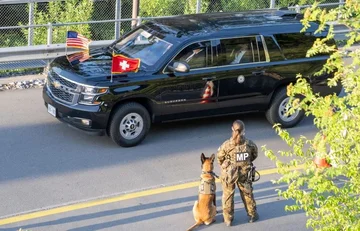
Dogs and security.
Besides KFOR, it should be stressed that the Kosovo Security Force and the Defence Ministry have very close co-operation with the US. There is a considerable American presence within our departments, daily activities and work, but presence in KFOR remains necessary”, he says.
In this course of developments, the debate cannot be seen separate from an old political restriction that still defines the role of the Kosovo Security Force in the north.
It stems from a 2013 pledge - formalised then by Prime Minister Hashim Thaci through a letter addressed NATO - according to which KSF diversification in the north can only be done with KFOR's preliminary consent.
Yes, how can KFOR's warned reduction affect this situation?
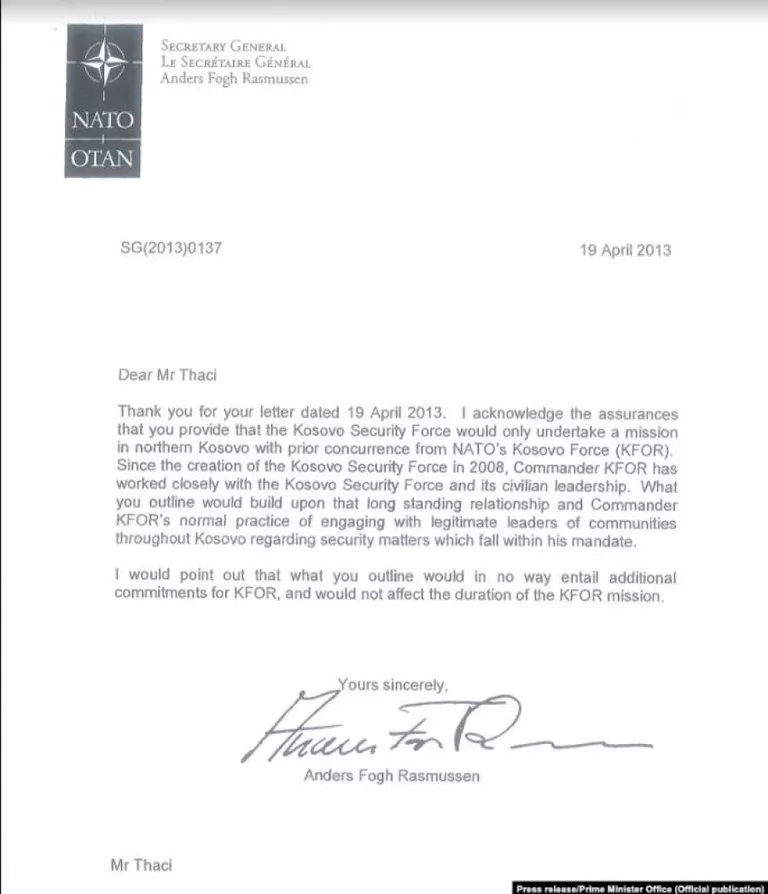
Macedonia estimates that this pledge has not had to be made, arguing that the KSF - with the Constitution and the laws of Kosovo - has the mandate to operate throughout the country. According to him, this issue should be discussed with NATO.
For us it is important that every part of Kosovo have security. I believe that, not only on the issue of the north, but with NATO we should discuss other issues related to the gradual transfer of competencies to the Kosovo Security Force in terms of defence”, says Macedonia.
Asked by Radio Free Europe if KFOR's warned reduction changes the way co-ordination with Kosovo security institutions, an official of NATO said the <x0optimisation process” does not affect existing co-operation agreements with local authorities.
He added that the KSF's defeat in the north remains conditional on current agreements and the approval of the KFOR commander.
KFOR did not respond to Radio Europe Free for Comment.
On this issue, retired American General Douglas Lute says NATO and Kosovo authorities are in the best position to judge whether the agreement still makes sense or not.
“I am confident that NATO command in Pristina is closely following the situation, in co-operation with Kosovo authorities, and KFOR is unlikely to take on unnecessary risks”, according to him.
Lute adds that, at this stage, Kosovo's top priority should be political, not military.
He emphasises the need for forming a sweeping government representing all Kosovo citizens, linking this to the initial goal of KFOR and UN Resolution 1244 for a Kosovo ruling order, law and interethnic co-existence.
In Kosovo today, politics has more weight than security. The security situation is enough to enable political progress, so it is expected that, after the last elections, parliament and the government will work together to move the country forward. It's time for political progress”, he says.
Despite Kosovo's view of Serbia as the main security risk - a perception fueled by even incidents such as the one in Banjska-Lote sees no immediate scenario for military intervention.
Rather, it moves debate away from borders and brings it into the state, especially in strengthening rule of law and governance. /Periscope