a day ago
Conflict Drama in northern Kosovo ʹ rearstages of a battle that did not end, but began on 24 September
Periskopi(3 years ago)
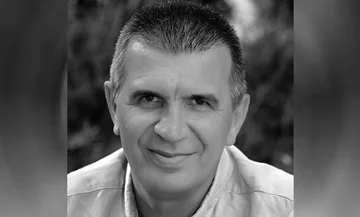
(3 years ago)It says Baton Haxhiu: September 23. Kosovo's prime minister was on a trip abroad. He was giving an official speech in Bern, a town in northern West Switzerland. At the same time, in northern Kosovo, events were taking another route. Serbian rebel group that had named itself “North Liberation Forces” had launched a mission [...]
It says Baton Haxhiu:
September 23rd.
Kosovo's prime minister was on a trip abroad.
He was giving an official speech in Bern, a town in northern West Switzerland. At the same time, in northern Kosovo, events were taking another route.
Serbian rebel group that had named itself “North Liberation Forces” had launched a dangerous mission from the Copunic of Serbia.
Two trucks with guns, two armoured cars and six jeeps filled with paramilitaries were preparing to capture the northern areas of Kosovo.
The mission was dangerous, but their purpose was clear: making the world realize that they controlled the North and would punish those who opposed them.
The night between September 23rd and September 24th, a digital wiretap, camouflaged inside a truck barricade in the middle of the road, lifted into the air and hit a Kosovo police patrol.
He killed one cop and injured another. A sudden explosion representing the first act of drama to unfold in the hours following.
The wounded policeman announced the base that they had been ambushed.
At 3:00 after midnight, special Kosovo police are notified. The speed of the Specials' arrival, except that it would then constitute the nucleus of success for the destruction of the terrorist plan, and that day it remains inexplicable even for trained military personnel.
Meanwhile, KFOR had begun talking from a distance with unknown terrorist soldiers.
Allied forces took over to manage the situation.
Since the situation was unclear for them, management became impossible. It was all becoming a mess.
Time with the fog of that Sunday morning also helped them.
Around 4 and 20 minutes, the sniper of the Special Intervention Unit, the elite team of Kosovo police, had been removed from the group to take position in the depth of the mountain.
The gang, which was de-conspired to a degree by the curious courage of Africa Bunnjak, abandoned its initial operational approach and began withdrawing for a thought-tank for several hours later.
Separate communication between KFOR leadership and the Serbian Army, KFOR leadership and the Kosovo Police, special units and the political chain of Kosovo leaderships continued.
Meanwhile, the president of Kosovo was in the United States for a meeting.
Following discussions with the Albanian diaspora and students, she realised her state had been attacked by armed forces that were not currently known to its purpose.
In her 24 September morning call with KFOR commander Osmani alarmed to be wounded and killed in the north.
His answer was incomprehensible to the president: I'm asleep.
The situation was getting worse. With KFOR commander sleeping, Prime Minister Kurti became aware that he should seek help from the United States.
Even though he had earlier doubts about their mediation with Serbia, he now had no choice.
He headed towards the American Embassy armed with only calls for help, while his dignity lay in balance.
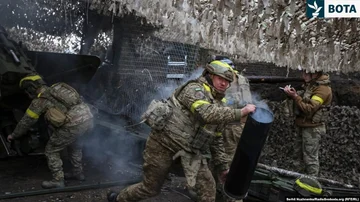
Three unbroken hours of war occurred, where fires broke out and other heavy weapons were used.
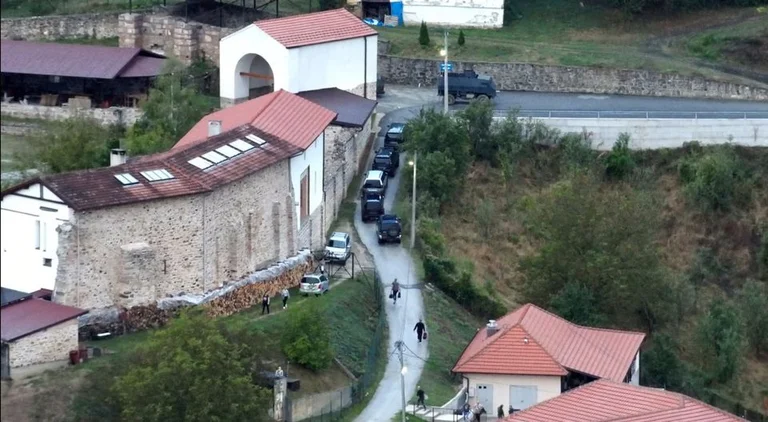
Villagers of the monastery, who had lived peacefully in the area, were found in a terrible, meaningless situation.
Their distribution was unresolved, and the back of the conflict felt inside the monastery's polluted walls.
The monastery, which “rastosically” also finds pilgrims coming from Serbia.
Unknown people and divided bodies build the image of that tragedy and the sadness of the days of conflict to come.
This moment clearly demonstrated the difficulty and sadness associated with armed warfare, leaving a serious impact on the village and its silent people.
It was a memorial that draws attention to the atrocities civilians suffer during such conflicts and the destruction they bring to their communities.
The Terror Group's moment drama has left
After three hours of bitter warfare at the Holy Monastery and the lonely village, the terrorist group was reportedly dealing with bullets from the special units.
Two wounded were left in the shadow of death by business associates.
The villagers themselves, who were scheduled to use as shields for terrorists, were found trapped under the shadow of weapons and smokes of the war oven.
Before the wounded left, the group of about 30 were confined to the monastery. They were already far outside their plan, but completely within the perimeter of the Kosovo Police.
There were also outside the monastery walls. The Special Unit's effects are understood by Zig-zage movements, camouflage clothes, weapons and positioning of terrorists that they are dealing with amateurs, not armed citizens, but trained guerrillas.
However, because of professional superiority, police could liquidate the largest number of terrorists if they decided to enter the monastery, but they did not want in any form to translate this situation into a bloodbath involving pilgrims civilians inside the monastery or Banjsca villagers.
At this point, when the time had passed, the work was not just the police.
Negotiations with mediators had begun between Pristina, Belgrade and the Yugoslav Army.
What exactly they're talking about can show those involved in negotiations, if there's ever a time when reports will be relaxed enough to declassify what was said.
The result, however, was: terrorists received the possibility of attracting them.
Unexpected rescue for them.
However, Kosovo police, using a machine gun, had hit towards terrorists who fled without looking back.
While Serbia still had an agreement on the departure of the paramilitary group, it had a plan B.
25 jeeps of soldiers and warriors were on their way to help terrorists. They went down the street. The Serbian Army told them to stop.
Eventually, sniper attacks by Kosovo police killed three terrorist soldiers, while a distance of 12 metres was enough to create the horror of war. A terrorist was killed closely by KFOR soldiers.
In this turbulent atmosphere, someone, something, had also negotiated with armed gangs in Manhattan.
But this event was a real challenge for KFOR leadership and international diplomacy. As tensions at the peak of diplomacy and weapons were working together in a strange way.
Negotiations continue between KFOR troops and the notorious rebel group Milan Radojicic.
While the North photo was complete for almost no one, Kosovo's development enthusiastically conveyed to the heroism the police were showing, at times fearing that it would not be enough.
Accusing KFOR of not involvement on the side of Kosovo every time the work seemed bad, and disdaining their help whenever the work seemed good.
But, as a result, Kosovo citizens in general, like Banjska's in particular, were shocked and frightened by unexpected developments.
They all witnessed the conflict taking shape on the doorstep.
This event of tragedy in northern Kosovo is a painful reminder of the consequences of regional tensions and conflicts that could erupt at any moment.
The lives of ordinary people are on the scales, while diplomacy and international forces try to find a way out without the sensitivity of authentic experience.
Banjska ended up an event but not a consequence.
This story will continue to influence future developments in the Balkans beyond Kosovo and Serbia itself.
The Purposes of the Paramilitar Group
The first goal of the rebel group was clear to establish a strong presence in northern Kosovo and to demonstrate that they controlled territories outside the cities.
Second, it was the most intriguing: They were aiming to provoke Kosovo police forces, to encourage the local population to join them in a clash that would come out of KFOR control.
The conclusion of a stranger expected to be this: KFOR would seek the help of the Serbian Army, or the Serbian Army would enter Kosovo on its own.
The initial abandoned by these two goals occurred when the BiH-based Radojcic group in Manastir and pending Serbian reinforcement, realizes that support would never come.
They fled, not their intentions.
On September 24th, something had begun, not over.
Five days later, on 29 September, Serbian forces gather in combat formations and clearly demonstrate an offensive goal as a rationale for embarrassing Sunday preliminary.
The Kosovo Security Force and Kosovo police bases are targeted by Serbian missile artillery.
Special units put their feet inside Kosovo's territory in the northern part.
NATO had envisioned such a situation, and there was a real possibility that Serbian forces would launch an intervention in Kosovo on the morning of September 30th.
In Belgrade, some wanted to test NATO's determination to protect Kosovo, while others looked towards a military clash.
Diplomacy was busy with numerous conversations with both sides.
But only after Belgrade is made clear that an intervention in Kosovo would lead to an open conflict with NATO at 3: 00 a.m., was ordered to suspend all military actions.
This plan was a sophisticated effort to manipulate the situation in northern Kosovo, speculating on tensions between Kosovo and the international factor.
Meanwhile, a tragedy has turned into an unexpected breakthrough, and the consequences will be felt for a long time.
Conflicts, diplomacy, and regional tensions are a changing landscape in the Balkans.
The courage and professionalism of the Kosovo Police, combined with diplomatic activity and international seriousness to protect Kosovo, backed up and by the kindly silence of Kosovo leaders who moved with their fingers cross, cancelled the group's goal of establishing armed units in several locations in Kosovo's north with the goal of demonstrating presence on the ground and creating an impression on local populations that this formation has effective control over territory outside urban areas.
In their plan, provoking conflict with police forces would spur the response of the local population and their joining these formations.
This would then lead to a larger clash and since it could not be managed by KFOR forces, then they, based on the point of the Kumanovo agreement, that gives KFOR commander the right to allow the return of Serbian personnel to Kosovo to 99 people, would be faced with a new situation when this group would accept the ceasefire only if KFOR were assisted by Serb forces.
Or, the Serbian Army would enter the north itself, on behalf of the protection of local Serbs, and create a new situation on the ground.
The cause of the sacrifice of Africa Bunnjak (something that was outside the prepared scenario) and the bold and quick reaction of the Kosovo police, this formation failed to realise the first versions of the plan.
Fortunately, the plan for a sophisticated armed uprising based on the idea that Kosovo is in conflict with the international factor, supported by the assumption that the international community would turn their backs on Kosovo because of their tension with Kurti dealt with failed.
The plan, however, has failed, but is not dead.
I could kill Albin Kurti on Saturday if you play the cards properly at the summit with Western top diplomats. It's his chance, probably his last chance.