4 days ago
How Russia Lost Friends and Global Influence
Periskopi(2 months ago)
(2 months ago)Nina L. Khrushcheva
Far from restoring Russia's great power status, the war in Ukraine has left Russia so tense that it has repeatedly failed to meet its commitments to partners and allies. Even with Russia's closest friends trying to protect the situation, the Kremlin's ability to design power and shape world affairs has weakened severely.
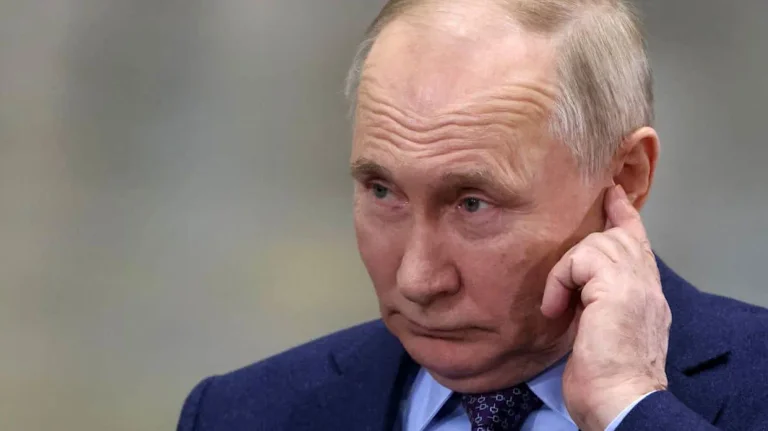
Since the launch of Ukraine's full-scale invasion more than four years ago, Russian President Vladimir Putin has failed to achieve the military victory he wanted. It has also undermined a host of other relations that took decades by building them, leaving Russia more isolated than it has been since the first days of the Bolshevik Revolution.
Only Ukraine's conquest was enough to create a rift between Russia and its ally Kazakhstan. Putin has a long history of minimising Kazakhstan for independent citizenship, suggesting that Kazakhstan's people want closer ties with Russia - claims echoing what Putin makes for Ukraine.
So, after the 2022 invasion, President Kazakhstan Kassynm-Jomart Tokayev rejected the Kremlin's pleas for help and later told Putin that Kazakhstan would not recognise the separatist regions supported by Russia in Ukraine.
He also signed a military co-operation agreement with Turkey, becoming the first member of the Organisation of Qualative Security Treaty (CSTO) led by Russia to establish such an agreement with a NATO member. While Putin's relationship with Tokayev has improved since then, this probably reflects the fact that both sides still need each other.
Then it's Armenia. When Azerbaijan launched a military operation in September 2023 to take control of Nagorno-Karabakh, the ethnic Armenian enclave within its territory, Russian peacekeepers stationed there did nothing, and the entire population of the enclave - about 100,000 people - were forced to flee. Within a year, Armenia had announced plans to withdraw from the CSTO and was buying weapons from France and India. Russia withdrew its peacekeepers from the region before the deadline.
The Kremlin also managed to overturn its relationship with Azerbaijan, which benefited from its betrayal of Armenia. In December 2024, a Russian land-air rocket hit an Azerbaijann passenger plane, killing 38 people. Azerbaijani President Ilham Aliyev requested compensation and responsibility from the Kremlin, but Putin refused to accept the blame for nearly a year. Meanwhile, Aliyev ignored Putin by bypassing the annual Victory Day parade in World War II in May 2025; Russian special forces conducted a deadly raid targeting ethnic Azers in Jekaterinburg; and Azerbaijan raided the Russian state media office Sputnik in Baku, arresting its staff.
But Azerbaijan serves as an important trade corridor for Iran, which, until the United States and Israel started their war in February, supplied Russia with fears and ballistic missiles for its war in Ukraine. (Russia also effectively abandoned Iran when it was attacked. )
To keep the corridor open, the Kremlin was forced to swallow insults from Azerbaijan, and in October 2025, Putin finally acknowledged that Russian air defence systems had crashed the plane and made a vague compensation offer.
As this pro-form apology paved the way for restoring ties, the episode constituted a major mistake in foreign policy for Russia. Of the Soviets, Kremlin leaders for centuries had skillfully managed tensions between Armenia and Azerbaijan. However, since the beginning of his war in Ukraine, Putin has managed to strain relations with both.
In Syria, Russia spent nearly a decade supporting Bashar al-Assad's regime, conducting air strikes and deploying ground forces against rebel forces, while providing Assad with diplomatic coverage to the UN Security Council. In exchange, Russia maintained control over the naval base of Tartus and the Emimimation Air Base.
But in November 2024, Syrian rebel forces launched an unexpected offensive that the Russian army - exhausted from the war in Ukraine - was unable to respond on a large scale. Within days, Aleppo and Damascus fell, and Assad fled to Moscow. All that investment, and Russia ended up with nothing.
The story of Russian influence in Africa is just as shameful. Before the war in Ukraine, the Wagner Group mercenaries were expanding Russian influence across the continent, exchanging security contracts for political loyalty and mining rights. In Mali, for example, they positioned themselves as essential support for the military junta in its fight against jihadist forces.
But in 2024, the Twareg rebels hosted a Malaan-Wagner convoy near Tinzaoatten, killing dozens of Russian mercenaries. Jihadists later attacked the airport and the national gendarmerie academy in Bamako. Narrativa that Wagner was making the mountain safer had become unsupportable. While some forces, renamed as Africa's"Crpus", remained after Wagner officially left Mali last June.
Things are not better for Putin or Europe. Hungarian Prime Minister Viktor Orbán, who is pro-Russian, recently collapsed after 16 years in power. Serbian President Aleksandar Vucic, for his part, has been taking silent care of the situation: although Serbia initially seemed to back Ukraine's invasion of Russia, Vucic has since met several times with Ukrainian President Volodymyr Zelensky and exported ammunition worth at least $908m to Ukraine through third (Bulgaria, Czech Republic and Poland). Vucic has also cancelled military contracts with Russian arms suppliers, signing instead a $2.7 billion euro deal (3.2 billion) with France for 12 Rafale fighter aircraft. But Putin has so far chosen not to answer. The last thing he needs is to cement the loss of one of his last allies in Europe.
Meanwhile, Putin's early client, Belarusian President Alexander Lukashenko, has released political prisoners in an effort to improve relations with the West - and even had contact with US President Donald Trump. While Europe's last “dictator” is not breaking up with the Kremlin, it is preparing an escape route - and increasing its risks.
Then there's China. Before the war in Ukraine, Russia and China presented themselves as two major powers resisting Western domination and advertising their non-restricted partnership” just before the invasion. But the relationship today seems more like an uneven marriage of comfort than an alliance of powerful equals. China supplies dual-use goods as microelectrics and machine vehicles - not weapons - to Russia, which sells oil and gas to China at low prices.
Perhaps Russia's most loyal friend today is North Korea, who deployed more than 10,000 soldiers to fight alongside Russian forces in the Kursk region following Ukraine's invasion of Russia in August 2024. But even this relationship is essentially transactional, based on shared uncertainty and hostility towards the West.
Putin believed that the invasion of Ukraine would restore Russia's great power status, erode Western influence, and accelerate the transition to a multipollar international order. Instead, it has destroyed the Kremlin's credibility as a partner and ally. Russia still has nuclear weapons, a permanent seat on the UN Security Council and huge reserves of energy, but the war in Ukraine has left it much weakened and unable to design power and shape global issues in any way except by threatening war.
* The alliance, Nina L. Khrushcheva, a professor of international relations in The New School, is co-authored (with Jeffrey Tayler), recently of the book In Putins Footsteps: Searching for the Soul of an Empire Agross Russia's Elven Time Zones (published by St. Martin's Press, 2019.