4 days ago
From Albin Kurt to Sami Lushtaku: The History of a Language That Produced Violence
Periskopi(2 months ago)
(2 months ago)It says: Baton Haxhiu
The clash between Sami Lushtaku and Hysni Mehan is not an isolated incident. It is the result of a political culture built for years with demonization, humiliation and verbal hatred.
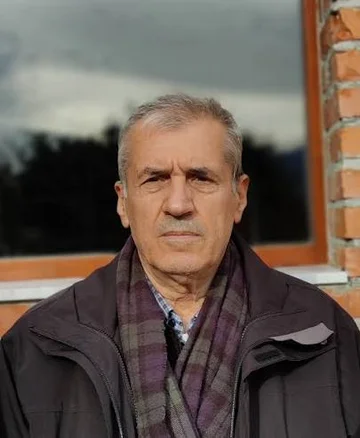
In Skenderaj, it all started with a sentence.
A social networking status. A brutal label. A comparison that in Kosovo is not just political insult, but identity shock. Hysni Mehan called a former fighter “Sami Serbia” In any other Balkan country, this could be read as political banal provocation. Not in Kosovo. In Kosovo, the moral connection with Serbia is not just the accusation. It's an exception to the collective history of war.
Then there was what is common in societies where language temperatures have grown for years.
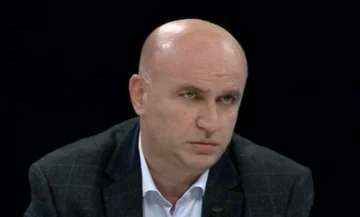
Sami Lushtaku went to see him. There was no public debate. There was no status. He had anger. Nerv. Instinct. And a phone in your hand that ended up as a shocker. Then came the police. The prosecution. Cameras. The statements. Everyone talked about the act. Few spoke of the climate that produced it.
Because real violence rarely starts with fists. It usually starts with the tongue. Dehumanized. With ridicule. Public humiliation. With the idea that the other is no longer a political adversary but a moral barrier that must be eliminated from public space.
And Kosovo has been living within this climate for years.
Actually, this story does not begin with Vetevendosje. It starts right after the war. In a war - torn Kosovo, filled with weapons, trauma and political rivalry, another war of words began.
Much of this language was produced through the World Today. A newspaper with vile authors in character and writing with hostile content to life in Kosovo. For years, a systematic demonstration of KLA and its individuals. With daily writings, labels, criminal insinuations and a language that often targeted no political criticism, but the moral delegation of war and its figures. In those years, the opponent was not just a political rival. He was a traitor. Criminal. National hazard.
Then came the reaction.
The Office for Information of the Interim Government, led by former political prisoners and people from the illegal world of resistance, struck back with the same severity. The language became even heavier. The most personal charges. The most public hatred. It was a generation that came from political prisons, war and a deep memory of conflict with a part of journalists and structures close to LDK.
And that is where the normalisation of verbal brutality began in post-war Kosovo.
The LDK of those years, through newspapers and people around it, often used a language much tougher than what is today attributed to Vetevendosje. The other side responded with the same war nerve. No one stopped to ask what was happening to Kosovo's public language. Everyone felt that the battle was moral and that each sentence was justified in its name.
Then came another political generation.
Vetevendosje did not invent this language. But it modernised it. He set it up. It turned into mobile power. At the moment he turned into a crime.
But this culture of demonization did not spare even Vetevendosje's own people.
Albin Kurti was tortured in Serbian prisons and later released through an official amnesty of the regime of Vojislav Kostunica, a process that was at the time a result of major international and public Albanian pressure. For years, however, this fact was used to label it Serbia's <x0 humane”, as a suspicious figure or as a secret political project.
Other labels for family background, their fathers' ties to the Yugoslav communist system, or proximity to the institutions of the time of Yugoslavia and Serbia were also used against Vetevendosje.
And right here is where the political language tragedy is seen in Kosovo. That she spares no one. At one point, KLA fighters are demonised. At another moment, former political prisoners are demonised. Then families, biographies, backgrounds, and personal memories are demonized.
In the first protests, in symbolic stakes, in clashes with police, in rhetoric against “the state's”, the idea arose that the harsher the word, the more authentic the politician was.
The opponent was no longer just a democratic rival. He was a thief. State dealer. Serbia's associate. Criminal. In this climate, social networks became daily moral courts.
And in parallel, protests began to become more aggressive. Stones to institutions. Fight the police. Tear gas in the House. State building attacks. At one point, even explosive vehicles towards the Kosovo Assembly. Each excuse was the same: revolt against injustice.
But the problem with verbal populism is that he doesn't view language as responsibility. You see it as mobilization. The tougher the word, the stronger the crowd.
And when the crowd gets used to the hate language, the line between word and deed begins to disappear.
The word "x0" is not a naive folk metaphor. It's an accurate description of how collective psychology works. The word does not immediately kill you physically but creates a climate in which hatred and violence begin to appear normal.
This is why the Scytheright case cannot be read as an isolated incident. Sami Lushtaku's violent reaction cannot be justified in a democratic society. But it's just as dangerous to behave as if he exploded into a moral vacuum, without years of demonization, without years where people have been treated as absolute evil.
Because no one can say with absolute certainty that a sentence automatically produces an act. But the same truth is that the constant climate of demonization reduces the psychological threshold of violence.
And maybe this is the greatest tragedy of post-war Kosovo. That verbal violence came to be viewed as a normal part of politics. First in the papers. Then on television. Then in parliament. Then social networking. Until one day, in a small town like Skenderaj, a status turned into a blow.
And maybe this is the part that Pristina often doesn't understand.
In Pristina, the political language is often treated as performance. As status. Like cynicism. Ironically. Like a TV nerve game or a social network. But in Drenica, in Dukagjin, in Gjakova, and especially in Decani, the word has a different memory. There's another body. There's another wound.
Between 1997 and 2000, almost every house in Drenica was burned or affected by Serb violence. It's brutal. Each family had a dead man, a missing one, a torture, a fugitive, a burned photograph, a wall that was burned by the flame. In those places history is not preserved in books. Stay on the walls. In silence. Face.
Therefore, to use today's demonization language against fighters in those spaces and not to understand its weight means not to realize that it is touching the very memory of Serbian violence. In those countries, the word is not only perceived as political opinion. It can be perceived as a moral continuation of that violence.
And that's why provocations like that in Drenica, Dukagjin or Gjakova are not read as Pristina television debates. They read differently. Worse. More personally. More physically.
To provoke people like Ramush Haradinaj, Sami Lushtaku, or the generation of Gjakova warriors with language affecting the identity of war, without realizing the psychology of these countries, means not to realize how thin the line between verbal violence and physical response is sometimes.
This does not justify violence. But it explains the danger.
Because Kosovo's history is not built only on politics. It's built on trauma. And when trauma meets with hate language, explosions are no longer just incidents. It's warnings.
And maybe this relates to the deepest psychological plague of Kosovo: Serbia. And Vetevendosje populists also use it because of <x0deficiation” patriotic, because it's a political generation that didn't produce anything. Only Serbia and the traitors.
In Kosovo, Serbia is not only a neighbouring state. It's a reminder of violence. It's war. It's a loss. It's collective fear. For this reason, the political language towards Serbia does not function as in normal European democracies. It functions as a moral instrument of legitimacy.
When Serbia attacks someone in Kosovo, it often grows politically. When Serbia is silent about someone, doubts begin. And when someone speaks carefully, rationally or without hysteria for Serbia, he often immediately demonises as suspicious, mild or close to him.
That is why patriotism is often measured in Kosovo by language severity and not by the seriousness of politics.
And the biggest paradox is that often people who once were closer to the Yugoslav system, communist institutions or time structures, become the most vocal in verbal patriotism. Because aggressive patriotism is also used in postconflict societies as biographies. The stronger the patriotic word, the more the past is covered.
This is not just our Kosovo story. And Kosovo still lives within this stage.
Therefore, the word “Serbia” in Kosovo politics is not always used as geopolitical analysis. It is often used as a moral weapon. How to get the other out of national legitimacy. And that's where the danger begins.
Because when patriotism is measured only with the severity of the tongue, then society begins to lose the ability to distinguish between memory and hatred, between the protection of history and the continued production of new enemies.
And then, status no longer remains just status. A sentence is no longer left alone. She starts taking the weight of collective trauma.
She starts producing what Skenderaj reminded us again: that the story of real violence almost always begins with the history of verbal violence.
Hysni Mehane and all those who use language today as political weapons must understand one thing: in Kosovo, especially in Drenica, Dukagji and Gjakova, the word does not enter the void. It falls on memories of war, of tombs, of burned houses, and of people who are known, not as metaphors, but as experience.
And whoever keeps playing with that tongue must know that sometimes he is not provoking just debate. He's waking up the trauma. And there's violence going on.