3 days ago
When Political Myth Becomes Stronger Than Economic Reality
Periskopi(2 months ago)
(2 months ago)Kosovo today is facing a deep political, economic and social problem: the combination of nationalist populism, the emotional vote from the diaspora, speculation investments in the real estate and gradual weakening of post-war institutional achievements.
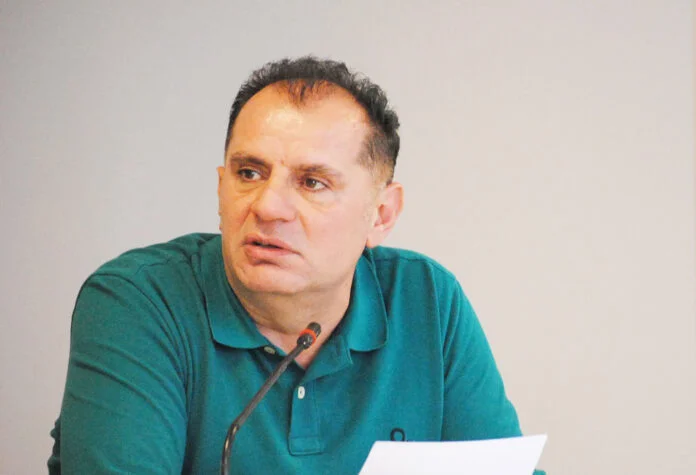
It says: Safet Gerjaliu
After the war, Kosovo was not a perfect state, but was a society under construction. There were political pluralism, relatively balanced representation, infrastructure development, private sector growth, institution building, international support and a clear Euro-Atlantic orientation. No party fully dominated the political scene, and this created a kind of natural democratic control.
However, in recent years a dangerous narrative has been built: that nothing has been done in Kosovo “, that every past government has been just a failure and that the country needs a revolutionary change, not institutional reform. It is not just political criticism; it is denial of Kosovo's development history.
Much of the support for this kind of policy has come from the diaspora. The diaspora has had an important role in the survival of post-war Kosovo families and in keeping the economic connection with the country alive. But, over time, a portion of it has begun to see Kosovo more through homesickness, frustration and political idealisation than through the daily reality of the citizens living here.
This has created a major paradox: people who do not daily bear the consequences of political decisions in Kosovo strongly influence the country's political direction. They vote for revolutionary narrators, for confrontation, for nationalist rhetoric and moral illusions, while life, pay, social security and stability are outside Kosovo.
On the other hand, the diaspora has entered the real estate market. A large portion of diaspora capital is not oriented towards industry, production, export, technology or the opening of sustainable jobs, but towards buying housing, housing and land. These properties are often not used for real housing, but are considered investment, emotional security, or speculating assets.
This has caused serious economic deviation. Home and land prices have increased much faster than the income of citizens living and working in Kosovo. A young man with local wages cannot compete with capital won in Switzerland, Germany, Austria or in Scandinavian countries. Thus, the resident citizen in Kosovo is gradually excluded from the housing market in his country.
The problem becomes even more serious when real offers are artificially reduced. Although many dwellings are built, some of them remain empty, are kept for price hikes, or are used for just a few weeks a year. So there's construction on paper, but there's actually not enough accessible housing for citizens living here.
This creates sectoral inflation in the economy: rising housing prices, rent, land, building materials and urban living costs. Even if official overall inflation falls, the citizen feels the crisis in the basics - housing, rent, food, transportation, and standard of living.
In that sense, Kosovo is facing a double crisis: politically, a part of the foreign vote supports radicalism and populism; economically, the same foreign capital contributes to the speculation increase in real estate prices. This makes the country more politically polarised and economically affordable.
Part of the interior support, especially from urban and civic groups, has been built on the image of the prime minister as a rebel, moral and anti-system figure. For many people, it is seen not only as the administrator of the state but as a symbol of revenge against the old elites.
This is the classic populist mechanism: real performance of governance is replaced with emotional loyalty to political image. This is dangerous for the state. Because when the leader is seen as a revolutionary, any criticism of him is seen as treason, every failure is argued as sabotage and any international danger is presented as conspiracy against the country.
At that moment, democracy is weakened and replaced by the psychology of the political crowd.
The main problem is not just a party or a leader. The problem is the model being created: Kosovo with patriotic rhetoric, but with speculation economy; Kosovo by emotional vote, but with weakened institutions; Kosovo with expensive housing, but low wages; Kosovo with many constructions, but little productive development; Kosovo with very political morality, but little real responsibility.