4 minutes ago
Ukraine is not losing. Russia is not winning.
Periskopi(a month ago)
(a month ago)A Changing Time
From Anne Applebaum
In a field outside Kiev last weekend, a van was parked sneaky behind several trees. Inside the van, there were no passenger seats, just a long table, two office chairs, two laptops, and extra screens.
From outward appearances, it was a mobile base of drones -- one of hundreds of similar vehicles now distributed across Ukraine.
It is also part of something far greater: a series of technological advances that have changed the war with Russia, and perhaps all wars, forever.
On one of my laptops, a soldier showed me a view from the top of a Ukrainian village that is over 100 miles away.
His task is to identify objects flying above him, to distinguish birds and bats from deadly Russian fears.
When you look at the latter, the soldier on the laptop next to him can lead an interceptor - a small drone that looks like a miniature rocket - to track and destroy Russian aircraft that comes before they hit their targets.
At first glance, images on screens look simple, like a video game. But this is not a low-tech operation.
Cutoffs of drones enabled by artificial intelligence are made possible by a complex network of radar systems, sound sensors, and other tools that hundreds of large and small Ukrainian technological companies are creating and updateing every day, using data received directly from soldiers like those I met. Almost none of these companies existed four years ago. They have emerged from a civil society capable of technology, whose members changed their professions or focus to help protect their country. I've met executive directors of Ukrainian defense companies coming from financial services, architecture, politics. I met another one last weekend who had returned just that day from the front line. He told me that he finds it helpful to learn how soldiers are using his products and how they can improve.
Other types of teams across the country are also linked to this constantly improving information system, not just the vans. Last year I was in an underground room in Ukraine, where dozens of people were monitoring hundreds of miles of front line in a series of screens.
Ukrainian defence analyst Andriy Zagorodnyuk You call it This system of drones, monitors, navigation enabled by artificial intelligence, robots tested in battle, and interlocked soldiers <x0).
Ukrainian military technology has evolved rapidly since the early years of war. But only now are foreigners - in Europe, the United States, the Persian Gulf, and certainly Russia - beginning to understand what this evolution means. Since 2022, many public debates over war, even in Europe and the U.S., have embraced the popular alternative by Russian propaganda, silently assuming that Ukraine, understaffed and armed, would eventually lose. Ukrainian aid was a way to avoid disaster, nothing more. When the Trump administration stopped sending military and financial assistance to Kiev in 2025, some in Washington expected (and possibly wanted) the end to come soon.
Instead, Europeans have obtained money. Ukrainian society produced a netted awareness of the situation.
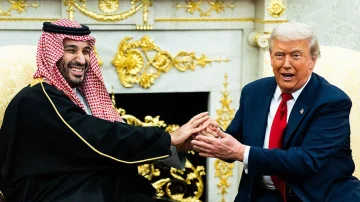
And when Ukrainian President Volodymyr Zelensky Visiting Gulf States in late March and signed a series of security agreements, something changed to the international tertiary. The leaders of Qatar, the United Arab Emirates and Saudi Arabia were talking to Ukraine, not because they regretted a war victim, but because they wanted to buy fear interceptors like those I saw in action last weekend. Iranians use the same fear technologies as Russians, and Ukrainians know better than anyone to fight it.
Gulf leaders are not alone: Suddenly, a lot of people have realized that the Russian Narrativa is wrong: The Ukrainians aren't losing. The Russians aren't winning and, most importantly, they don't know how to win. Ukrainians and foreign analysts have described this dynamic in the three main war theatres.
Earth war.
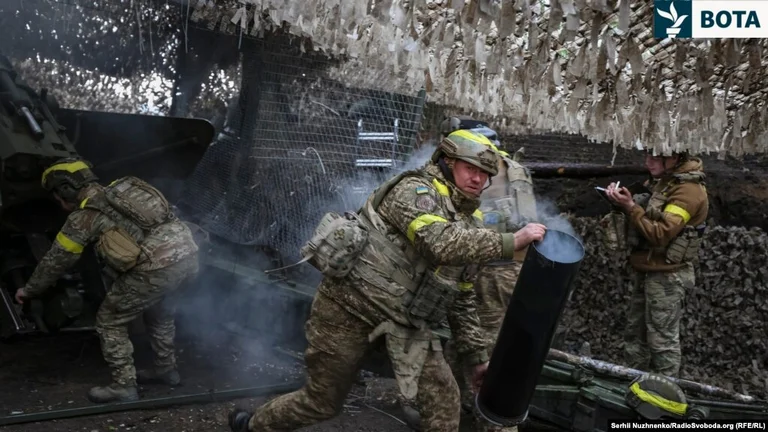
If the history of the past two years was a slow and rapid progress for Russia, this year's story is very different. Since the beginning of spring, at the beginning of its annual offensive, Russia has Lost More territory in Ukraine than it has earned. For now, it is difficult to see how the Russian army can move forward because the front line is not a line at all, but rather a vast area without movement, about 20 miles wide. Everything within this area is evident to the drones, which means that any Russian truck, tank, or footman seeking to attack new territory is readily identified and can easily be hit. Because Russian commanders continue to attack anyway, Ukrainians are killing and wounding thousands of enemy soldiers, perhaps even to the point of 30,000 Every month. They say their aim is to get more Russians off the battlefield than can be recruited to replace them, and may be close to success.
Long-range action struggle. Although unable to move the front line, Russians can still use fears and rockets to kill civilians and destroy civilian infrastructure in Ukrainian cities, as they did once again this week. Indeed, Russian President Vladimir Putin's appetite for this kind of attack is escalating, as it has no other practical way of damaging Ukraine. He also knows that Ukrainians do not have enough air protection to stop ballistic missiles, even if they can now stop most fears. Ukraine still relies heavily on air defence equipment from the United States, especially ammunition to Patriot batteries. A European fund was set up to buy these interceptive missiles, although some observers fear there is simply not enough to buy. According to Zelensky, more
Patriot Used During the first three days of the US-Iran conflict, how many have been used throughout the Russian-Ukrainian war.
What Putin won't admit is that he too is running out of air defence. This has helped Ukraine's long-range fears of more reliable aim at Russian oil and gas infrastructure, producing spectacular explosions and reducing Russian refining capacity by at least 20 per cent. Almost all. Main oil refinerys in central Russia They stopped or reduced production, and some were hit. More than once .
In the same order, a new group of Ukrainian drones with a 100-mile radius of action can Aim Weapons depots, logistical centres, and supply chains far from the front line in Russia's occupied territories. These attacks are less spectacular than those deep inside Russia, but they have already created significant fuel shortages on the Crimean Peninsula and are making it difficult for the Russians to supply their troops fighting in the East and South.
Psychological war. Over the past four years, the Kremlin has repeatedly told the Russian public that war is going well, that Ukraine is not a real country, that victory is safe. But this is hard to match the panic that swept through Moscow last month, when an annual military parade was cut short for fear of being interrupted by Ukrainian fears. Nor does it agree with the spectacular black smoke columns flying into the air Wednesday morning, as Ukrainian fears hit a local refinery on the day of the opening of the annual Kremlin economic forum in St Petersburg. Kiril Budanov, former head of defence intelligence, who is now head of the Ukrainian president's office, told me there is much evidence that the Russians are finally facing the lie of state propaganda: "they cannot understand why they have to continue fighting and why they are being hit now, because they are told they will win and Ukraine is nothing. "
Not everyone thinks this means the war will be over soon. A young woman, a Ukrainian civil servant, told me last weekend that she and her friends have already given up the idea that they will ever live again in a normal" "country, because war will last forever. She remembered a flight she and some friends took to Barcelona before the war: "That beautiful life will never return".
But there are signs that some in Moscow, at least, are preparing for the war to end. Recently, a series of slides published from Sergei Kiryenko's office, a former Russian prime minister and now a senior official in Putin's administration. They describe a plan to sell the country's end of the war: announce victory, describe the Russian army as the world's <x0 most willing war> ", portrays small territorial gains as a great success, claim that Europe suffered a major economic blow from which it will not be recovered and that Ukraine will soon be dissolved. Budanov believes the Kremlin's decision to cut off the telegram, Russia's most popular social media platform, was a preventative act designed to prepare for this kind of natural change, "so that when the time comes, they can only have an official position and nothing other than this".
Budanov also continues to believe that negotiations initiated by the Trump administration could bring a ceasefire, along the current front line, as early as this year. "and then we will start resolving the other issues we have."On Thursday, Zelensky wrote him a letter Directly Putin proposing just this: an immediate ceasefire, accompanied by face-to-face negotiations between the two leaders. Putin publicly rejected him The idea, saying you don't see"any meaning"in a meeting.
Russia still has other options. Russian President, who has never admitted Ukraine is a legitimate country, or that Zelensky is its legitimate president, could continue to bomb Ukrainian cities, hoping to destroy the power grid and make the country immortal. It could call for mass mobilization and continue to try to overload Ukraine's defence by sacrificing thousands of lives. Some fear he may use this moment to expand the conflict and attack a NATO country, perhaps to test American readiness to protect the Allies. A Latvian general said this week that even if Russian fears cannot win in Ukraine, they have an advantage over NATO protections that have not yet achieved rapidly evolved technology.
Even without negotiations, Russia and Ukraine may be heading towards a new status quo. The transparent front line zone may now be 20 miles wide, but with the improved fear technology, it may soon be 30 or 40 miles wide. At one point, the front line will become not only a human land, but a de facto deilitarized area, similar to that shared by North and South Korea, regularly patrolled and maintained by fear.
Thereafter, there may be a limit - a temporary border, a border that will not be recognised by either side - yet a limit - not unlike a river or a mountain range, impossible to move, hard to cross. This would not be a clear victory for Ukraine, but it would be a great defeat for Putin, whose central purpose - the destruction of all Ukraine, the removal of Ukraine from the map - would never be realized.