13 minutes ago
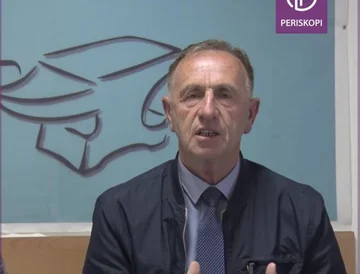
Rasp: My political opinion is not the same as that of Serbia or Kosovo, I try to be a moderate politician
Periskopi(3 years ago)
(3 years ago)You know a person who walks through a thin wire and doesn't fall, keeps a long stick in his hand to save the bartender? Meanwhile, the wire on both sides comes down, dipping even more”. That's how Nenad Rassic, minister for Communists and Returns at the Government of Kosovo, describes the event [...]
You know a person who walks through a thin wire and doesn't fall, keeps a long stick in his hand to save the bartender? Meanwhile, the wire on both sides comes down, dipping even more”.
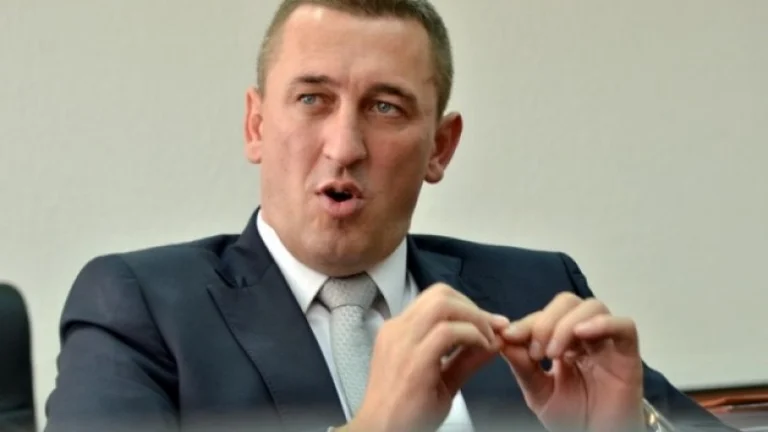
That's how Nenad Rassic, Minister for Communities and Return in the Government of Kosovo, describes the activity of Kosovo Serb politicians who, as he says, do not think the same as the authorities of Serbia and Kosovo.
In Kosovo, the largest Serbian party is the Serbian List, which is supported by official Belgrade. In the last ten years, it has won both local and general elections.
Rassic, from the Serbian Democratic Progressive Party, was appointed minister after his predecessor from the Serbian List resigned in early November, rejecting a decision by the Kosovo government to reregister cars with illegal Serb license plates.
Resign, in fact, all Serbs from the north gave up both local and central Kosovo levels and were supported by authorities in Serbia.
Whatever you say, they'll name you as traitor”
Rassic says his political opinion is not the same as that of power in Serbia or power in Kosovo. At this point, he says, lies between the clashes in Belgrade and Pristina.
I'm, at all times, trying to be a moderate politician, just because we need it, above all, co-operation and the possibility of living together. We, as local Serbs, should be pragmatic, moderate and totally committed to co-existence with Albanians. You have to understand how difficult and complex this is, because whatever you say, someone will name you inappropriate, bad, betrayer. Practically, we have the situation that we are rejected by one side and we are unacceptable by the other”, Rassic says of Radio Free Europe.
He does not explain why he feels unacceptable in Kosovo.
Following entry into Kosovo institutions, against him and his adviser, Rada Trajkovovic, the head of the European Movement of Serbs from Kosovo, has been made offensive statements by Serbia's own president, Aleksandar Vuciq.
He, among other things, has said that Rassic and Trajkovik “do not trust anyone in Serbia, but have the confidence of Albin Kurti and Western agencies”.
“True struggle for co-existence”
Trajkovic, on 15 December, has been detained by Serbian authorities at the border crossing between Kosovo and Serbia, Merdare.
It says it has been held for 24 hours illegally, without water and food, as well as without necessary medical medications.
She describes this as revenge by Serbian authorities against her because she thinks otherwise of power in Serbia.
Serbia's Interior Ministry has not responded to the REL's earlier interest in the case.
Trajkovic says her political activity for a normal co-existence of Serbs and Albanians in Kosovo is not uncommon to draw “between two fires”, due to verbal clashes between the Government of Serbia and the Government of Kosovo.
And then, they [the Belgrade officials] say, this Serb now wants to co-operate with them [with the Government of Kosovo]... When that happens, in a way, you don't feel all support from institutions in Pristina either. Normally, they use this equally for political purposes. Thus, a sincere struggle for the co-existence of Serbs and Albanians as if it is losing value in the media war between [Kosovo and Serbia]”, says Trajkovic.
Rassic and Trajkovovic say that negative comments and often with threatening content on social networks, which, according to them, follow every time Belgrade authorities speak against them, create a sense of uncertainty in them.
Trajkovic says uncertainty becomes even greater when <x0 potentials that have been made over the past decades --” against political opponents of the regime in Serbia, but does not specify more about them.
Acting “through two fires”
Within the collective resignations in early November were those of the mayors of four majority Serb municipalities in northern Kosovo: Northern Mitrovica, Leposaviq, Zvecan and Zubin Potok.
Kosovo President Vjosa Osmani announced the elections in these municipalities for December 18th, but they were postponed for April 2023, due to increased tensions.
The Serbian list refused to participate in this election, and tensions culminated with the establishment of barricades on roads in the north, which sãod for nearly three weeks.
Kosovo Serb Party leader Aleksandar Jablanovic blames the Kosovo authorities for postponing the elections, because, according to him, the good opportunity was missed for “to get rid of the Serbian List” as the “representation of Belgrade policy” in Kosovo.
He says his party's political activity does not belong to either Serbian President Aleksandar Vuciq's political line nor to Kosovo Prime Minister Albin Kurti. At this point, he too describes his party's political action as “ec between the two fires”.
It's not just me, but each person with free political opinion feels that it's between two fires. Do you know why? Because all mistakes made on the part of the regime in Pristina and on the part of the regime in Belgrade eventually improve in some secret meetings, in some secret countries, but at the expense of political opposition and at the expense of citizens. Therefore, you are always in the middle of two fires, because in Kosovo everything is allowed, in case it helps maintain power”, Jablanovic says.
“didn't extend our hand to either side”
The leader of this political subject, Aleksandar Arsenijevic, leader of the civic initiative in Kosovo, Serbian Survival, says the current Belgrade and Pristina policy is led by the same narrator, so “if you are not with us, you are against us”.
From the point of view of this concern, he says, his party seems to be inappropriate for both sides.
The activity of this feels a lot, because we don't have the hand stretched out by either side, but those hands are raised on you. Every time, those hands can punch you. But, again, I think those blows can be endured if you have strong will and purpose. We want to preserve the authenticity and be the authentic voice that will talk about the problems both sides contribute to, Arsenievic says.
Kurti, since the 2019 election campaign, has warned dialogue with Kosovo Serbs, praising that such dialogue is more important than the one Kosovo is conducting with Serbia in order to normalise relations.
In late November, government officials have confirmed to Radio Free Europe that they are developing dialogue with local Serbs, but “out of public eyes”.
They have not provided much details about this process, saying they aim to protect Serb representatives from “pressions and threats” of illegal “structures and groups linked to”.
Otherwise, Kosovo and Serbia are in negotiations on normalising relations since 2011.
The sides have reached dozens of agreements, but the implementation of most of them on the ground has stalled.
Kosovo insists dialogue should end with mutual recognition; Serbia seeks compromise solutions, but without specifying much of what it means.