a minute ago
I am proud of the people of Kosovo, who fought for their freedom from oppression
Periskopi(5 years ago)
(5 years ago)22 years ago, NATO launched an air campaign against the former Yugoslav Army and Police. For 78 Days NATO attacked the then Yugoslav federation to end the ethnic cleansing Slobodan Milosevic was doing using his entire military arsenal against Kosovo Albanians. NATO alliance campaign led by [...]
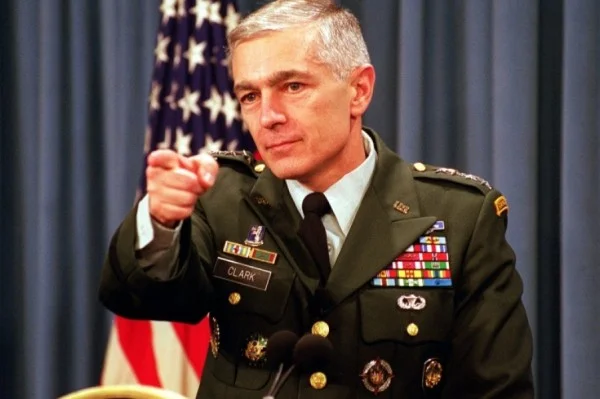
22 years ago, NATO launched an air campaign against the former Yugoslav Army and Police. For 78 Days NATO attacked the then Yugoslav federation to end the ethnic cleansing Slobodan Milosevic was doing using his entire military arsenal against Kosovo Albanians. The NATO alliance campaign was led by retired American General Wesley Clark. On this anniversary, photos of then Western leaders became viral in Kosovo's social media. And General Clark's photo was also illustrated as a sign of gratitude for his contribution to Kosovo's freedom.
In an exclusive interview for Kosovo, General Clark has said he is proud of the people of Kosovo, who fought for his freedom and insisted on creating democratic governments.
He has also confessed NATO's campaign initiative to intervene in the war Serbia was waging in Kosovo. Clark also said whether an agreement between Kosovo and Serbia is possible, stressing also that Serbia should help their people pass the old nationalism.
During the written interview given to Kosova Prees, Clark was also asked about the obstacles Russia could make to Western efforts to normalise relations between Kosovo and Serbia.
Kosovo: Mr General, today 22 years ago you addressed NATO's air campaign against the Yugoslav Army to stop ethnic cleansing of Kosovo Albanians. In June 1999, Kosovo won its freedom, and your name remains in the memory of the people of Kosovo as a hero of freedom. Please show us your views on Kosovo today. Please tell us how you feel today?
General Clark: I am proud of the people of Kosovo, who fought for their freedom from oppression and insisted on creating a democratic government.
Kosovapress: Today, all of Kosovo's people are using your image in thanks to you, so in memory of the start of NATO's air campaign against the Yugoslav Army, this event is illustrated with your picture, while your name in Kosovo is now synonymous with the hero, many children bear your name, and there are names of roads, etc. Do you feel proud?
General Clark: Yes, I am very pleased with the support of the people of Kosovo. But I also admit that many other people, both Americans and NATO, and especially Kosovars, sacrificed so much.
Kosovaress: If you can share with us the feeling you had at the beginning of the campaign? So, the moment of command for its beginning?
General Clark: I felt this was the right move, an action Slobodan Milosevic and his policies made inevitable. I was confident that we would prevail, but at that moment we could not predict the final outcome of all we asked for was for ethnic cleansing to be stopped and NATO peacekeepers could enter to protect the population. As the campaign continued, it became clear that all Serbian forces would have to leave.
Kosovaress: Did you believe that the Western project for Kosovo would be so successful?
General Clark: Has succeeded beyond expectations. I have always believed that people should be able to live together in peace and that force should only be used as a last option. However, the region is still caught among major geopolitical forces. My hope is for relations to normalise throughout the region.
Kosovaress: In 2008 Kosovo has become an independent state, but since then its international subjectivity remains fragile. From your point of view, what is wrong, the lack of Kosovo diplomatic experience, the change of Western leadership (of your generation), or do you think there are other factors?
General Clark: I believe that the key to political development in Kosovo is equal economic development, education, agriculture, business and trade -- all should be normal with neighbouring countries -- this will require continued international diplomatic support, and then the people of Kosovo should expect their government to develop the proper security network to enable continued progress.
Kosovaress: By the time you played a crucial role in the Kosovo issue, Western leaders were very unified on the Kosovo issue, but there has recently been differences between the United States and the European Union (especially during the administration of President Trump). Differences about the format of negotiations between Kosovo and Serbia lowered US-EU relations to their lowest point since World War II. What do you think was the problem here?
General Clark: With a new American administration, I believe the problems of the past four years can be overcome in large measure.
Kosovaress: As a person experienced in Albanian-Serbian problems, do you think an agreement between the parties is possible?
General Clark: Yes, an agreement is possible, and such an agreement is in the interest of both sides. Government leaders in Serbia must help their people overcome old nationalism and disputes in the past.
Kosovaress: I want to ask you about the possibility of obstacles Russia can make to Western efforts to normalise relations between Kosovo and Serbia. Given its relations with Serbia, do you think it could play a negative role in benefiting its interests in the separatist regions of Georgia and Ukraine?
General Clark: Although I am no longer in public service, it seems that Russia is using Serbia to create difficulties in Southeast Europe. They must recognize that the creation of such difficulties is not in their interest.
Kosovaress: At first I said that you continue to be a hero in the memory of the people of Kosovo, from this position please tell us how you see Kosovo for example in the next five years?
General Clark: I believe the new US administration will try to promote the greatest reconciliation and harmony in the Balkans, all in Kosovo's best interests. Kosovo will continue to set an example as a nation and as democratic people who are westward oriented. And in the ongoing fight of democracy against authoritarianism, Kosovo's example will be very powerful.
Wesley Clark is a retired American general who is already a name in the history of humanitarian war. He led NATO bombings against Yugoslav military and police units, which resulted in the surrender of former dictator Slobodan Milosevic, who was forced to sign a military technical agreement in Kumanovo to allow NATO peacekeepers to enter Kosovo. General Clark is considered a hero by the people of Kosovo.