8 minutes ago
Trump: Iran won't have nuclear weapons
Periskopi(an hour ago)
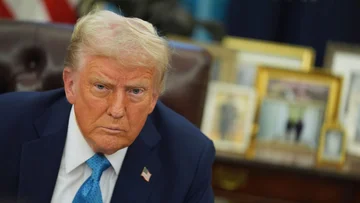
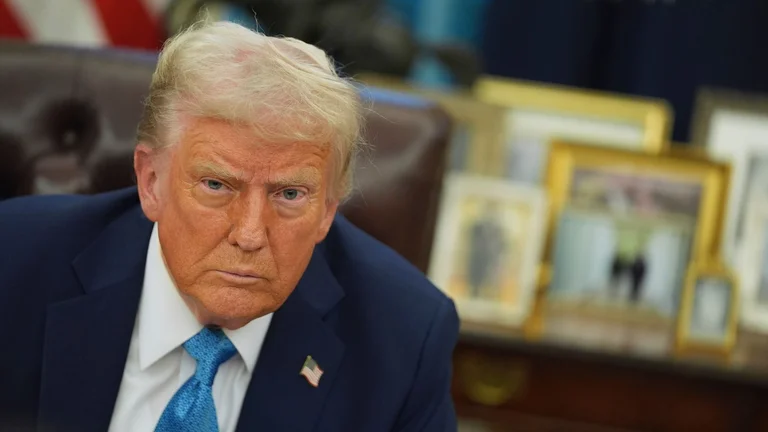
(an hour ago)United States President Donald Trump has said on Tuesday that the framework agreement -- expected to be signed with Iran this week -- highlights “cret and powerful” that Tehran will not develop or possess nuclear weapons.
The only thing that really matters to me is that Iran never has nuclear weapons, and that is clearly stated in the deal”, Trump told reporters during the G7 summit in France.
“Iran will face hell” if the Islamic Republic takes steps to master nuclear weapons, he added.
“We have concluded our agreement with Iran and it must be successful, if it passes into a second phase. But I think this will be even easier”, Trump said.
According to senior US administration officials, the United States and Iran electronically signed the memorandum of understanding on June 15th to end the three-month war and reopen Hormuz Strait.
The agreement is expected to be officially signed at a ceremony in Geneva, Switzerland, on 19 June.
Trump gave no details on the Framework Agreement, which extends the current ceasefire for another 60 days so that the parties can hold talks to permanently end the conflict that began on February 28th with American and Israeli air strikes against Iran.
Iran's Foreign Minister, Abbas Aracchi, said before foreign journalists Tuesday that the most important “case in the memorandum is “the adoption of the immediate and permanent end of the war on all fronts, including Lebanon”.
Trump has expressed disappointment with Israel and its prime minister, Benjamin Netanyah, over the continuation of attacks on targets within Lebanon, which, according to him, target Hezbollah militants.
Hezbollah is a militant group and political party that controls much of southern Lebanon. It is considered a terrorist organisation by the United States, while the European Union has only put its military arm on the blacklist.
Trump told reporters at the G7 meeting that, although he has very good relations with Netanyah, the Israeli leader must be on “responsible” in terms of Lebanon.
Both Tehran and Washington have claimed victory after reaching the agreement, while continuing to have mixed signals regarding its contents.
Iranian state news agency Mehr published what it called the details of the 14-point memorandum of understanding, saying it envisions talks on nuclear issues and the complete removal of sanctions on Tehran.
On the other hand, Washington has stressed that the main element of any comprehensive peace agreement is ensuring that Iran does not own nuclear weapons and that Hormuz Strait remains open to the free flow of ships.
This Strait, a vital route for global oil and gas supplies, was virtually closed by Iran after the launch of the American-American military campaign. The move shocked energy markets and adversely affected the world economy.
Washington insisted that the passage through the strait will remain without tariffs for 60 days under the memorandum, while regional talks will determine long-term arrangements.
However, the irregularities persist in terms of tariffs for crossing this strategic waterway.
The Fars agency, close to Iran's Islamic Revolutionary Guard, reported that “has been decided that maritime traffic across the Persian Gulf will be regulated by Iran in co-ordination with Oman”.
This statement conflicts with Washington's claims.
Analysts have said it would take several weeks for traffic to fully return to the Hormuz Strait, which prior to the war served as a crossing route for about a fifth of global oil and gas supplies.