16 minutes ago
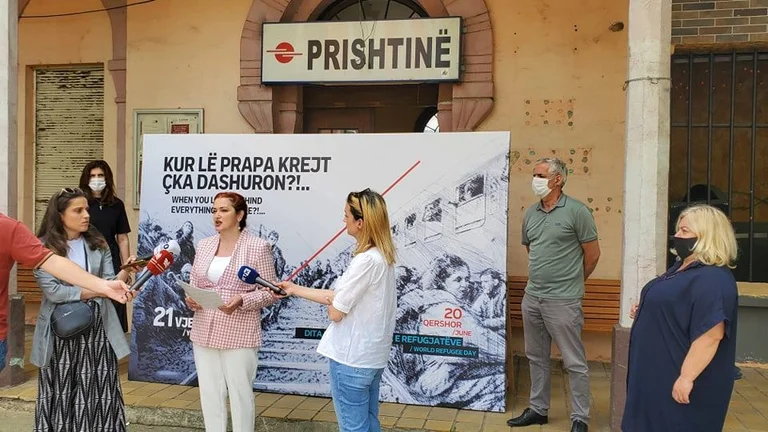
Eliza Hoxha, PDK: The first established pain museum at Pristina train station
Periskopi(6 years ago)
(6 years ago)On International Day of Refugees, Democratic Party of Kosovo MP Eliza Hoxha, through a performance at the Train Station in Pristina, has appealed that the sooner the pain Museum, which remembers the ecstasy of Pristina citizens, the idea initiated by the mayor, has been established. PDK, Kadri Wessel. MP Eliza Hoxha, expressed thanks [...]
MP Eliza Hoxha, expressed thanks to northern Macedonia, Albania and Montenegro, who then opened their borders and homes to Kosovo citizens.
It has also thanked international organisations that helped all refugees maintain minimum dignity and hope, as well as all Western states that opened the doors of planes to accept refugees in their countries.
She also thanked The KLA and NATO that enabled Kosovo's release to return home and demanded that this station, as soon as it becomes the Museum of Pain, be reminded of Kosovo's new history and the importance it has for new generations.
MP Eliza Hoxha's full statement:
Today, on the International Day of Refugees, we remember the world-level refugee problem as a basic crisis affecting developed countries that are accommodated by over 70 million displaced people. This appears to be the largest number of people who have left violence and conflict since World War II. Last year, every day 37,000 people have fled their homes every day.
21 years ago, almost half of Kosovo's population were displaced and became refugees. Over 600,000 outside Kosovo and 400,000 others displaced within Kosovo territory. Personally, I was one of the refugees in Macedonia, from April 1, 1999 to June 13, 1999. We left everything behind that day, not knowing if we would ever come back. It's been one of the hardest days of my life. A violent disappearance, a whisper, a man with no address, no suitcase, no ID.
This place where we are today marks the station, which became a place of embarrassment, violence, and pressure. Here the train had not passed and had not stopped for over 10 years in a row since the new railway station in Fushe Kosovo was opened. And the train started walking again with the only intention of having Kosovo Albanians deported from it. On this road, between salvation and extinction, life and forgetfulness, love and loneliness, belonging and humility, the refugee train carries with it numerous unremitting, unremitting, unsurpassed confessions.
We forgot that fast?
Or didn't we want to talk?
The war ended and we returned to Kosovo and the train has since not moved over the years...
This station with so many memories, I need to talk more to us and to us. This empty passenger station can be filled with their confessions today and allow us a tour of our experiences during the struggle for survival and freedom. This station should be our collective memory and pain station that we experienced to enjoy today's freedom days.
Today, on this beautiful day, I want to say thank you to the Republic of Northern Macedonia, the Republic of Albania and Montenegro, who opened their borders and homes to accommodate us in difficult days.
Today I want to say thank you to international organizations that helped all refugees maintain their minimum dignity and hope.
Today I want to thank all Western states for opening the doors of planes to admit refugees to their countries.
Today, I want to thank the Kosovo Liberation Army and NATO for enabling Kosovo's liberation and we returned to our homes.
This station, today under the protection of cultural heritage, deserves to bring all these pains and challenges to Kosovo refugees to remember, not to forget, to respect them.
The head of the Democratic Party of Kosovo, Mr. Kadri Wessel has since May 2019 proposed that this station be converted to the Museum of Pain at the time from the position of the Speaker of the Assembly. He renewed this once again a month ago as a need to memorialise Kosovo's new history and the importance it has for new generations.
Today, with this activity, this initiative, we will empower it to the reality of this purpose and soon to establish the museum.
It's never too late to remember.
Not to forget!