2 minutes ago
Government programme consists of 217 measures, Institute EPIK calls them a mission (unbeated)
Periskopi(6 years ago)
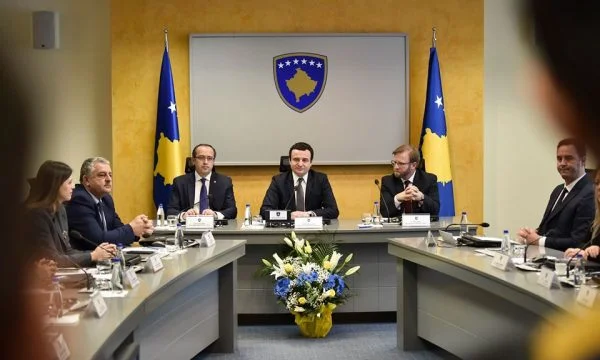
(6 years ago)On March 6th, the government has approved its 2020-23 Programme for the comprehensive “Kosovo, with justice and sustainable development”. The 46-page programme is built on the basis of the Coalition Agreement and is organised in 12 areas of governance. The programme aims to complete the process of statehood and full integration of the Republic of [...]
On March 6th, the government has approved its 2020-23 Programme for the comprehensive “Kosovo, with justice and sustainable development”. The 46-page programme is built on the basis of the Coalition Agreement and is organised in 12 areas of governance. The programme aims to complete the process of statehood and full integration of the Republic of Kosovo under regional, European and international institutions.
The EPIK Institute has identified 217 concrete measures the Government of Kosovo has pledged under its 2020-2023 programme from reciprocity measures in dialogue with Serbia to finding a solution for Green Carton.
This cassis also produces the study entitled “M ISION I (PA) M U n NDUR: 2020-23” Government Program.
This is the complete communique of the EPIC Institute:
We have identified 217 concrete measures which the Government of Kosovo has pledged under its 2020-2023 programme from reciprocity measures in dialogue with Serbia to finding a solution for the Green Carton. It needs to be clarified from the beginning that we've been trying to sort out the measures of the program which are clear, concrete and measurable. In other words, we have not included measures of software which in essence are not mass, but abstract vows. We will consolidate the functioning of public companies, implement the MSA and review the laws/politicals, strengthen the capacity of institutions, etc. Also, we have not included measures of the programme that make up the government's regular tasks, for example. Improve the accountability to citizens, distribution of grants to municipalities, and similar activities.
These are some of the key pledges derived from the 2020-23 Government Programme:
1. A resolution/form for dialogue must be adopted in the Kosovo Assembly;
2. Full review of agreements reached so far;
3. Replacing customs tariffs with full reciprocity measures;
4. Sustainable financing and transparency and full accountability of RTK;
5. National Savings Program;
6. Implementation of child extensions;
7. INTERPOL Membership;
8. Monitoring recruiting processes & advancement ( MB, EU, etc).
9. Design of a new permanent process for appointing board members;
10. Development Fund;
11. The transformation of the Kosovo Privatisation Agency into agencies within the government;
Twelve. The increase, up to 400, of the number of job inspectors;
13. The indictment against Serbia for the International Court of Justice;
14. Vetting: Courts, Prosecution, Police, Kosovo Intelligence Agency, Customs, Police Inspectorate, Financial Intelligence Unit;
15. Special investigative mechanism for combating organised crime and high-level corruption;
16. Fund for Preservation of Confirmed Assets;
17.50% including 3-5-year-old children in pre-school education;
18. Double the 1-3-year-old group turnout in pre-school education;
Nineteen. Returning Kosovo to ENQA;
20. Founding Pristina Hospital;
21. Health Insurance Fund;
22. Eliminating monopolies:
23. Membership in U NESTO;
24. National Stadium;
25. Partnership for Peace with NATO;
26. Forced three-month military service;
27. Functional external service revision;
28. Development bank;
29. Vote in closer diplomatic and consular missions;
Thirty. Finding a solution for the Green Carton.
In order to facilitate monitoring and increase accountability, we have also prepared to share tasks stemming from the Government Programme under each minister's mandate. The ministry, mostly in charge, is the Ministry of Infrastructure and Environment, with a total of 36 measures, together with the Ministry of Economy, with a total of 35 measures.
The programme identifies the functioning of nine different funds and the adoption of 27 laws.
The new government program is somewhere between ideal and impossible. The programme contains appropriate measures, in almost every sector. However, implementation of the Program will depend on some unknowns. How will all 217 pledges be financed? Will the coalition manage to maintain political consensus to push through dialogue with Serbia, reform in justice, public administration and/or health? Will the Government have sufficient technical and certificate capacity to manage such an ambitious programme?
We believe that as in those most complex questions of humanity, the answer even in this case is: only time will tell. In the meantime, however, we believe that our next publication has offered us sufficient means to monitor the Government's work and demand accountability for vows made.