12 minutes ago
The women that are pulling their headscarves are terrorizing Iran's regime.
Periskopi(6 years ago)
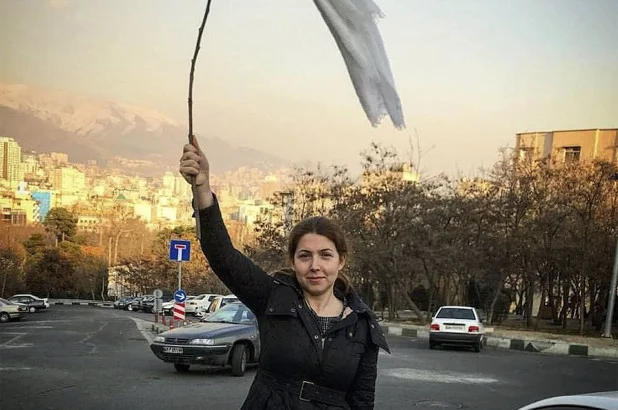
(6 years ago)In the summer of 2017, a movement in social media encouraged Iranian women to remove their headscarves and share their moments of “insidious lyre” on the Internet. The girls were routinely turning down the rules of the good “Hyzab” putting the coat so bad that the hairs of the hair were visible. Women had [...]
The girls were routinely rejecting the rules of the good <x0higab” putting the coat so bad that the hairs of the hair were visible. Women had posted photos of them by climbing mountains or by driving with their loosely displayed hair.
“The coverage was an ideological pillar of revolution” that dropped Iran's chess in 1979, writes Kim Ghatta in the Black “Vala”, a history of that year's regional crisis in Iran and Saudi Arabia, translates Periscope from the NyPost.
Iranians have lived double lives since the establishment of the Ayatolah theocracy Rholah Khomenin in 1979.
In public, nearly all 82 million citizens of this country have obeyed the strict rules of the regime that prohibited music, alcohol, and men and women living together. Likewise, women have kept their hair covered all the time but only in public.
But Iranians constantly break these rules in their private spaces.
There's a private party where women and men dance together, where everyone drinks, and where music roars.” It says "Ghattas."
The division between private and public has allowed Iranians to cultivate their rebellion.
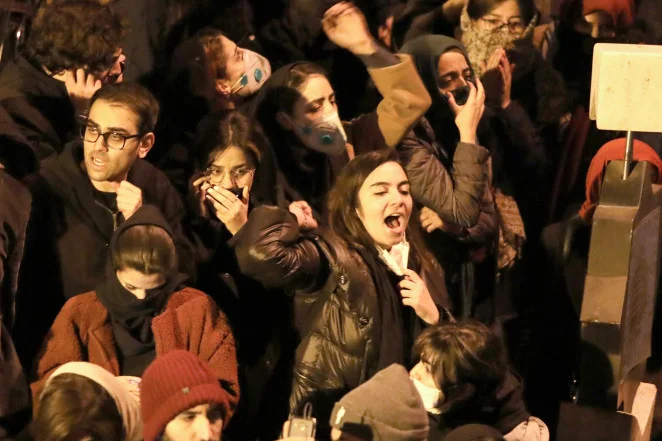
Ghatta's writings on Iranian divided personalities have also shed light on the powerful and strange protests that erupted in 2019, and even now in 2020 following the murder of General Qasem Solejmani, who caused the Islamic regime to crash a plane with 172 travelers.
On March 6, 1979, Khomenin had established the rule called “the calluquers, in which women who did not hide their hair under cover would be forbidden to work and receive services from all government institutions.
Iranian women had protested but later, Iran's state media had launched a campaign of shame among these women.
Now, forty years after the revolution, a new generation of Iranians is beginning to protest strongly against the government.
Every day we see new videos of women challenging the country's moral police,” writes Ghatas showing how government orders were being rejected for the cover.
The cover procedures were the most difficult for the regime to refrain from because they're happening in an isolated way,” he added further.
However, it does not show its prediction whether the Iranian regime will fall. /Periscope