13 minutes ago
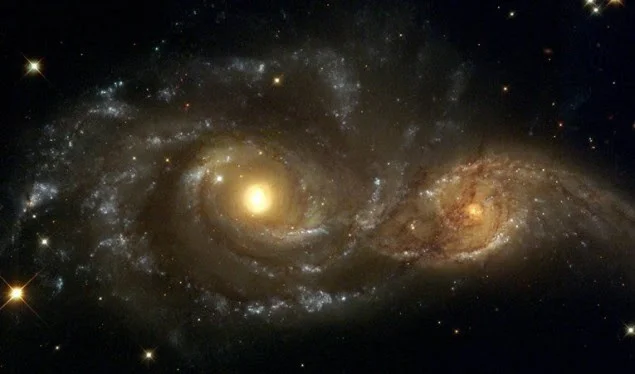
Our clash with the other galaxy has begun, new stars are already being formed
Periskopi(6 years ago)
(6 years ago)When we hear of our Milky Way galaxy crash with someone else, we immediately think of the Andromeda a large spiral galaxy that should crash into ours after about four billion years. But this is not the only galaxy that bumps into the Milky Way. Magellanic clouds, or two dwarf galaxies of [...]
But this is not the only galaxy that bumps into the Milky Way. The magnical clouds, or two disorderly dwarf galaxies that are rotating ours, are already beginning to approach us, and it seems in a sense that there was a clash between our galaxy and the Great Clouds and the Magellan Small. Because of the consequences of this clash, new stars are already rising.
The first signs of impact
Astronomers have observed a long traces of gas extending from the Magellan clouds since the 1960s, which we call the Creek Magellan. That trace of gas extends through the galaxy of the South Milky Way, writes EarthSky.
Magellan's clouds are supposed to clash with our galaxy for billions of years in the true sense of the word, but according to the latest data presented by astronomers at the American Astronomical Association (AAS) rally in Honolulu on January 8th, it appears that the first signs of the crash have emerged.
In particular, new stars are usually created when they unite galaxies, and astronomers have recently observed a new cluster of stars on the outskirts of our galaxy, near Magellan's mess. The area is home to the oldest stars in our galaxy, and experts have discovered that the stars of this group are made up of material from Magellan's cloud.
Scientists have recently realized that the large magnical cloud (LMC) is a threat to our galaxy.
According to a study published in the scientific magazine "Monthly Notics of the Royal Astronomical Society" in January 2019, the Great Magellan Cloud is sure to clash with our galaxy long before we think.
This discovery came after scientists developed computer simulations of the LMC movement.
Scientists estimate that LMC is currently about 163,000 light years away and is moving at a speed of 400 km per second. But simulations by astrophysicians at Durham University show that the Great Magellan Cloud will slow down at some point, turn towards us and crash into our galaxy. The crash should occur some 2.5 billion years later.
If mankind survives so long, the real spectacle awaits it.
It is possible that a crash activates a black hole in the center of our galaxy and begins to swallow everything around it, zooming out ten times, Kosovo Press broadcasts.
Scientists suspect that as the Milky Way and LMC join, stars or planets will clash with each other, but a future galaxy with more than 250 billion stars will still make a mess within our Milky Way, according to Astrophysicist Carlos Frank from Durham University.
Everything will be ruined within our galaxy, and the solar system can be thrown into outer space. If that happens, I doubt if our descendants, if there are, will be able to survive, “he explained.