24 minutes ago
US warns changes in their contribution to NATO mission in Kosovo
Periskopi(an hour ago)
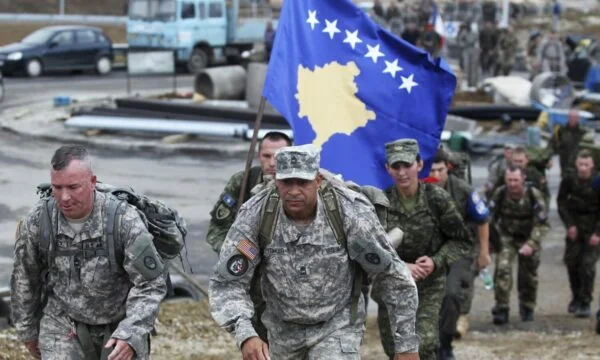
(an hour ago)The United States is expected to make changes to their contribution to the NATO mission in Kosovo, KFOR, within the framework of a broader process of revising the Alliance's military presence in the country.
A United States European Command official (EUCOM) told Radio Free Europe that the decision is based on the annual revision by the Supreme Allied Command in Europe (SHAPE), which recommended adapting troops to the ground.
“Based on the latest annual revision of the Allied Supreme Command in Europe, NATO will optimise the deployment of the Kosovo Force (KFOR). As a result, the US European Command will make an adjustment in phases and based on the risk assessment of the American contribution to KFOR, in line with this USAPE-led review”, the EUCOM official for Radio Free Europe said.
He added that the US continues to consider KFOR a key component of regional stability in the Western Balkans, without providing details about the nature or size of possible changes.
NATO: Least gradual presence in KFOR
Last week, NATO announced it would gradually reduce its presence in Kosovo over the next year, due to, as it said, improving the security situation.
Free Europe Radio called for clarification from the Alliance's headquarters in Brussels for concrete indicators supporting this assessment, especially in northern Kosovo, where the situation remains fragile.
In response, an official of NATO said the Alliance does not comment on operational or intelligence issues, but stressed that the situation on the ground is constantly monitored and closely through various means to ensure that the mission remains suitable for its purpose.
Currently, KFOR consists of over 4,600 troops from 31 countries.
Free Europe Radio also contacted defence ministries in Italy and Hungary two of the main contributors to KFOR, along with the US, to learn if they plan to review their forces but received no response.
Neither did the Kosovo Defence Ministry respond to the demand for comment.
In an event last week, incumbent Kosovo Prime Minister Albin Kurti said that Kosovo has strong armies and capable police, and that, soon, there will be gendarmerie, aimed at ensuring peace, stability and progress towards NATO and EU integration.
KFOR remains the third security reacter in Kosovo, after the Kosovo Police as the first reacter and the EU mission for rule of law, E ULEX, as the second reacter.
The mission is responsible for security along the border with Serbia, while Kosovo Police are responsible in other parts of the border line.
The debate over American presence in Kosovo and beyond
In Kosovo, the United States currently has about 590 deployed soldiers under KFOR a significant decrease compared to over 5,000 troops deployed in 1999, when the mission was created after the end of the war.
Since then, the US has also camp Bondsteel near Ferizaj, considered the largest American military base in the Balkans.
The debate over the possible revision of the American presence in Kosovo began early last year, when US Defence Secretary Pete Hegseth warned that Europe should be prepared for a review and eventual reduction of the American military presence.
During a visit to Warsaw at the time, Hegseth said the future of the American presence would depend on global threats and strategic US priorities.
However, a US Department of Defence official told Radio Free Europe then that there are no changes in the actual position of American forces.
Also, in February of this year, the American newspaper Politico, citing four NATO diplomats, reported that the US is asking the Alliance to reduce its external activity, including the Kosovo peacekeeping mission KFOR.
Even then, a Pentagon official confirmed to Radio Free Europe that there are no changes in the delocation of American forces.
According to the US European Command, the total number of American forces in Europe has fluctuated between 75,000 and 105,000 since 2022.
Of them, about 63,000 are permanently deployed, while the rest serve in rotation.
The largest number of U.S. troops over 35,000 lay in Germany, where Ramstein, with over 16,000 military, civilian, and contractors, is located.
In early May, the US announced the withdrawal of 5,000 troops from Germany within the next 6-12 months.
Pentagon spokesman Sean Parnell said the decision reflects operational needs and the situation on the ground.
US “Reducing to KFOR would be destabilising”
An American State Department report released late last month described the US presence in KFOR as the key component for ensuring a safe environment in Kosovo.
Analyst Mark Montgomery, from the Foundation for the Protection of Democracy, tells Radio Free Europe that any reduction of the American presence in KFOR would be “very destabilising”, as it would remove the US from “the most likely tension” border Kosovo-Serbia and send signal that Washington is withdrawing from its security role.
He adds that the US is essential to KFOR's success and that discussions on changes in politics to Kosovo are “disturbing”, as it can weaken prevention and encourage Serbia to test the determination of the US and Europe.
Montgomery emphasises that preserving current levels of American troops in KFOR is a low-cost but highly strategically important move, while any reduction would, according to him, “most difficult times for Kosovo and the region.
Without any logical replacement for the United States in this case, conditions will most likely be further destabilised if the US takes a step back”, Montgomery says.
He adds that Kosovo should strengthen its partnership with the United States by deepening economic co-operation, advancing energy independence and constantly lobbiing for a stable and powerful American role in KFOR. At the same time, he stresses that the country must resolve the internal political blockade and prove institutional stability and democratic governance.