7 minutes ago
Hormuz-What do we know so far about the pact between US and Iran
Periskopi(5 hours ago)
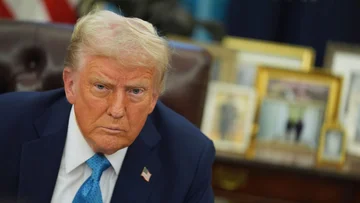
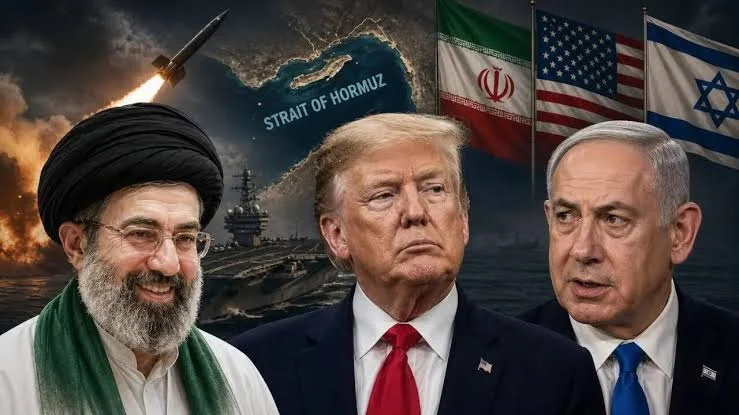
(5 hours ago)The deal reached between the United States and Iran for reopening the Hormuz Strait is being presented by Donald Trump on his birthday day as the end of the war that lasted more than three months and as an American strategic victory in the Middle East. However, the details that have been released so far show that more is involved in an expanded ceasefire and the launch of a new negotiation process than in a final solution to the conflict.
According to the made public elements, Iran will reopen the Strait of Hormuz, the maritime route from which much of the world's trade oil passes, while the US will remove the maritime blockade it has imposed on Iranian ports. The existing ceasefire will be extended for 60 days, during which the parties will negotiate the Iranian nuclear programme and the future of US sanctions.
But that is where uncertainty begins. Trump claims the agreement will make Hormuz Strait “forever without tariffs”, while preliminary documents speak only of a 60-day suspension of any restrictions and of launching a regional dialogue. In practice, Iran had not set the pre-war Hormuz transition fee, which means that part of what is being presented as historic victory is in fact a return to the first status quo.
Let the oil flow! ” wrote Trump on social networks when announcing the agreement, labeling it a “big agreement” that will bring “peace and security across the region”. However, as analysts have noted, the current document does not yet contain guarantees that would make lasting peace.
In an interview for the New York Times, Trump argued that his decision to attack Iran in late February and the naval blockade that followed after Tehran closed Hormuz “has reformed the Middle East in favour of the United States”. He also thanked Chinese President Xi Jinping and Russian President Vladimir Putin for failing to intervene against the American blockade, hinting that Moscow and Beijing also indirectly contributed to reaching the agreement.
Indiscretions for Still Unfinished Pact
The most controversial point remains the Iranian nuclear programme. Trump claims the deal will ensure Iran never has nuclear weapons and that Tehran will be allowed to enrich uranium for civilian purposes only. US Vice President JD Vance went even further when he said that the fact that Iran would not own nuclear weapons is “built within this agreement” and that the US would be able to verify its implementation.
But the American president himself acknowledged that negotiations on enriching uranium have not yet ended. According to him, a 15-year suspension of enrichment is being discussed, while Iran continues to insist it will not give up its right to enrichment under the Nuclear Arms Nonproliferation Treaty.
Another open issue relates to existing reserves of rich uranium. Trump said the US aims to co-operate with Iran to thin and remove about 12 tonnes of enriched uranium currently located on Iranian territory. However, there are no concrete deadlines and no detailed procedure on how this process will be implemented has been made public.
In fact, many of the main issues remain unanswered. The maximum uranium enrichment limit is unknown, what will happen to existing reserves and how the inspection mechanism will work. Trump himself has acknowledged that these topics will be discussed in negotiations expected to take place in Switzerland.
The issue of frozen Iranian funds remains equally unclear. Tehran claims that further negotiations depend on the release of billions of dollars blocked abroad. Trump insists there will be no sanctions relief and no fund will be released until Iran meets its obligations. He has added that if the Iranian regime suppresses domestic protests, it could affect the removal of sanctions, but such a condition does not figure in the preliminary texts that have been circulated so far.
Just hours after the announcement of the agreement, Iran's Supreme National Security Council gave a first sign of no confidence. His statement said that the final <x0-negotiation would be postponed until after the implementation of the other side's commitments under the” memorandum. This shows Tehran does not consider the process closed and that continuing negotiations will depend on how the US will implement its commitments.
The American president has also warned that if negotiations fail, the US could resume military attacks against Iran. It has gone further, suggesting that America could turn into a type of <x0-gargant for the Middle East in exchange for some of the income of countries in the region -- a concept that would constitute a radical change from traditional American politics after World War II.
Anger in Israel
These very elements also explain anger in Israel. Benjamin Netanyah's government had declared that the objective of war was to eliminate the Iranian nuclear threat, destroy the ballistic missile programme and weaken the regional network of Tehran allies, including Hezbollah in Lebanon, Houth in Yemen and Hamas in Gaza.
However, according to information available so far, neither ballistic missiles nor Iranian support for Allied groups are a clear part of the agreement. Moreover, Israel worries that a future easing of sanctions would give the Iranian regime new financial resources.
Criticals have come from all over the Israeli political spectrum. Former Defence Minister Avigdor Lieberman called the accord <x0-catastrophic”, while opposition leader Yair Lapid said that if the reported details are correct, it is one of Israel's biggest foreign policy and security failures.
Trump himself didn't hide the clashes with Benjamin Netanyah. In an interview for the New York Times, he described the Israeli prime minister as “a very difficult man” and said Israel should be grateful to the US, because according to him “if Iran had nuclear weapons, Israel would not exist for two hours neither”.
Even according to the BBC, another risk of sustainability of the agreement is Israel.
Similarly, Trump told Wall Street Journal that he was angry with Netanyah about Israeli attacks in Lebanon over the weekend, as he thought they could risk finalising the deal with Iran. If Israel expands operations against Hezbollah, there is fear that Tehran could react by again threatening Hormuz's closure, restoring the global energy crisis.
Returning to normal will not be easy
Energy experts, meanwhile, warn that return to normality will not be immediate. The clearing of marine mines, normalising tanker traffic, and the full recovery of production can require weeks, which means the economic effects of the deal can delay.
Beyond geopolitical, the deal also has an important dimension of American domestic politics. War and the energy crisis have increased fuel prices and pressure on the American economy. JD Vance admitted this when he declared that my top <x0m message to the American people is thank you”, promising that energy prices will start falling.
According to recent surveys, 63 percent of Americans do not approve of the management of the economy by Trump, and 57 percent believe the economy is deteriorating. For this reason, lowering energy prices and stabilising markets can be as important to Trump as diplomatic agreement itself.
In essence, the Hormuz Agreement does not resolve any of the issues that caused the war. It temporarily prevents military confrontation, reopening global energy routes and creates a framework of negotiations. But the Iranian nuclear programme, uranium reserves, ballistic missiles, frozen funds, sanctions and Iran's regional role remain open.
At the moment, only one thing has been secured: weapons are down and Hormuz is reopening. Everything else remains the subject of negotiations that have just begun. For this reason, what financial markets are celebrating as the end of the crisis could only result in the first chapter of a much longer diplomatic battle between Washington, Tehran and Tel Aviv. /Periscope/