a few seconds ago
Andrews message to Kosovo: Strengthen your country, U.S. aid is not permanent.
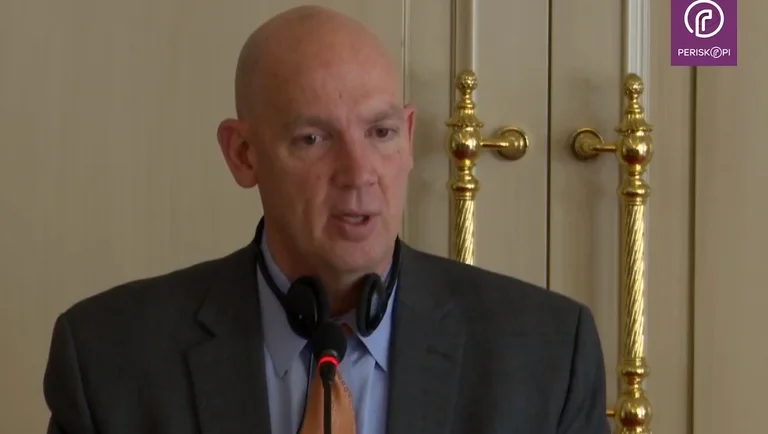
Periskopi(6 years ago)
(6 years ago)The vetting process has different risks and challenges. Kosovo must naturally develop the mechanism to sanction lawyers, prosecutors, who did not behave according to standards ethics. So said Deputy Assistant Secretary of State Jorgan K. Andrews, who declared that Kosovo will not have permanent assistance from the States [...]
Andrews has ordered that it depends on political will, but also on the citizens of Kosovo, how much the rule of law will be in the country.
He made these comments during a session of discussion organised by the Kosovo Institute for Justice (IKD) in co-operation with the American Embassy in Pristina, where he talked about the role of civil society in the justice system.
Andrews, who first comes to Kosovo, said the country's citizens should have confidence in local institutions, but the important thing is to build that trust.
“Building Kosovo, developing, establishing more reliable institutions, the nature of our co-operation changes. Our assistance changes with time, so even when Kosovo builds up its capacities, we try to build capacities on more sophisticated issues. Assistance isn't always permanent, it doesn't have that try and purpose. Even as institutions grow, Kosovo becomes better able to defend its sovereignty, independence and the need for this assistance goes away, and then Kosovo takes its own post, both capable of an international partner and exporter of justice and rule of law”, he said.
In addition, he said it depends on political will, on how much the law will be ruled in the country. And impunity said it was the measure of lack of rule.
Abdemnegation affects rule of law, impunity is the measure of lack of rule of law. One of the most challenging aspects is how to keep the most powerful accountants in society, the justice system must protect the weaker and provide protection for the weaker and the most powerful is the equation. No one is perfect, no one is perfect, and the key issue is that each state's justice reaches a level that is acceptable to society and that culture in society, even though justice is not perfect, we can reach a level where citizens feel it”, he added.
During the discussion, he has stressed that there are big challenges and risks in the vetting process.
Kosovo must automatically develop the mechanism to sanction judges, prosecutors, who did not behave according to the ethics of standards in the context of Kosovo. And the regulatory system has to happen throughout career. It's not enough to put someone in self-using and done. People who are not corrupt can be blacked out by the corrupt system and they have to misuse their position, so it has to be more comprehensive. There are various challenges, there are different risks as to the vetoing process, and if you have the justice system and you do the vetting, each judge in that process, half of them can't get the standard out, then you've got the prosecutors halved and you don't have enough to do convenient work. Takes time to build this”, he orders.
According to him, other things have to be done in order to build the citizens' trust in institutions and justice bodies.