5 minutes ago
What can Kosovo lose if it joins American gas projects?
Periskopi(6 hours ago)
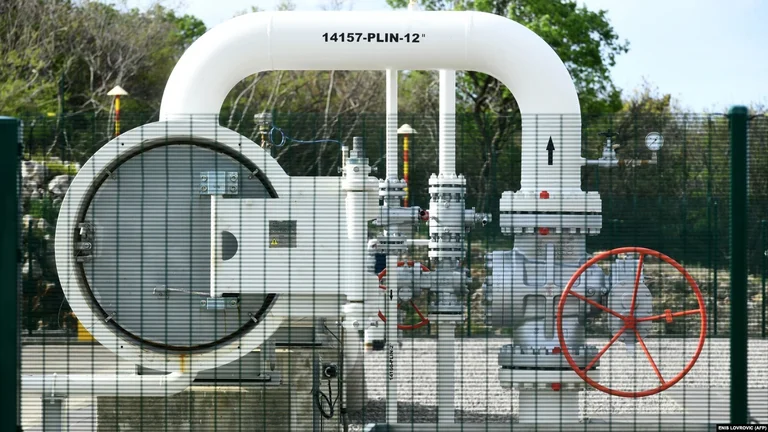
(6 hours ago)Kosovo's continued inauguration to join newly postponed American gas projects from the United States has raised concerns in the country about possible economic, energy and political consequences.
As Prime Minister Albin Kurti's incumbent government continues to be reserved for this issue, experts warn that non-annagement could leave Kosovo out of strategic investments, limit alternatives to energy supply, and impact relations with its main ally, the US.
From the American Embassy in Pristina to the country's economic odata and opposition, calls have been continuous for Kosovo's involvement in liquid natural gas projects (LNG) American.
Does Kosovo have the luxury to reject such projects?
No, not at all, says Adrian Stein, an expert on foreign policy and security operating in Washington.
He points out to Radio Free Europe (REL) that Kosova sė has the luxury of marking “autogo” on the plains of economy, security and strategy.
The refusal not only would turn Kosovo into an isolated energy island in the Balkans... but, it would do so at the worst possible time, just when the global energy market is experiencing structural supply crisis and price surges due to geopolitical conflicts”, Steun underscores.
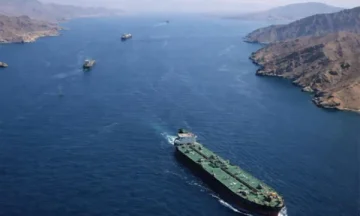
Countries such as Albania, Bosnia and Herzegovina and Croatia are already engaged in such American gas projects.
The incumbent Kosovo government did not answer REL questions whether it is considering calls to join the projects, or what decision it will make.
The vast majority of Kosovo's produced electricity has a source of coal, while its lack is covered mainly by import.
Experts estimate that refusing American gas projects would only deepen dependence on an extraordinary system for electricity production, as well as on imports at higher prices.
Burim Ejupi, director of the Institute for Development Policy IDEP in Pristina, explains that Kosovo would be able to connect to the American gas project from Greece through neighbouring northern Macedonia.
But if it doesn't become part of the project, it would lose a huge opportunity in terms of economic development, he thinks.
Ejupi says foreign investors, especially in the field of technology, want to invest in a country with stable electricity.
The presence of American gas, in addition to energy security, would be more of a guarantee of investment”, Ejupi points out for REL.
Meanwhile, Steun insists that Kosovo “does not dare to leave itself out of an important initiative for the region.
“We are not talking about technical infrastructure, but a new energy architecture in the region, where the US presence, integrated with European Union countries, will serve as strategic counterweight to Russia”, he emphasises.
He estimates that the gas project is a strategic initiative, and that therefore possible rejection by Kosovo would be <x0 times the short and costly “.
What would Kosovo risk in its ties to the US?
Kosovo's relations with its biggest ally reached the lowest point in recent years, and some of Kurt's actions even led to the suspension of the start of a key strategic dialogue.
And they can get worse if the country rules against engagement in American gas projects because, according to Steun, the US sees co-operation in the field of energy as one of the main pillars of partnership with countries in the region.
As an example, he mentions the rejection that Kurt's Government had made in 2021 for the estimated $200m gas infrastructure construction project funded by the US Millennium Challenge Corporation.
The question is, after five years, where is the green revolution? Kosovo is where it was. The most appropriate approach is the gradual transition, not the dramatic revolution, so gradual removal from coal through natural gas”, the expert points out.
He believes that, if Kosovo again ignores a project of crucial importance for the US partnership in the Balkans, “refusal from Washington would not be read as just a coincidence, without any evil”.
On the other hand, Front Nahzi, author of the book “Ethnic Interest and Foreign Policy Network, says of REL that rejection could limit Kosovo's prospects for economic co-operation with the US in the future.
“S, at least, can strengthen the perception that Kosovo is reluctant to participate in broader regional initiatives supported by its most important strategic ally”, Nahzi points out.
By doing so, Kosovo would even lose the chance to show itself as an active partner contributing to regional development, energy security and restriction on Russian and Chinese influence in Southeast Europe, Nahzi concludes.
Saturday, meanwhile, warns that the consequences of refusing the US gas project would affect beyond US-Kosovo relations.
He sees the possible rejection as an obstacle to Kosovo's path towards integration.
Kosovo's “Key to regional energy corridors in itself has strategic significance, as it brings de facto integration with countries in the region, NATO, the EU and the West. Even with those who do not know, such as Greece”, Steun explains.
Therefore, he asks, is not Kosovo's ambition and strategic goal integration? / REL