a day ago
Things in Syria Are Finally Changing

Periskopi(8 years ago)
(8 years ago)Syria seems increasingly moving towards de facto division accompanied by continuing conflict of low-level military and a functional but slow political ʹ a so-called frozen conflict. This may have been the early goal of Russian President Vladimir Putin, who has begun [...]
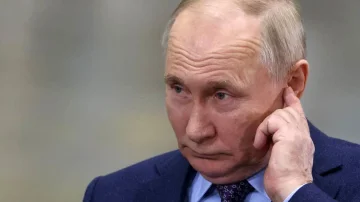
Syria seems increasingly moving towards de facto division accompanied by continuing conflict of low-level military and a functional but slow political ʹ a so-called frozen conflict. This may have been the early goal for Russian President Vladimir Putin, who has begun and managed such conflicts elsewhere, including Georgia and Ukraine.
Other key players in Syria, including Israel, the United States, Turkey and remaining Sunni rebels, may also find they would be satisfied with this new reality. The clearest losers, on the contrary, would be the Assad regime and Iran.
What are the signs that Syria is moving in the direction of frozen conflict? Consider Syrian President Bashar al-Assad's recent visit to Russia to meet Putin. At the press conference after the meeting, Putin told reporters that “following the Syrian Army's apparent successes in the fight against terrorism and with the activating of the political process, Syria-based foreign forces will start withdrawing from the country”. This seemed to stress that the Russian president was not interested in helping restore Assad's regime to Syria's entirety. And with the absence of Russian air support that the Syrian army has relied on major combat operations (including the siege of the Aleppo and the destruction of the rebel-controlled East Ghouta), such a return would be impossible.
Some have speculated that Putin was only referring to the withdrawal of foreign forces, contrary to the regime. In the past, Moscow has sought to differentiate between its presence in Syria (at the invitation of authorities “legislation”) and the unwilling presence of other foreign elements. In this case, however, Syria's Russian envoy, Alexander Lavrentiev, explained that the president was referring to “all foreign military forces deployed in Syria, including Americans, Turks, Hezbollah and Iranian forces”.
The Russian statement was followed by an angry response from Tehran. Iranian Foreign Ministry spokesman Bahram Qasemi told reporters in Tehran that “no one can force Iran to do anything. ... while terrorism exists and the Syrian government wants, Iran will have presence [in Syria]”. Conflicting statements with each other are only an indication among the many differences between Moscow and some of its allies about Syria's future. We also have Moscow's silent admission to recent Israeli air action regarding Iranian targets in Syria and the granting of clear permission to Turks to create a large enclave in northwestern Syria. Meanwhile, Assad has rejected a Russian plan for drafting a new Syrian constitution that would limit his powers.
Moscow's model of conduct in other countries suggests she is satisfied with maintaining unresolved conflicts, at relatively low costs. In Ukraine, for example, the Donbass conflict remains far from resolved. But keeping part of the Donnetsk and Luhansk provinces, Russia ensures that this could impede Ukraine's internal affairs on its own, and that plans and strategies for it are the most urgent issue facing every Ukrainian government.
In Syria, of course, Russia is supporting the government, instead of its own uprising, as in Ukraine. But Moscow is now making clear that its interests do not fully match Assad.
This was not immediately evident when Russian aircraft first appeared above Syria's sky on September 30, 2015. They were received with triumphant titles in the pro-Iran and pro-Hezbollah regional media. An article in the Lebanese newspaper Al-Akhbar at the time by its editor, Ibrahim al-Amin, warned of the birth of the coalition “4 + 1”, which would include Iran, Iraq, Syria of Assad, Hezbollah and Russia. Today reality suggests a more complex picture.
Russia seems to have done just what it wanted to do in Syria. Its intervention kept Assad's regime from possible defeat in 2015. The fate of the regime has since returned. He now controls about 60 percent of Syrian territory. The latest inspections of the Islamic State in the vicinity of Damascus were cleared this week. No danger of rebellious victory remains.
Russia has proved the efficiency of its brutal air weapons tactics and systems, as well as its rebuilt army's relative ability and dedication. It has maintained the integrity of its naval bases in Tartus and Latakya, and the Cometim Air Base. She has made it clear that Moscow supports her allies. And he killed many jihadists in the North Caucasus who were involved in the rebellion.
But Putin seems to have little interest in the work al-Amin, pro-Hezbollah editor, wanted to offer: the leader of the region's rainy bloc. On the contrary, Moscow wants to make itself the principal broker of the Syrian context deal, where everyone must address it for pursuing their goals. But for that, of course, Russia should be able to give each side a portion of what it wants, rather than significantly pointing only to one side.
Russia, therefore, wants to preserve and increase the division between Turkey and other NATO member states. For this reason, Moscow seems to have acknowledged the establishment of a de facto Turkish-Sunit Islamic enclave in northwestern Syria, stretching from the town of Jarabul to the east and taking up most of the province's Idlib. Turkey is currently in the final stages of building 12 monitoring posts, surrounding Idlib. Turkish Deputy Prime Minister Recep Akdag last week ruled out any return of the recently occupied Africa zone to the Assad regime.
Turks could not have carried out operations to create this enclave without the silent approval of the Russians, who control the sky over northwest Syria. Of course, the regime considers Turkish actions to be violations of its sovereignty. But without Russian muscles to call, very little can do.
Farther south, Israel's large-scale air action against Iranian objects has been largely ignored by Moscow. Russian air defence has made no attempt to intervene. Putin made it clear after a recent visit by Israeli Prime Minister Benjamin Netanyahu to Moscow that Russia has no actual intention to secure the Assad regime's S-300 air defence system.
Iran has urged the regime to try to attack the remaining rebel enclaves in southwest Syria. The arrival of Iranian-backed units to the border, however, brings with it the possibility of a wide Israeli reaction. Russia has no interest in such a result, which could plunge Syria into a new war and threaten the profits the Assad regime has already made.
In the east, Russia is not quick to challenge the siege of the United States and its allies to 30 percent of Syria that they control east of the Euphrates River.
US Secretary of State Mike Pompeo, who attacked Iran in his speech this week, shows that the US Army is unlikely to abandon its positions in eastern Syria at any time soon. This area acts as an obstacle to a continuing area of Iranian domination that extends through Iraq and Lebanon and borders with Israel, and that major allies of the United States, including Israel and Saudi Arabia, clearly hope that the United States will keep in check as a means of continued pressure on Tehran. US congressmen met this week with Syrian Democratic Forces commanders in the controversial town of Manbij, west of the Euphrates, and pledged continued US support for the Kurdish-dominated force.
Where does all this take you? Russia, largely achieving its goals in Syria, now wants to balance its support for the Assad regime with other interests -- namely, the continued minimm of the West in other countries of the world and maintain labour relations with other regional powers, including Turkey and Israel. Meanwhile, the United States and Israel have focused mainly on the challenge of Iranian regional progress. The result will be a divided Syria that serves as the arena for the game of non-Syrian agendas a geopolitical situation Russia has enough experience to sail. / Foreign Policy Read.al