a day ago
What is the United States looking for in Syria?

Periskopi(8 years ago)
(8 years ago)After seven years of slaughter on changing battlefields, the conflict in Syria has become so complicated that a single solution seems impossible soon to reach. And the US failure to determine long-term interests for Syria and the region does not seem to make things easier because the majority of [...]
Since most of the Middle East is currently in a state of turmoil, US Secretary of State Rex Tillerson must be praised for keeping the Syrian conflict in mind ready for his recent visit to the region.
His work has not been simple. American diplomacy has been a lot but invisible in the Middle East and the State Department does not seem to have any ideas, or, most importantly, any funding to lead with. If the United States really wants to solve the deadly crisis in Syria, it should begin to show common interest and keep its word.
The complexity of the situation in Syria has far exceeded the world's capacity to solve it. The rapidly changing events, a number of sides, and the constant change of battlefronts make the situation complicated.
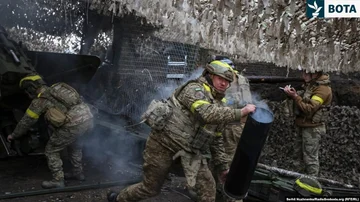
Six months ago, there were two clear trends in conflict: Syrian President Bashar al-Assad with the help of Russia, Iran and Hezbollah was towards victory; and the Islamic state would be permanently defeated by a US-led coalition. Today, a successful campaign against I SIS looks like a Pirros victory. Hundreds of thousands of lives have been lost and a solution to the conflict is not envisioned in the near future.
The world looks even closer to the cliff. In recent weeks, Israel has crashed with Iranian forces in southern Syria to show it will not allow Iran to establish a presence there. And Turkey has launched a strong campaign against Syria Kurds across the border. Assad has understood reality and has hinted he will issue territory to Syrian Kurds. But Turkey has no desire to tolerate an autonomous Kurdish entity on its border.
The United States, on the other hand, has spent the past six years leading various Arab Sunni fighters under the favourable circumstances of the so-called Syrian Democratic Forces, a branch of what was formerly called the Syrian Free Army. Some elements of it have been more active than others and have fought against Kurds I SIS. But now they find themselves in the target not only of Assad, but also of Russia and other Shiite militia backed by Iran.
The U.S. was right to focus on wrestling I SIS; but now faces a broader mission: to ensure the survival of its allies on the ground. This raises the prospect of a direct conflict with other powers, not just Russia. In fact, the US may already have killed dozens of Russian Army contractors in a recent air strike.
The US and its European partners have been reluctant to criticise their NATO ally Turkey and have hardly urged Turkish President Recep Tayip Erdogan to show restraint. But the tribulation, one of the US's favourite diplomatic means, hardly works with those at the heart of the battle.
Furthermore, Turkey seems not interested in what its allies think. For example, he recently raised his eyebrows to NATO by buying new Russian weapons such as S-400 were. This is not good with the peace process for the future. After all, Western countries will need Turkey to balance the Russians, whose strategic agenda goes beyond the Middle East.
When historians look back at the Syrian conflict, they will assess both presidents like Obama and Trump for the ongoing fight of I SIS. But it will be the US's fault that it has not understood the broader war.
Clearly, the Obama administration did not know what the deal was doing when, without thinking about what would come, asked for Assad's departure in 2011. In July of that year, Robert S. Ford, the American ambassador to Syria, was sent to Sunni Hama, where Assad's father ordered a massacre 30 years ago. According to the State Department at the time, the idea of the visit was [to express] strong support for the right of the Syrian people to assemble peacefully and express themselves”. Didn't the administration predict that Assad é like his father would react to a popular uprising with violence?
When the US made a decision to reject Assad seven years ago, it was praising its national interests in Syria, while ignoring the interests of other key actors like Turkey, Russia, Iran and Israel. And now, with the U.S. tottering, there's a real danger to a well-advised and well-equipped American war.
So far, the Trump administration has not been moved to operate from the humanitarian disaster of Syrian civilians. But perhaps it would do more if he considered the threat of conflict for the entire region.
If the administration wants to show leadership, it should start by consulting other regional powers to understand their interests and decide how peace can be achieved. Tillerson might be trying to do this. But without asking regional actors what they want, the Trump administration should ask itself that question first. With the effects on rapidly growing Syria, it remains unclear what America's position is.
/Project Syndicate