a day ago
Cynicism in Syria

Periskopi(8 years ago)
(8 years ago)The Turkish Army's offensive against Kurdish-controlled territories in northern Syria exposes the true complexity of the Syrian crisis. Turkey and the US, both founding members of NATO, already face a real risk of escalation that could bring a direct armed confrontation -- one Russia [...]
The Turkish Army's offensive against Kurdish-controlled territories in northern Syria exposes the true complexity of the Syrian crisis. Turkey and the US, both founding members of NATO, already face a real risk of escalation that could bring a direct armed confrontation that Russia would enjoy
In his book The Great Strategy of the Byzantine EmpirePolitical scientist Edward Luttwak attributes Byzantium's life span to the quality of its diplomacy. Relying on obedience, alliances, and content more than force, Luttwak argues, the Eastern Roman Empire managed to live for eight centuries, twice as much as the Roman Empire from which it was born. As countries like Turkey and the United States try to sail the very complex situation -- either the “bizantine” of Syria -- they do well to recall Byzantium's diplomatic solidarity.
The Turkish Army's offensive against northern Syria territories held by the Kurds in the fight against Islamic State highlights the true complexity of the Syrian crisis. Turkey and the US are both founding members of NATO, but now face real risks for an escalation that could bring direct confrontation between their respective armed forces a confrontation Russia would enjoy.
Turkey is falling in Middle East simplified calculations: territory is equal to power. For Turkey, so proud of its imperial history, yet anxious for the loss of former glory the Turkish conclusion is that the Kurdish population should not, under any circumstances, secure control over any land.
In recent decades, Turkey's efforts to achieve its neo-Otoman dream of exercising decisive influence on its neighbours have been repeatedly ignored. While many Arab reformers saw from Turkey as a model for modern democracy after the so-called Arab Spring in 2010, things did not work out as planned.
As for Turkey, it has slipped since then towards authoritarianism, partly thanks to the effective use of nationalism by President Recep Tayip Erdogan. Mehmetkik Kutıl-Amare, a Turkish television series describing the glorious Ottoman victory against the British during World War I, has become a TV sensation among viewers in Turkey. And Erdogan's popularity usually increases in times of increased political tensions, to the point that some political commentators in Turkey have suggested the possibility of early elections to further consolidate the regime, as did the failed coup in 2016.
All of this has helped distance Turkey from the European Union. And, furthermore, Erdogan's regime has already abandoned the act of trying to closer ties with the bloc, and has instead doubled its commitment to empowering its position in the Middle East. Turkey's priority is to prevent the creation of an autonomous Syrian Kurdish enclave at its borders a consequence that could inspire the Kurdistan Workers' Party (PKK) in Turkey, which has been behind numerous terrorist attacks on Turkish territory.
To be sad, there is always danger that Turkey's military ventures in Syria fail, whether there is great human losses or if a considered inferior opponent ensures an unexpected victory. The authoritarian regimes are more endangered by failed military adventures than by democratic forces. But, at the moment, Erdogan seems devoted to his strategy, which combines offensive with defence targets.
All this has created a dilemma for the US, which is already being forced to choose between its official ally (Turkey) and its field partners (Kurdish). The U.S. Army is more loyal to the Kurds, who courageously risked and often lost their lives in the fight against Islamic State. Diplomats and politicians, however, are more willing to sacrifice Kurds on behalf of maintaining good relations with Turkey, which remains an important NATO ally, though it is becoming more distant and difficult.
Ideally, the US can find a way to secure Turkey without abandoning Kurds. But while the Kurds are committed to using their blood - earned weight to create an autonomous and consolidated territory in northern Syria and Iraq, such a strategy may be difficult, or perhaps impossible to conceive.
The situation in Syria today is very cynical. Erdogan is taking every step necessary to reinforce his authority. The United States, meanwhile, is prepared to sacrifice its loyal partners, the Kurds, is supposed to be on behalf of the raison détat.
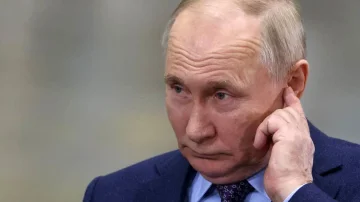
But the biggest Cynic can also be the de facto winner in this strategic game: Vladimir Putin's Russia. Tensions with NATO are already higher than ever before. If Syria becomes a battlefield for two Alliance members, the consequences for the West and the benefits for Russia will be enormous.
The biggest losers, meanwhile, are the civilian populations, who have been the main victims of this bloody chess game. And their suffering is just intensifying. However, as so much blood has been shed, the world has lost its sensitivity more and more.
A friend diplomat of mine recently told me that, in his new position within the field of intelligence, his confidence in humanity is not being reinforced. Addressing the Kurdish issue in Syria has simply reinforced this negative outlook.
Project Syndicate Albanian by Reporter. al