a day ago
Russian Restalment

Periskopi(7 years ago)
(7 years ago)Eighty years ago, Joseph Stalin and the end of the Great Terror, citing as the reason the local “teption “, which had “brought to his attention” His decree of November 17, 1938, ordered the extrajuridical courts, called the troika, to prevent the condemnation of political prisoners. Troikas were at the heart of political terror. They [...]
Eighty years ago, Joseph Stalin and the end of the Great Terror, citing as the reason the local “teption “, which had “brought to his attention” His decree of November 17, 1938, ordered the extrajuridical courts, called the troika, to prevent the condemnation of political prisoners.
Troikas were at the heart of political terror. They provided a facade of the socialist subx0 legality”, to what was a mass murder, and imprisonment without any justification. The Stalin Act in November 1938 banned a killing machine that had executed an estimated 1,400 people a day to that point.
Just two decades later, an anonymous Soviet intelligence officer, said the number of 16-month terror victims of 1937-1938 was 1,334,360. Of these, half was shot, and the rest were sent through the gullag. Political horror continued after November 1938, but at a smaller pace.
World War II filled Stalin's camps with prisoners of war, foreign citizens, inhabitants of occupied territories, and Soviet soldiers returned from the front. The Gulags continued to expand until they peaked at 2.5 million prisoners, shortly before Stalin's death.
The November 17 anniversary passed again without a stir, even though a large percentage of Russian families had grandparents, ancestors, and distant relatives who were, to use the term “sovjetik, “printed”.
Every year, the number of survivors in the gougla fell. About 1 in 5 exiled were women. Because of the greatest life expectancy, they are the last witnesses, but soon they will be more. Since the opening of Soviet archives, guugal researchers have undoubtedly made Stalin as the principal responsible for the Great Terror.
He carefully orchestrated mass killings and imprisonments. He met for hours in his office with the faithful directors of the NKVD. He personally signed the firing “s”, including state and party leaders. Although ever depicted as the cleansing of state and party officials, the overwhelming majority of the oppressed <x2-nars of the people's” were ordinary workers and villagers.
Stalin personally created a system that processed the mass number of victims through the troika fart trials. And he did not hesitate to eliminate even his loyal executions. When “Master” needed the Turkish head, they, to their surprise, found themselves executed with a bullet behind the head in Lefortovo Prison.
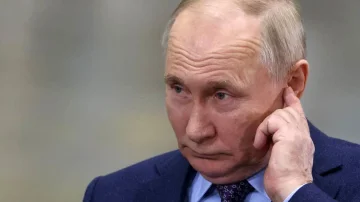
The facts are there. The Kremlin cannot deny the gulagu in the face of numerous, irrefutable documentation as well as public memory. This is a problem for the Kremlin, as the killing of millions of people from Stalin does not fit Vladimir Putin's narrator, on Russia's need throughout its history to have a hard-handed, heroic leader.
In fact, “of the media's “in the Kremlin say Russia now needs a strong leader to face the United States “decadedente”, and its NATO troops.
Putin dreams of Russia's former glorys, the defeat of Napoleon, the victory over Hitler in the Patriotic Great War, rapid modernisation and Orthodox faith. The Kremlin media bombard the Russian people with the propaganda that the war is imminent. As a fortress surrounded in a hostile world, the Russians are told they need an iron leader, such as the master of Judo, Putin.
Stalin's historical figure threatens the Kremlin's turquoise. Stalin ruled Russia with an iron fist for a quarter century. His regime was marked by violence, hunger, deprivation, and mass murder. The Russian Federation is the rightful descendant of the Soviet Union, claims Soviet heritage, and that includes Stalin's legacy.
Putin does not want Russian citizens to fear a strong leader, who, like Stalin, could go to extremes. Putin himself, approaching Stalin's record for a quarter of a century in office, cannot afford the image of an animal, paranoid and cruel Stalin hanging over his head.
He must somehow convince the Russian people that Stalin was historically needed.
And here's how the Kremlin's <x0... Stalin was a complex figure. He once killed and imprisoned many innocent people, but in this process he eliminated a fifth “colon” Stalin was forced to use political terror to protect the world's first socialist state from foreign agents, classmates and supporters of the old regime.
He had no choice but to exercise a terror indiscriminately.
Yes, Stalin's forced industrialization imposed difficulties on hunger, high standards at work, as well as extreme discipline, but its harsh measures strengthened the Russian people, for a war that was certain to come. The Soviet Union could not have defeated Hitler without gouga camps, which drew East sources for the occupied West, and produced tanks and aircraft that won the war.
The political prisoners' death squads, sent to the German mines, saved the lives of faithful Russian soldiers. But Stalin did bad things, but he did them for the good of his nation, the argument continues. And according to him, Stalin should be assessed by a cost-profit equation, weighing his bad deeds against good ones.
For example, the texts of official history promote debate whether Stalin was “Russia's father” or Russia's “enemy”. Students are encouraged to keep their minds open. Adults give other signals, somewhat more delicate. Putin and his inner circle use no direct commendation for Stalin.
Putin has spoken of Stalin as an effective <x0menager”, but has already made a symbolic visit to the execution range in Butovo, on the outskirts of Moscow. The Russian Federation Communist Party is allowed to erect Stalin's monuments, and march massively before Stalin's grave on his birthday.
The softest signal of Stalin's silent rehabilitation is the return of the national anthem of 1944, the nostalment of pensioners to the old Soviet system, the holiday celebrations of the Patriotic Great War, the images of Stalin's appearance at Red Square, and even the return of the Crimea to Russian territory.
So, someone might ask: Was the Kremlin's campaign worth it “Stalin was tough, but he was right”? Russian public opinion polls show Stalin has been praised as the most important figure of all time and countries, just ahead of Putin and Pushkin.
Nearly two-thirds of people appreciate his leadership in World War II “despite his sins and mistakes”. Less than half of Russians believe Stalin committed political crimes. One in five people believe Stalin's depression was justified by political needs. Only 13 percent of Russians claim to be unaware of Stalin's crimes. Russia's youth is an exception. Half of them are not worried about his depression.
A decade ago, nearly 70 percent of Russians agreed that “Stalin was a brutal tyrant responsible for the extermination of millions of innocent people” a conclusion contested by only 1 out of 5 citizens.
In 2018, only 44 percent of Russians agree with the description “brutal” for Stalin. The rest disagree, or there's no opinion on it. Time is on the re-installing side. Gulag's literature clearly describes Stalin's crimes against humanity, but Russians don't seem to care about it.
Half of Russia just wants to look forward to healing old wounds and never stop at the past. The number of gouga survivors is shrinking rapidly. Women, like Gulag's last witnesses, are the only ones left alive to tell their stories before it's too late.
Note: Paul Gregory, there's a researcher at the Hoover Institute, and a professor at the Department of Economics at Houston University in Texas.