2 minutes ago
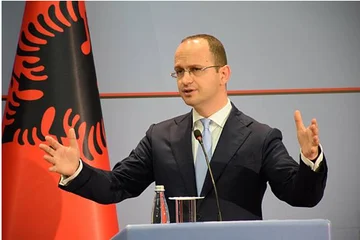
Wessel and his tour spent hundreds of thousands of euros on lobbies, sʹka visas even this year

Periskopi(8 years ago)
(8 years ago)Now the chairman of the Parliament, Kadri Wessel, has undertaken a diplomatic tour of Europe's main centres for lobby, in order to liberalise visas for Kosovo. Despite this and many other institutions' trips, these lobbies were expected not to be determining, as international relations connoisseurs and civil society are expressing sceptic [...]
While the other aspect is the cost of public money, only in the April-June period alone, according to a KDI report travel abroad of MPs has cost Kosovo's 112,236.13 euros. The majority of all tickets and accommodation.
Opposition MP from the ranks of the Democratic League of Kosovo, Armend Zemaj simultaneously the first deputy chairman of the Commission for European Integration, has estimated that Chairman Veselin and Government in general are only making empty rhetoric on the issue of visa liberalisation.
According to him, the lack of institutional co-operation is causing the lobby to fail to achieve the right effect.
However, it has been reserved that the financial means for this lobby have been wasted.
“I cannot conclude that these are waste expenses, because parliamentary diplomacy is costly, and should be in constant and complete co-ordination. In order for the efficiency of these visits to be accurate, concrete with specific themes and that the lobby process has specific points where to influence”, Zemaj says.
Unlike deputy Zemaj, on the other hand, the Kosovo Democratic Institute researcher Adelina Hasani sees the issue.
She has named it a delayed adventure the lobeing of the Prime Minister Wessel.
According to her, this initiative should have been undertaken earlier by the Kosovo Assembly and that such trips are only damaging the state budget.
“In this delegation of the assembly for visa liberalisation lobbies are participating and many people, which is necessarily damaging Kosovo's budget. On the other hand, there is a lack of a strategy towards lobeing for visa liberalisation. We know that we have problems with some friendly states that oppose lifting visas for Kosovo, but that have not accepted Kosovo as state”, Hasani points out.
On the other hand, she has added that there are problems and within state institutions, given the EU's recent criteria, which is fighting organised crime and corruption. And according to her, more needs to be done in this regard.
International relations acquaintance Africa Hoti has considered this diplomatic journey of Parliament Speaker Kadri Wessel necessary.
According to him, it is now the final phase in making the decision and should expand beyond the top parliament, as it is national policy.
But despite that, Professor Hoti has said that these lobbies cannot be defined because countries make decisions based on the interests they have.
While sceptical, it has indicated that in December there may be a vote in favour of Kosovo for visa liberalisation.
“We are half, half, or fifty to fifty, as it seems we have not yet convinced all states to make a political decision for Kosovo. This direction is two key issues that are holding EU member states on hold. The first is the fear of migration facing Europe. ...the second question is that some countries are ahead of the elections, if they made a positive decision on visa liberalisation, they might lose to their electorate vote. I'm talking about a country that is very defining, which is Germany, yes and France”, it ends.
On the other hand, in a written reply from the chief parliament's cabinet, they have not commented on the charges that Kadri Wessel is making his own diplomatic tour, but have described his initiative as a correct decision.
Unlike Justice Minister Done Hoxha, the Assembly Speaker's cabinet has expressed more optimistic that there may be a pro vote, although some countries have voiced scepticism because of fear of immigration.
The task of each institution is to work on the realisation of the goals we have as a state, to work on the rights of our citizens. Voting in the European Parliament, the Law Commission and recommendation from the European Commission are evidence that Kosovo has met the criteria. The Council's decision is political. So it's not about criteria. Support from these institutions and many states also tells of the effect this lobby has had, said the response given to Kosova Preress.