a day ago
Two Standards Even in War Regions

Periskopi(8 years ago)
(8 years ago)The real stories of people in war are hardly sold because they are not spectacular. And those who have looked at the war closely, like traumad soldiers talk a little bit. It is in Eastern Europe that the cult of the strong man and the staunch patriot is especially present, they do not want to look like cries. But [...]
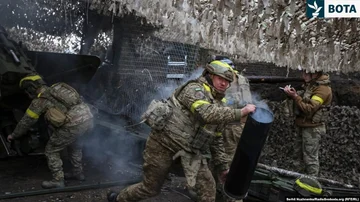
There is war in Syria, Iraq, and Donbas. There are people who lose their lives. But besides the influx of refugees to Europe no one feels the war, everyone continues to live in security. Everything happens somewhere far away. Especially in Eastern Europe, there is no awareness that war is everyday at the same time. Reports of war reporters are rarer than in the west. Associations cannot thus develop proper empathy with other peoples, neither with refugees nor with those in need.
I am currently writing from Koba in northern Syria. I've been to Raka before. There I was accompanied by Kurdish warriors in a military car, Humvee. In Raka the most common vehicle to go to town is the tank. Some cannot even get a good look at it because the bulletproof glass of windows resembles a spider network. Inside a Humvee you need a big focus, this car pulls and moves fast, and the engine should never go out.
When I was on the ground, the US-backed Kurdish and Arab troops fought hard against the so-called “Islamic State”. Raka was always under the cloud of dust, all over the smoke. The planes continued to drop bombs, even in long - ruined neighborhoods. In fighting for Racka, 3,200 people lost their lives, one third civilians. I've never seen a city more destroyed than Raca.
Inexperienced in War
This is my fourth year as war reporter. In 2013, I was a journalist in a free profession in Majdan, Kiev. 100 people lost their lives in protests. When they were extinguished I went to Donbas, not Poland. I did not know that it was not protests but war. In the bag with a light vest. I've been safe, with no experience in war regions, but I've been put up with the conflict, the help of experienced reporters. When I was in Donbas, only one editor asked me if I had a vest. I didn't. I didn't even have security training back then. But even for that, no one wanted to know. In the meantime, though, I have my camera, my bulletproof vests, my cameras, even my security training. But travel costs are often affordable.
Two-speed European
War means more sitting and waiting. It has nothing to do with “action” in movies or computer games. For hours he waits in bombed homes, coffee holes, tea, and energy drinks. “Action” is rarely, and short. That's what you talk to people, you listen. Once in Iraqi Kurdistan we were sitting, three Polish journalists with other war reporters. A five-member team from a Western television set us straight in front of a reporter, a producer, a voice specialist, two cameramen. The media in Germany or Great Britain take everything seriously.
The three of us had the same opinion. These five “work for the same media, and the three of us serve eight different media. ” We laughed a little, but it was bitter, and we could have shed tears. That's how journalistic poverty feels in Europe. Could also say “The double-speed Europe”. Not only do we Polish, many reporters in Eastern Europe work under the same conditions.
Our poverty is only nicely packed as “The digital reporter”. A reporter makes videos, photos, serves tone, at the same time thinks about reporting and trying to post clips for social media. Fortunately, I don't have any money for fear. Even more efficient, faster, even more exclusive. Without a big editorial, you should take care of marketing yourself.
Trust or Face News?
Almost every day I face the limits of possibility, especially when bombs fall from heaven. Two things at the same time are possible, but three, four ...when you get back to fighting, you can only watch people. Whether they're military, civilians, or warriors, they all open up. While I'm here to show the processes and prospects of people in wartime. Something very few care about in my country. I don't want to dress or judge, but I'm in danger. So I want the media to understand that they are not that close because they are following social media from war zones. Once this provincial attitude would be impatient, today he's <x0medream. ” They want to fight “face news” and they always get cut off on the network.
The real stories of people in war are hardly sold because they are not spectacular. And those who have looked at the war closely, like traumad soldiers talk a little bit. It is in Eastern Europe that the cult of the strong man and the staunch patriot is especially present, they do not want to look like cries. But as long as the war in the Eastern European media doesn't hold human faces, Europeans can turn their heads aside. That makes nationalism and militarism even more appealing.
/Pawel Peen'ek, born in 1989, is a Polish journalist. He has reported protests in Kiev, the war in Donbas, Iraq and Syria. One of his “books from New Russia has just been published in the United States.
/DW