29 minutes ago
In Kosovo, peace is built on division

Periskopi(8 years ago)
(8 years ago)Mitrovica, Kosovo “This is a piece of paradise on earth,” said the monk. “When you're here, feel it.” Dressed in a long black cloak and pettled black beard, this monk's words would appear to be a simple phrase, a holy man speaking of a place [...]
Mitrovica, Kosovo “This is a piece of paradise on earth,” said the monk. “When you're here, feel it.” Dressed in a long, black cloak and pettled black beard, this monk's words would appear to be a simple phrase, a holy man speaking of a holy place.
But nothing is simple here.
His house, the Banjska Monastery, is above the village located outside Mitrovica in Kosovo a divided town in a divided country that still carries the scars of a war that had occurred 600 years earlier.
Built between 1313 and 1317 by Serbian King Stefan Milutin, the monastery was where it was buried until Battle of Kosovo in 1389.
That battle, between Christian Serbs and Ottoman Turks, has been widely mythologyed, with conflicting historical facts. What is known is that, the leader of the Serbs, Prince Lazarus, [is the interpreter: Car Lazarus was killed. His death became a symbol of subsequent suffering and resistance.
As myth states, the night before the battle, Lazarus was visited by a saint in the form of a grey hawk with a message from the Virgin Mary.
He could win the battle and make a kingdom on earth. Or he could lose it and have a kingdom in heaven. He chose defeat.
On 28 laughteres in 1989, on the 600th anniversary of this battle, Slobodan Milosevic arrived by helicopter in that country and restored Lazarus ' choice. It was time, he said, for Serbs to make “the heaven on earth. ”
It was a call to capture weapons, and what followed was an ethnic cleansing of Kosovo Albanians that ended only after a 1999 Nato bomber campaign.
But two decades after these bombings that helped stop the violence, and a decade since Kosovo declared its independence from Serbia, this land remains more divided than in peace.
Here in Mitrovica, in the northern part of the country, Serbian ethnicity is dominant; only recently are police officers beginning to wear the official uniform of the new state.
Many people do not see themselves as part of Kosovo as it currently exists. They want to be part of Serbia but feel like small soldiers in a larger game since Serbia is seeking membership in the European Union, and they expect to be forgotten by Belgrade when that day comes.
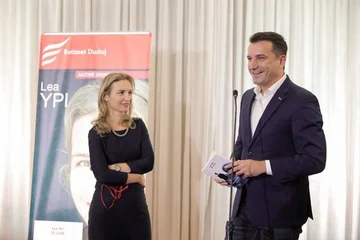
This was my first visit to Kosovo under my new post covering Central and Eastern Europe. A quick trip to attend the visit of Serbian President Aleksandar Vuciq, who came to speak to Serbs after the assassination of prominent Serbian politician Oliver Ivanovic.
They were gathered in a packed hall in a city of daily icemen how close their former enemies were but also how divided their lives had become.
Every day, the call for the supplicant echoes from a mosque on the south side of the bridge over the Iber River, which divides the city. Ethnic Serbs in this part of the bridge can hear the museum song as they walk near a newly established September. It's dedicated to Car Lazarus. He's looking across the bridge, which is protected by international peacekeepers. Italian Carabinier is currently on duty.
It's easy to notice when you're in a field of dark ethnicity even before you encounter international troops. Most cars don't have Kosovo signs or have signs of Serbia, which are considered illegal by the government in Pristina.
Children go to separate schools. Men work in separate industries. Families eat in different restaurants. Students who graduate from the university in Mitrovica, their diplomas are not recognised by the government in Kosovo, which is led by Albanian ethnicity. Even phone services are separate.
In view of all this division, it is interesting to spread and perhaps a sign of hope that the killing of the local politician, Oliver Ivanovic, did not immediately lead to a finger-taking of the Albanian community across the bridge.
Instead, most have speculated that Mr. Ivanovic with criminal networks within the angry community led to that murder.
Mr. “The fear consensus among humans is unbelievable,” said Mr. Ivanov just before he was killed.
“The “polians are looking, doing nothing about this and the people here feel they have no protection, even though it's about our people, for Serbs. ”
The monk, who only gave us the priestly name Georgia, agreed with these findings that Ivanovic had made. There are many people who live in sin,” he said.
But his description of change seems to deny the roots of the last war, the cause of that great bloodshed, and what had to happen to stop it.
Serbs in Kosovo were missing, he said, blaming the separation of Church and State. The only way for natural balance recovery, added, would be to have a Serbian Orthodox government based on a solution that is the anathema of Muslim population in Kosovo.
There was a unity of state and church for people. You can't have one without the other. ”
Over the centuries, the monastery that calls the house had been burned down and completely destroyed. Under Ottoman rule and until the end of World War I, it served as a mosque. A restoration was underwent in 1990, when it was declared a Cultural Monument of an exclusive importance by the Serbian government. Always, the Serbs are back.
That long story shaped his views and many people in Mitrovica. As a descendant of Milutin and Lazarus, the monk gave voice to the sense of Serb persecution.
We were originally forced to live under the Turks,” he said. We are now under Albanians and under Americans. ”
But Serbs remember, he said. And he was hoping Serbs would return Kosovo.