a day ago
It is no longer possible to wage war. Last one was Crime

Periskopi(9 years ago)
(9 years ago)The recent decades have been the most peaceful era in human history. For the first time in history, fewer people die from human violence today than from traffic accidents, obesity, or even suicides. And in early agricultural societies human violence caused up to 15% of all deaths, and in the century [...]
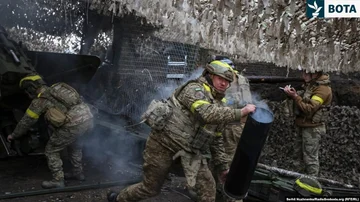
The recent decades have been the most peaceful era in human history. For the first time in history, fewer people die from human violence today than from traffic accidents, obesity, or even suicides. While in early agricultural societies human violence caused up to 15% of all deaths, and in the twentieth century it caused 5%, today it is responsible for only about 1% of the deaths. However, the international climate is rapidly deteriorating; the warmonger has become fashionable, and military spending is growing. Both ordinary people and experts fear that just as in 1914 the murder of one Austrian leader sparked World War I in 2017, an incident in the Syrian desert, or a reckless move on the Korean Peninsula, could trigger a global conflict.
However, there are some key differences between 2017 and 1914. At that time, the war was very tempting for elites worldwide, because they had concrete examples, how much war successes contribute to economic success and political power. Now, successful wars seem to be a endangered species.
Since the times of Assyria and Rome, great empires were usually built up by wars and elites in 1914, with many examples of the great benefits that a successful war can bring. In the 1846-48 ' s, the United States invaded Mexico and took California, Nevada, Utah, Arizona, New Mexico and parts of Colorado, Kansas, Wyoming, and Oklahoma. It was the millennium deal. Likewise, imperial Japan enjoyed its victories over China and Russia. Germany cloned its triumph over France. Almost every great power had a fine range of small colonial wars under its name. When France, Britain, or Italy thought about putting troops on the ground in Vietnam, Nigeria, or Libya, their main fear was that someone else could go there earlier.
In 2017, global elites don't even know what a successful war looks like. They may have read about them in history books, and they may have seen fascinating remakes in cinemas, but they have good reason to doubt that this type of war has disappeared. Although some dictators of the third world and nonstate actors continue to flourish through wars, it seems that great powers no longer seem to know how to do so.
The biggest victory in the history of the living US against the Soviet Union was achieved without a major military confrontation. The U.S. received a taste of military victory, such as in ancient times, during the First Gulf War that only tempted him to spend trillion dollars on humiliating military fiscos in Iraq and Afghanistan. China, the rising power of early 21st century has avoided all military conflicts since the adventure in Vietnam in 1979, and its climbing has come for factors that are only economic. In this regard, he has followed the example, not of the Japanese and German empires before 1914, but of the nonviolent economic wonders of Japan and Germany, in the post - 1945 era.
Even in the Middle East, regional powers do not know how to wage successful wars. Iran gained nothing from the long bloodshed of the Iran-Iraq War and then avoided all direct military confrontations. It became a regional hegemony after the two main enemies of the United States and Iraq were involved in a war that destroyed both Iraq and the American appetite for confusion in the Middle East.
The same can be said of Israel, who fought the last successful war 50 years ago. Since 1967, Israel has progressed P AV UNDER most of the wars he has fought, not theirs. The occupied territories are a heavy economic burden and a major political responsibility. Like Iran, Israel has recently improved its geopolitical position, not by waging successful wars, but by avoiding immersion in the wars that destroyed Iraq, Syria and Libya.
The only successful war carried out by great power has been the Russian invasion of Crime. However, it was made possible by an extraordinary series of circumstances: The Ukrainian army showed no resistance; other powers did not interfere; and the Crimean people either supported the invaders, or accepted the invasion as a fact carried out. These circumstances will be difficult to recreate. If the precondition for a successful fight is the lack of enemies willing to resist, it limits all available opportunities.
In fact, when Russia tried to reproduce its success in Crime, in other parts of Ukraine, it encountered harsher opposition, and the war in eastern Ukraine became an unproductive block. The invasion of Soviet-era waste factories in Luhansk and Donnetsk, hardly pays for the war, and certainly does not compensate the costs of international sanctions.
Despite the crime invasion, it seems that in the 20th century, the most successful strategy is to maintain your peace, and let others fight for you. Why has it become so difficult for great powers to wage successful wars?
One reason is the change in the nature of the economy. In the past, if you defeated your enemy in the field of battle, I could earn money by robbing enemy cities, selling enemy civilians in slave markets, and adopting fertile fields and mining gold. However, in the 20th and 1st century, only a few gains could be obtained in this way. Today, the main economic assets consist of technical and institutional knowledge and cannot gain knowledge through war. An Organization Like I The SIS can thrive by robbing cities and oil wells in the Middle East in 2014, I The SIS earned more than $500m from Iraqi banks, and in 2015 it won another $500m in oil sales. But China and the U.S. are unlikely to start a war for a billion dollars. As for spending billions of dollars in a war against the United States, how could China regain these costs and compensate for all, the damage to war and the loss of access to trade? Could the People's Liberation Army rob the assets of Silicon Valley? True, corporations like Apple, Facebook and Google are worth hundreds of billion dollars, but you can't take these assets by force. There are no silicon mines in Silicon Valley.
A successful struggle may, in theory, lead to great profits by enabling winners to correct the global trade system in its favour, as did the US after his victory over Hitler. However, modern military technology would make it extremely difficult to repeat this success. For definition, the huge profits that would amount to a global war for victors would also make it valuable to the loser to use weapons of mass destruction. The atomic bomb has turned <x0-second profit” into a World War, into collective suicide. It is no coincidence that, from the time of Hiroshima, superpowers have not fought directly with each other and are engaged only in conflict with third parties, in which no one has been tempted to use nuclear weapons to avoid defeat. Indeed, even the attack on a second-level nuclear power, such as Iran or North Korea, is an extremely attractive proposal.
Cyberwar makes things worse for potential imperialists. By Bush's time, the U.S.A. could wreak havoc in Fallujah, while the Iraqis had no means of revenge against San Francisco. But if the United States now attacks a country that even owns moderate cyberwar capabilities, viruses and logical bombs can stop air traffic in Dallas, cause train crashes in Philadelphia and put out the power grid in Michigan.
In the great age of invaders, war was a business with little damage and much profit. At the Battle of Hastings in 1066, William Master won all of England in one day at the cost of several thousand dead. Nuclear weapons and cyber warfare, on the other hand, are low-cost technologies that do a lot of harm. You can use such tools to destroy entire states, but not to build lucrative empires. Therefore, in a world filled with canning, perhaps our best guarantee of peace is that great powers do not have a recent example of a successful war. While Gengis Khan or Julius Caesar would invade a foreign country with a hat ring, today's officers speak aloud, but they are very careful in fact, when it comes to the beginning of wars. Of course, if a person finds a formula for winning successful wars under conditions of the 20th century, the gates of hell can be opened quickly. That's what makes Russian success in Crime an especially frightening sign. Let us hope that an isolated example will remain. Although it is impossible to wage successful wars in the 21st century, this does not give us an absolute guarantee of peace. We should never underestimate human folly.
* The Harry is the author of “Sapiens: A Brief History of Humankind” and “Homo Deus: A Brief History of Tomorrow” /Prepare: The world..