a day ago
The fault is our generation.

Periskopi(9 years ago)
(9 years ago)May 29th, I'm all 60th. They keep telling me that it's not hard, that the 60s are 40s, 25s, or 37 new kids, but the truth is that they often feel (and live) like 60-year-olds. I'm full of 60s and the thing fills me with surprise, with a double I owes [...]
May 29th, I'm all 60th. They keep telling me that it's not hard, that the 60s are 40s, 25s, or 37 new kids, but the truth is that they often feel (and live) like 60-year-olds. I'm in my 60s, and the thing fills me with surprise, with a double due to the awareness that the games are over -- it's still going to be possible to change any details, but the key is over. Older ones is finding out you're not gonna be any more. In the word “it's filled” there's something strange and exciting that makes me uncomfortable. I don't think I've had enough, but the problem, here and now, is not me or my person: what makes me uncomfortable is the feeling that we haven't achieved almost anything. I say we, after I say, after we say, in the Argentinians, the 60-year-old Argentinians, my peers, my generation, those like me. It may be time to ask ourselves how, when, what, and why; it is time to begin taking on our responsibilities.
The definition of a generation is difficult, it's a grainy, incorrect process. So, just to set a criterion, we say: those who arrived a little bit earlier and a little behind me, those who were 20 in Argentina of the '60s and '70s. At that time, General Perón spoke of “this wonderful youth” and now it is easy to think that we were all worried young people, concerned about the fate of our country, willing to live (and die) for him. A myth has spread: if I talk about my generation, many think about militants, the dead, the desaparecidos and the tortured. There were, like, a lot of people who haven't done or suffered anything. Without asking too far, those who rule us today are part of my generation and have done nothing of this. Those days were being prepared by Maurizio Macri, Daniel Scioli, Cristina Fernández, Elisa Carrión, and many others known to earn more money. And millions of people watched without knowing what to say, were executed by Mario Kempe's goals or singing Spinetta's songs in their voice.
As for those of us who were committed to it, it is still given excessive importance. True, history was made, not by thousands of people who, on May 25, 1810, stayed in houses, but by those 200 or 300 who emerged. Those who define a generation are the few who act, and not most who don't? This is likely the case, and it is easy for everyone else. Yet, the myth has its own purpose. For example, one easy trick: to talk about what some of us don't do in the '70s is a way of not talking about what we've all done in the next 40 years. And yet I want to start right from there: years ago, like everyone, weird. We started our lives in a convulsive, hopeful way - everything had to change, everything was changing. Every young man, little for the better, knew that that social order was unfair and that another had to replace it: The problem was, not that society should change, but that by what means, in what direction. In various ways, we tried hard. We lost. We lost brutally, but we tried. That Argentina was full of shame. He was led by generals willing to intervene against anything that threatened the power of a wealthy debt, large fields and its middle industries, which exploited workers and villagers, who allied themselves with the anti-column empires, who controlled the country and the state in its favor. For good reason, we decided to fight against this system. But in 1970 the Argentinians under the poverty threshold were 1 in 30, and today there are 1 out of 3: 10 times more. At that time all thought that poverty was a temporary state awaiting a better situation, and a job at a factory to have a home, to send children to school, to earn a little more, to be better used, to make “before”.
The myth of sociality continued to dominate. It was a country with a vast and highly educated middle class that made us depressed - an obstacle to any revolutionary change attempt. A middle class formed in public school, thought of as an instrument to homogenize society and lay common bases, where we all learned that we were not very rich, very diligent, or very stupid. The Argentinian specialty stayed in its state schools: The private had always been a characteristic of Latin American society. Argentina, on the other hand, was the place of the public. It's gone. 50 years ago, only 1 Argentinian in 10 attended private school; today there are 3 in 10. It's another crucial clue. Some of us wanted to change that place, others didn't. We changed it together for the worse. We are the generation of the fall. Now, 50 years later, 1/3 of the poorest population has been frozen -- living in poverty, temporary homes, an illegal or no job, dependent on the state, and giving. It's completely out of the system and there's no hope of being reintroduced: it lives exposed to unexpected changes. No future, no one believes in the future.
Fifty years ago, the silveric income was half the size of the United States, but today it is less than a quarter. 50 years ago, inflation 10% was considered a danger, and today it would be a tremendous success. And we never did. Fifty years ago Argentina had 400 miles [400 km] of railways uniting the country, but today there are not even 4,000, and most are out of use. 50 years ago, Argentina supported itself in terms of oil, gas, and electricity, and today it is indebted to import. 50 years ago, Argentina designed and produced aircraft and cars, today the balance of payments is in red from purchasing and asembling spare parts. 50 years ago, public hospitals treated most of the population, and today they treat only those who have no choice. Fifty years ago, soccer games and cheers chanted, while putting two cheerleaders in the same stadium today is dangerous. Fifty years ago we didn't talk about uncertainty, but today we only talk about it. 50 years ago, criminals that were as rare as newspaper news, and today there are so many that they no longer make news. Fifty years ago, the Argentinan politicians were characters unable to decide one quarter after another, even today. 50 years ago, they believed Argentina was the place to come, and today we wonder why we told that shit.
It's not the data itself; the worst thing is that daily life has become noncommode every day, with more clashes than encounters, more dissatisfaction, more inadequacy and inadequacy than joys and satisfaction. We have also reached a rare level of daily violence. Not by kidnappings or beatings, but by reports among people, full of mistreatment, insults, hatred, and resentment. It's like that, it looks like shit, but there are places in the world where people on the street laugh, are treated as if they were not hated. Life often seems like a battle. Because we've made life a struggle. Six months ago, a family of refugees from Alep, a war - torn Syrian city, came to Córdoba, the second city of Argentina. There were four people - a disabled father, a wife, two daughters. They had promised them a home, help, a job, but nothing really. Everything was expensive and difficult for them. Then they were stolen. A few days ago they returned to Alep: “The bomb is dropped here, but there is not all that uncertainty, and life is much more economic”, the patriarch said. Clearly, Argentina has dropped to unimaginable levels. We know. What we don't want to know is it was us. A few weeks ago, in Brussels, former President Cristina Fernández has said her party has lost the election because “society is unable to understand what happens by going beyond the news. In my generation, we knew how to distinguish from what was happening, since we were educated from an intellectual standpoint”. It was our generation, mine, the one so educated that Argentina did it. There are still some of us who have the mindlessness to heed the faults of others.
It is easy to blame others, and it is always difficult to understand your own errors. But if anything useful, it's to ask: ask to think about how and why modern Argentina is our fault. to know what we've done to reach this point is the first inevitable step to demand that we reach another one. I don't know, but I have some doubts. For starters, it's the heroic pretext: the dead. They've killed thousands of people and we've comforted ourselves thinking that the problem is that “killed the best”. It's us, the bad guys, but it's not our fault, it's those murders. Not the best, not the worst: the most non-existenceed, the less fortunate, the more consistent, the less fantasy, the courageous, the least discreet; the ones who were in the right place at the right time, the ones who weren't in the right place at the right time. They killed many of us and it was a tragedy. But the problem was not the absence of those killed, it was the effect that those dead had on the living. They were professorly deaths: they demonstrate to us that “being realistic and the search for the impossible” can have a price as high as since then we've preferred not to step up and accept the potential. That was always a disaster. We've been looking for a fit: we've had fun of every idiot who recited a verse to us, we picked one after another. It was enough two or three hit expressions and a smile to make us fall into the networks of a fool whom we hated with all our heart a few years later. We hated them, imagined because we hated ourselves because we loved them, and we didn't want them, nor did we know during these 40 years to create the conditions for the proposed country to discuss what it wants to be, what it wants to be, what it means to do it.
Thus, Argentina is now again that barn that had sought to leave behind 100 years ago when some felt that it was not enough to export meat and wheat and decided to stimulate the industry. Today, thanks to Soya, we are once again a large planted land, and we rejoice that we can sell lemons. This reconversion is the most important decision of all these years and we never spoke, never really decided. Why would we do that? It was democracy. With no idea, no debate, no possibility for the future, in our years Argentina has become a reactionary place: a place in which every government causes so many disasters that the future government comes to fix the situation. Alfonzín's government has come to end the killer network of dictatorship; the Menem government to end the economic chaos of Alfonso's hyperinflation; the government of de la Rúa to end the Meenemist corruption; the Kirchner government to end the anti-state neoliberist catastrophe mesto delauist; the government of Macri to end the corruption chaos of Kirchnerism. We keep going like this: so is the current government. Because the problem begins when the response ends: as soon as they start applying their recipes, governments, with their own disasters, prepare their next reaction. A reactionary country is a land without projects, made and broken up with speculation, a carouse country: ours.
Beyond political masks, we are corrupt. We are greedy, full of desires. We love some minor pleasures - the biggest television, the greatest car, the trip to envy. And we climb over every car that offers us these candy. We don't like to imagine long-term, set ourselves targets, look for it. Maybe why we saw that when we looked we didn't find it and then we stopped looking, we didn't find it. The problem is that we have become a place of uninhibited wailing - that we seem to be ruthless, that we are filled with honor and sacred pride that moves us to reject everything that does not respond well to what is not well - known. But then we spend our lives accepting everything. More and more, abnormal attitudes seem normal to us: it seems normal that many people eat little, live badly, die quickly; that violence, verbal or physical, is our way of being; it seems normal to be deceived. A month earlier, at a football stadium, a boy met a man who had his brother killed at the wheel of a fast - moving car. He told him something: the killer, to get rid of him, started screaming that the boy was a fan of the opposing team and started beating him. Others have been joined. Emmanuel Balboa has asked to leave, but he hasn't succeeded: he's down, he's dead. Now the corpse, lying still on the ground, the fans have continued to insult him because, they said, he was a fan of the other team. Someone stole his shoes. So 2 or 3 people said it was unattended and all Kemo tolerated. We are like frogs in an old story: we are put in a hot bath, then start to heat up water, and in time, we are used to living in a boiling place; or we almost boil, since we do not have enough gas. We are like frogs that are used to it; after all, we are people who vent. Exploitation, someone said, only serves if done afterwards. Otherwise, it's offensive.
The anhima is the most silverite custom. We've blown out and built a place with an image and a similar to the ansma; a place of bad mood that screams out of anger, but is so pleased with ourselves, so deceived by itself that he could trust a president when he said there was less poverty in Argentina than in Germany. A country that continues to think it has a place in the world. A place you won't see things as they are. The maximum, we are helped by a credit that does not abandon us - we continue to provide faces for the world's T - shirts. If there were Ernesto “Che” Guevara or Eva Perón of later Borges or Maradona is now Jorge Bergoglio: The amount of global characters produced by Argentina is not proportional to its role in culture and the world's economy. Although in this sense there is something that might define us: we are the great ones in the mask. For example, it's hard to deny that people of our generation who have had the most success are the 2-year-olds who 90% of the Argentinians voted a year and a half ago to command. It is hard to bear that those who rule us are a gentleman who, when speaking, does not speak, and another who lies until silences, and that “Miweire <x3) are a once extraordinary former football player who has become a sad pensioner today and a once extraordinary musician who has become a sad pensioner. Maurice, Daniel, Diego, Charlie. We're good on masks and, more and more, with sad pensioners. We're very mediocre or, at least, our public stock is mediocre, they have mediocre results. After a few years, the books will always tell if there are any more books, always if there is a place called Argentina that ours has been the most failed generation of country history. Because we're not going to make differentations, they're going to talk about all of us who've moved the country to this point. Apparently, generations after us will be able to compete with the scepter, but I think they'll recognize the credit we've given them. Our brand: The Argentina we started living in was much better than the one we're going to end up living in.
Someone will tell me it's easy to talk while you're away, because it's better to keep your mouth shut, asshole”, they're gonna tell me; they've already told me more than once. I don't know if it's easy or difficult: I know for sure that distance is a common state for many, and it comforts me. But it is true that in those years many of us left Argentina - from those like me who abandoned the country in 1976 from terror to those who abandoned it in 2002 from disaster. We have often taken advantage of Argentina as a late country that our parents or grandparents were born elsewhere to tell us that we were returning from where they had come from. As far as I'm concerned, I've been forced to go to France in 1976, I've returned enthusiasticly in 1983, I've returned (to Spain) in 2013. Last time it was different, no one forced me. I don't know why I left: I told myself that the world was too big and interesting to reject the temptation of a change, but I also know that it happened because it had come to my throat. Frustrated by a life of aggression, collision; frustrated by the lies that had taken place in the debate that I had already said and written all that I could say and write; frustrated, before time, with the fact that the only alternative to that full discussion with falsehood would have been a doomed discussion. Bored that I knew there was no way out. I got guns and luggage, I got away. I also feel responsible: we've lived 40, 50 years of Argentina and left nothing worth remembering (but a land on the ground, its eternal carousel, its poor reactions). There may also have been improvements, but I cannot see them. It is true that in some respects life is cheaper than 50 years ago, but many of these, especially sexual freedoms, that did not exist back then, have come from other cultures. We are limited to adopting, not all: for example, abortion remains illegal thanks to our authorities' submission to the authorityless authority of the Catholic Church, and the rest of the changes come from techniques invented by Americans and produced by Chinese.
Meanwhile, we have failed; it is so easy to know that we have failed. What can be done when everything is so clear? To be looked at on the other hand, to look for someone to blame, deny everything, hide, or until you know that it's not that heavy? None of these reactions serve to require that something be arranged. Maybe the idea of who failed can fix something is another way to go, go away. Maybe the time has come for us to feel possible and to retreat. We leave space to others who, possibly, will make it even worse. But it's hard: nobody retires at the age of 60, 40s, 25s, or 37 and a half young. Then what? Decide that we will be different, as is done with the good intentions of the weekend or the birthday? Decide that we may not be able to be different but that we can act differently, seeking other ways? Let's decide that it's worth the effort to leave men alone and screams and take over the disaster, knowing we built it out of mud, knowing it can't build anything out of mud pretending to be mortar? Admit that we have already lost our chance and that there will be others we command but that it would still be worth the effort to cooperate as much as possible? Accept that we have to cooperate in a research whose results, if ever they were, we would never see? We've got a place, we've got it for wool. Denying this fact is the safest way to go on our way. One place, no matter what. It may be worth the effort to talk about, to give up on it - to redress.
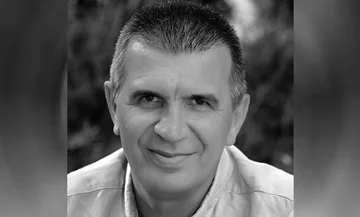
(Martin Caporós is a journalist and writer Agentnas. This article has appeared in the New York Times Spanish edition entitled “La Culpa es de nuestra generación”
From the world.al