a day ago
What would a nuclear war really do for the world?

Periskopi(9 years ago)
(9 years ago)President Donald Trump's vow to strike North Korea with <x0) fire and rage just as the world has never seen” was a formidable threat that America will use the most powerful weapons of mass destruction in the Korean Peninsula. According to many defence analysts, the risk of nuclear confrontation over Europe and [...]
President Donald Trump's vow to strike North Korea with <x0) fire and rage just as the world has never seen” was a formidable threat that America will use the most powerful weapons of mass destruction in the Korean Peninsula. According to many defence analysts, the risk of nuclear confrontation over Europe and the Indian subcontinent has also increased in recent years.
In a more hopeful turn of events, 122 countries voted in June to approve the United Nations Treaty for the prevention of nuclear weapons in New York. The “Ban Treaty” will make nuclear weapons illegal for countries that ratify it, and many see it as an opportunity to start, once again, a multilateral dermament effort. Backers of the treaty argue that even a limited, regional nuclear war would produce a humanitarian, catastrophic and global crisis.
Other analysts also suggest that reality is not as serious as it is often described. In March of this year, Matthias Eken, a researcher on attitudes to nuclear weapons, writes in The Conversation, that their destructive power “has been exaggerated a lot” and that overuse of the world's latest <x2-scientists and apocalypseic language” should be avoided.
Eken argues that nuclear weapons are not as powerful as is often described, given the prediction that the launch of a 9-megaton nuclear head over the state of Arkansas would destroy only 0.2 percent of the state's surface. He also notes that more than 2,000 nuclear explosions have been made on the planet, without ending human civilisation, and argues that if we want to ease the risks posed by nuclear weapons, we should not, first of all, overblown those risks.
Eken's approach to nuclear weapons conflicts with the most dramatic rhetoric of global humanitarian disaster and existential threats to humanity. What is the basis for this latter?
Nuclear War is also a war on the environment
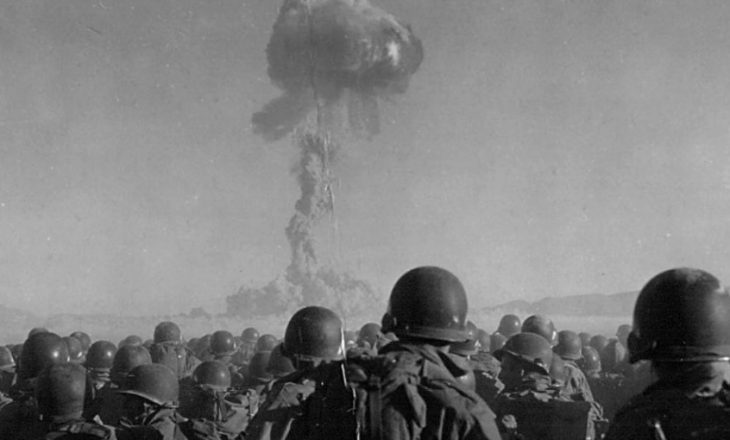
The greatest concern stems from relatively new research, which has shaped the indirect effects of nuclear explosions in the environment and climate. The most studied scenario is a limited regional nuclear war between India and Pakistan, including 100 bombs the size of those used in Hiroshima (mature by modern standards), erupted mainly over urban areas. Many analysts suggest it is a possible scenario, in the event of a comprehensive war between the two states, whose arsenals include more than 220 atomic bombs.
In this case, some 20 million people may die within a week of the direct effects of explosions, fire, and radiation. Even this fact, it's catastrophic with more dead than in the whole world war.
But nuclear explosions are also very likely to light fires in a wider area, which unite and inject large volumes of soots and waste into the stratosphere. In the Indian-Pakistan scenario, up to 6.5 million tonnes of soot can be released in the upper atmosphere, blocking the sun and causing a significant decline in average surface temperature, as well as rainfall across the globe, with effects that can last more than a decade.
This ecological disaster, on the other hand, would adversely affect global food production. According to one study, U.S. corn production (the world's largest producer) would drop by an average of 12 per cent in 10 years in our scenario. In China rice production would drop by 17 percent on average in a decade, corn at 16 percent, and winter grain by 31 percent. With the total supply of global cereals, less than 100 days of global consumption, such consequences would put some 2 billion people at risk.
Although a nuclear conflict involving North Korea and the U.S. would be smaller, in view of the limited arsenal of genan, many people would continue to die, and ecological damage would seriously affect global public health for years. In addition, any nuclear conflict between the US and North Korea is likely to increase the risk of nuclear confrontation, involving other countries and regions of the world.
It's worse.
A large-scale nuclear war between the United States and Russia would be much worse. Most Russian and American weapons are 10 to 50 times stronger than the bombs that destroyed Hiroshima. In a war involving the use of strategic nuclear weapons of the two states (those used away from the battlefield targeting infrastructure or cities), some 150 million tonnes of soot could be released in the upper atmosphere. This would reduce global temperatures by 8 degrees C is the scenario of the <x0-second nuclear core”. Under these conditions, food production would be halted and the vast majority of the human race would likely die.
Eken suggests that both scenarios of a limited regional nuclear conflict and a comprehensive war between the US and Russia are unlikely to happen. He may be right. However, both scenarios are possible, even if we cannot safely determine the amount of risk. Continued combat rhetoric by President Trump and Kim Jong Un for the use of nuclear weapons is not making this opportunity smaller.
What we can say is that the doctrine of nuclear prevention represents a dangerous bet. Nuclear weapons do not keep us safe from the acts of terrorism, nor can they be used to fight the rising level of the seas, extreme weather, ocean acidification, loss of biodiversity, or antimotic resistance.
That is why so many health and public organizations have campaigned to declare illegal nuclear weapons. No matter how much it has to explode to cause disaster or to produce an existential threat to mankind, and regardless of the risk of that happening, words that “prevention is better than recovery” remain more useful than ever when it comes to these disgusting and dangerous weapons.
David McCoy is Professor of Public Health Global, at the University of “called Mary” in London / The Conversion ) Translated from The world..