21 minutes ago
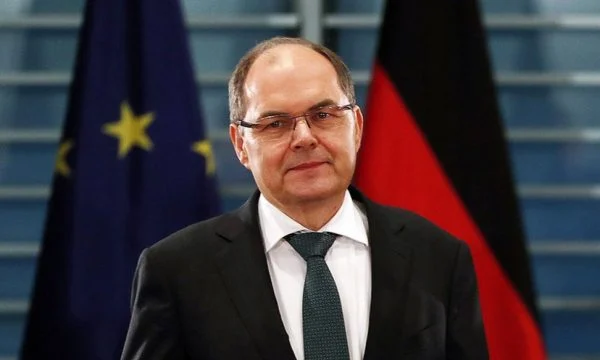
International community High Representative in BiH Christian Schmidt resigns
Periskopi(2 months ago)
(2 months ago)After nearly five years at the helm of the international community's Office of High Representative (OHR) in Sarajevo, German politician Christian Schmidt has announced the completion of his mission.
This news was first revealed to the prestigious German newspaper “Frankfurter Allgemeine Zeitung” (FAZ).
It is estimated, however, that after this seemingly voluntary resignation, a real diplomatic drama and an unprecedented clash between Berlin and Washington for the future of the Western Balkans is hidden.
The Office of the High Representative is an institution that exists since the end of the war in Bosnia, a conflict from 1992 to 1995 cost over 100,000 lives and forced millions more to flee their homes.
The task of this institution is to oversee the post-war order and respect the Dayton Peace Agreement, which was reached with US mediation.
According to reports FAZThe removal of Schmidt has been a topic of discussion in Sarajevo diplomatic circles for a long time, but the handover of the task is not being done on his own will.
The paper finds that for months, the United States has been looking out of Schmidt in an increasingly harsh tone, and recently even in the preventative form, for it to leave the office as soon as possible, with the aim of installing a more obedient or “offspring easier to manage” from Washington.
In his latest report to UN Secretary General Antónnio Guterres, Schmidt issued warnings that are rarely heard in diplomatic language.
According to the draft provided by the FAZ, he warns of a near-standing Bosnia break-up and a key “demontim” of state structures.
At the centre of this threat lies Bosnian Serb leader Milorad Dodik, who continues to retain absolute power in Republika Srpska, despite the Constitutional Court's decisions banning him from holding official positions for years.
Dodik, a devoted supporter of Vadicmir Putin and one of the few European politicians who participated in the May 9th military parade in Moscow, is using an increasingly aggressive rhetoric that openly targets Bosnian Muslims for ethnic and religious motives.
Schmidt stresses how Bosnia is being held hostage by Republika Srpska through blocking judges' appointments, paralysing parliament's upper house and “financial death” of state institutions.
The military, police and public broadcaster have been left in oblivion and without funding aimed at weakening them until the breakup.
In addition, the High Representative criticises Croatian actors seeking a third “entity”, naming these as efforts to divide the country along ethnic lines and destroy Bosnia's multi-religious and multicultural character.
It refutes the narravities that portray Bosnia as a battlefield of “clashing civilizations” where Christianity is supposedly attacked by radical Islam, calling these claims tools to justify the division of the state.
According to “Drankfurter Allgemeine Zeitung”, this drastic shift in the American course may be linked to the pure economic interests of Donald Trump's narrow circle.
The paper cites an unknown American company run by businessmen near Trump, aimed at building a gas pipeline from the Croatian coast to Bosnia to sell American gas.
The EU has expressed reservations to this business initiative.
Dodik, who traditionally blocked every American initiative, has suddenly given full support to the project.
In exchange, Washington seems to have sacrificed Schmidt, which Dodik and Moscow term with contempt “Gauleiter” (wing leader in Nazi Germany).
This “pazar<x1 diplomatic> was preceded by the removal of US sanctions on the Dodik family in October 2025 and the visit of Trump's son Donald Trump Jr., to Banja Luka.
In an FAZ comment, the resignation of Schmidt is much more than a personnel change; it marks a breach of European stability.
For three decades, Europe and the US were on the same side in the Balkans, but now the Trump administration is lined up side by side with Dodik, the biggest causer of unrest in the region.
This informal interaction between Washington and Moscow against the stability of a region surrounded by the EU is a gift to Putin, comments FAZ.
Austrian diplomat Wolfgang Petritsch has recalled to the paper that the US cannot decide alone on the Peace Implementation Council, but it remains question whether Germany and other EU countries will choose to enter an open conflict with Trump about Bosnia. /Telegraphy/