7 hours ago
BBC: From life - threatening symptoms, how disturbing is Ebola explosion in Congo
Periskopi(a month ago)
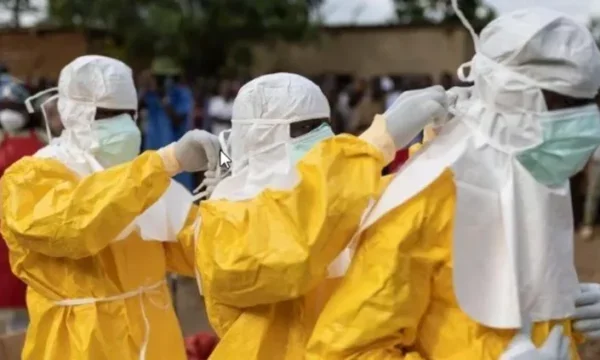
(a month ago)Ebola's explosion in the Democratic Republic of Congo is very disturbing, writes the BBC. It has spread for weeks without being discovered in a part of the world where civil war makes it difficult to cope with the virus and where the presence of Ebola is rare, so there are fewer means to prevent a virus that kills about a third of infected people.
This is a critical moment in an explosion where there is uncertainty about how widespread, but there are already almost 250 suspected cases and about 80 deaths.
Most Ebola explosions tend to be small, but experts are concerned by the 2014-2016 outbreak.
At that time 28,600 people in West Africa were infected with the greatest outbreak of disease ever.
The announcement of a public health emergency with international concern by the World Health Organization (OBSH) does not mean that we are in the early stages of a Cardi-style pandemic.
The danger Ebola poses for the whole world remains small. Even at the explosion of 2014-16, there were only three cases in the United Kingdom, and all were health - care workers who had offered to help.
But this reflects that the situation is complex enough to require international co-ordination”, says Dr. Amanda Guardsk, from the Institute of Pandemic Sciences at Oxford University.
Ebola is a serious and deadly disease, although it is rare.
Ebola's viruses naturally infect animals, but humans can get infected if they get into close contact.
This explosion is being caused by Ebola's Bundibugyo species, is one of three known species that cause explosions, but is relatively unknown.
Bungingbugyo caused only two explosions earlier in 2007 and 2012 where he killed about 30% of infected people.
Bundibugyo presents a range of challenges. There are no vaccines or treatments approved for Bundibugyo, although there are some experimental vaccines, unlike other Ebola virus species.
And tests to determine if someone has the infection don't seem to work well.
The initial results of the blast were negative for the Ebola virus and needed more sophisticated laboratory tools to confirm Bundibugyo's involvement.
<x0) Says Prof Trudie Lang from Oxford University.
Symptoms are thought to appear between two and 21 days after someone has been infected. Initially they are like flu symptoms: fever, headaches and fatigue. But as Ebola progresses, it leads to vomiting, diarrhea, and body organs failure. Some patients develop internal and external bloodshed.
Since there are no adopted drugs to target the Bundibugyo virus, the treatment is based on “optimised supportive care” including the management of pain, other infections, fluids and nutrition. Early caution improves survival prospects.