19 minutes ago
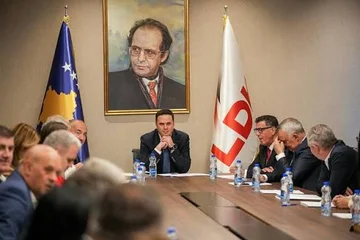
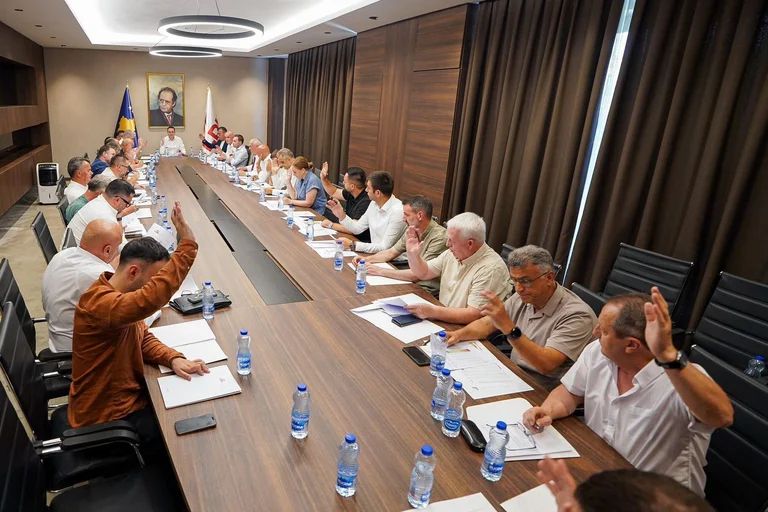
LDK “represents unity” after the chairmanship meeting, but absences in the photograph raise questions about the internal turquoise
Periskopi(an hour ago)
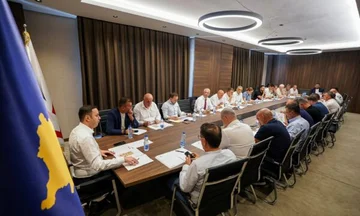
(an hour ago)The Democratic League of Kosovo has published today a statement after the meeting of Branch College, according to the reconfirmed support of President Lumir Abdijxhiku and the party's chairmanship, and it is determined that domestic elections will be held during 2027, in line with the statuteary deadlines, Periscopi writes.
Until today Periscope from its sources has reported that the current situation within the party is expected to be discussed at this meeting, where several branches and senior LDK figures have appeared publicly seeking political responsibility from leadership., even the president's resignation, Lumir Abdixhiku.
The statement after the meeting has been presented publicly as the joint stance of LDK structures, aiming to design the message of internal unity and stability in a period when debate within the party has intensified significantly after the election results and requirements for political responsibility.
In addition, domestic elections are expected to be held during 2027, in line with statuteal deadlines.
However, developments that have accompanied the gathering raise questions about how much this message fits with the party's inner reality.
According to statements after meeting by Headship member Rock Manaj, a show in Channel10 The branches of Prizren, Peja, and Lipjan did not attend the meetings.
These shortages, made public after the end of the meeting, provide a contrast between real representation and the manner of public communication.
Also, in photos published on Facebook The LDK notes shortages of some important party figures, including Avdullah Hotin, Hykmete Bajrami, Imri Ahmeti and Gazmend Muharjer, who are often mentioned in the recent domestic debate as critical voices to the current leadership.
In this context, the question arises whether the way the declaration is presented as <x0) the complete” of all branches really reflects the situation within the LDK, or whether it aims to build a more consolidated framework of support than what is reflected in practice.
The latter, according to the political interpretation that can be made by these developments, leaves room for debate over the way unity is communicated within the party in relation to the reality of participation and internal attitudes.
Otherwise, Periscop has contacted Avdullah Hoti and Hykmete Bajram of Imri Ahmeti
Regarding their failure to attend meetings and recent developments, but the same have not responded until the moment of publishing this text.
In the Pristina municipality, The LDK has a total of five [5] branches.
According to Periscope sources, branch 1, 2 and 5 are KUNDPs for Obadiah to be party chairman even further. As Branch 3 and 4 are at his side.
Apart from the branches in Pristina, OBJECTION Obadiah is also: Peja, Lipjan, Mitrovica, Kline, Prizren, Rahoveci, Gjakova, Decani.
Already responsible for the election outcome [from Abdixhiku] have sought even senior party figures, such as: Avdullah Hoti, Hykmete Bajrami, Arben Gashi, Imri Ahmeti, Gazmend Mujajer, Driton Selmanaj, Rzazarta Krasniqi, Florian Dashi.
"The LDK is nobody's property...", written among other things Avdullah Hoti, thus expressing the discontent of the election result.
Already responsible for the election outcome [from Abdixhiku] have sought even senior party figures, such as: Avdullah Hoti, Hykmete Bajrami, Arben Gashi, Imri Ahmeti, Gazmend Mujajer, Driton Selmanaj, Rzazarta Krasniqi, Florian Dashi.
Internal elections are the solution, to behave with dignity, because positions are not permanent", Hykmette Bajrami wrote.
Along with Obadiah are figures like: Besian Mustafa, Xhafer Tahiri, Visar Azemi, Alban Zogaj, Berat Rukqi, Paris Guri and others...
One fact worth noting is that current LDK chairman Lumir Abdjiku turns out to have recorded the lowest personal vote report compared to the total of the subject's votes leading the history of the Democratic League of Kosovo elections.
Compared to past election cycles, where LDK leaders have usually maintained a stronger personal burden within the party's general vote, the election result marks an apparent deviation from this tradition.
Me 17.5.8% of the vote, it ranks at the end of the spectrum of personal performance towards the party, reflecting a more pronounced division between the vote for the subject and the vote for the leader./Albina Zariqi- P ERISCOPI/