19 minutes ago
The political crisis, what are the consequences for the country internationally?
Periskopi(4 months ago)
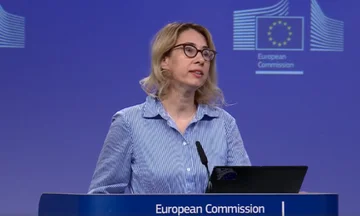
(4 months ago)Postponing European Union Enlargement Commissioner Marta Kos's visit to Kosovo due to political developments is considered alarming for the country's integration process. Former diplomats say the lack of political stability and active presence on the international stage could have long-term consequences for the country's foreign policy. Meanwhile, in PDK [...]
Former diplomats say the lack of political stability and active presence on the international stage could have long-term consequences for the country's foreign policy.
Meanwhile, the PDK accuses Vetevendosje Movement that due to lack of political dialogue and the blocking of institutions are sending negative signals to international partners. However, in the ruling party stress that Kosovo will remain committed to Euro-integration processes despite the political crisis in the case of the president's non-election.
Former diplomat Blerim Canaj tells Kosovo that failure to elect the president and go to new elections should be addressed with responsibility, as a short period without full diplomatic commitment can affect integration processes and reports with international partners.
“We are seeing the political changes taking place at a staggering speed and not being present at tables like the Kosovo government and decision-making political structure is a loss. In foreign policy, to tell you the truth, one year could cost up to five years later. We're seeing the shortages and shortcomings we've had in foreign policy these years and how much they're carrying them now. There are absolutely staggering consequences, and they may be different, depending on the developments that take place in Europe and the world... Right now, we are confused about what our goals are. Absolutely, it is an extremely serious situation that simply needs to go into the condition of politicians for political irresponsibilities”, he says.
While Democratic Party of Kosovo MP Ariana Musliu estimates the current political situation is sending negative signals to international partners. It emphasises that the blocking of institutions and the lack of political dialogue directly affect the trust Allies have toward Kosovo and the European integration process.
The political crisis is not just internal issues, it is the message Kosovo sends to the world for its state maturity. When institutions remain blocked and dialogue is replaced with stubbornness, the consequences do not remain within our borders, but they are reflected in the belief that international partners have toward us. The annulment of Commissioner Marta Kos's visit is not simply a postponed protocol, but it is a signal that Europe expects stability, responsibility and institutional seriousness. European integration does not go on rhetoric, but on democratic functioning and political co-operation. Hence, the first responsibility falls on those who have power. Governance is not the privilege of ruling the crisis but the obligation to prevent it. When power forgets this principle, the cost is not paid by a party, but pays Kosovo on its way to Europe”, she says in a written response to Kosova Prees.
But these claims consider LVV deputy Driton Hyseni unstable. He says of Kosovo that delaying Commissioner Kos's visit should not be seen as any condition or sanctions towards Kosovo, but as a message for the need for institutional stability. According to him, Kosovo remains committed to the path of European integration, and the commissioner's visit has been postponed for a more favourable moment.
Kosovo is fully committed to European integration and we have no other address. We as a country have expressed it, but we have also made the maximum commitment towards advancing our integration processes. And the visit of Commissioner Marta Kos, who was scheduled for tomorrow, has not been cancelled. Let's be honest, but it's been postponed for a moment, let's say, more favourable according to statements in Brussels. And I consider that apart from a political message or a diplomatic message that conveys to us a need for as state officials to fully engage in political stability, to have stable institutions and to go with sure steps towards selecting those tasks, those positions that the state of the Republic of Kosovo needs to have. On the other hand, it's not that it represents anyone, let's say, conditioning, or sanctioning, or whatever other interpretation it can be given, because it's about a postponement of a visit”, he says.
Kosovo has also faced political crisis throughout the past year. The lack of stable institutions has even been mentioned in the draft report on Kosovo compiled by European Parliament rapporteur Riho Terras for Kosovo. /Periscopi/