14 hours ago
Not brag, but shield: KLA deregulation need
Periskopi(8 months ago)
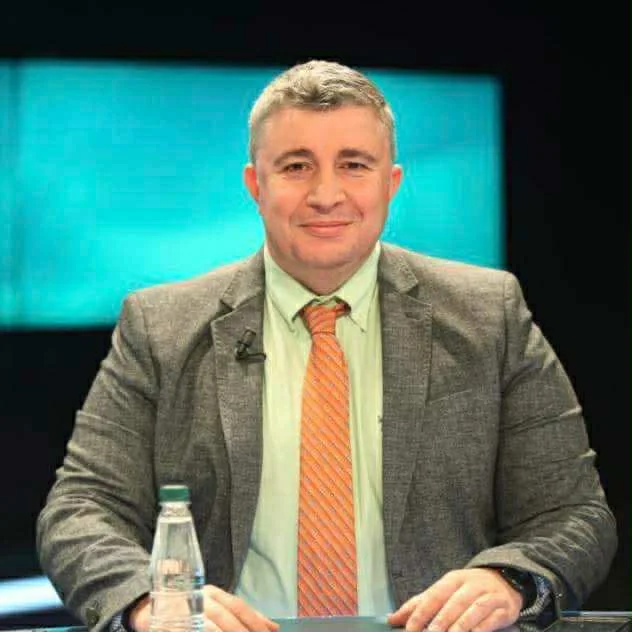
(8 months ago)From: Adri Nurellar, the judicial process at The Hague, is entering its latest act, and defence witnesses have appeared before the court. But there have already appeared cynical expressions of type “that were vain, not true commanders, but requests”, or “The Kosovo Liberation Army has not been an army of”. [...]
The trial process at The Hague is entering its latest act, and defence witnesses have appeared before the court. But there have already appeared cynical expressions of type “that were vain, not true commanders, but requests”, or “The Kosovo Liberation Army has not been an army of”. This bitter irony of these voices that are now addressed U n CK is not just wrong and insulting, but, above all, a denial of sacrifice.
The KLA was not a regular army (as the Special Court Prosecutor is claiming), and that is where its greatness lies. It was born in illegal conditions, without cemented hierarchy, without centralized logistics, often with improvised weapons and uniforms. Her strength stemmed, not from the arsenal, but from the noble cause - from boys and girls who left their homes and took mountains from villagers who shared the last bite with the warriors, from the diaspora who sacrificed their savings for rifles and bullets. It was a horizontally scattered guerrilla, fueled by the belief that even a small people have the right to live free.
On the other hand, the Yugoslav Army was a classic representation of the state-run reception device with everything a military machine could have. And yet there stood before her a people that were badly armed, but full of determination that no tank could destroy. The difference between a regular army and guerrilla is not technical details but the very essence of history. The regular army was an instrument of state terror; the guerrilla army was shouting at the oppressed people. To equate these two realities is like to equate Goliath with David.
It is meaningless that some today sell it as “dubet” the fact that the KLA was not a well-equipped conventional army, with effective control of the territory, but a typical partisan formation. In reality, that is what makes the glory even greater. Thaci, Veselin, Krasniqi and Selimi founded a guerrilla from scratch, led him in completely uneven conditions and turned him into the hope of a captive people. Such a confrontation was apparently a suicide mission, but was turned into the greatest test of Albanian determination and bravery.
To clear once and for all the malicious smoke that happens if Whether the KLA deserved to be called an army or not, it should be stressed that it was a political, legal and moral strategy. The name “ustra” gave the KLA national legitimacy and raised it above the perception of “terrorist groups” as Serbian propaganda called them. In the logic of international law, this brought them closer to the status of a warring party and protected them from terrorist treatment if they were taken captive. The term “ustra” raised the KLA to the level of a worthy political and historical actor in front of the Yugoslav Army, suggesting that they were not scattered tits but national forces fighting for freedom. This appointment also had historical significance since Albanians have tradition of liberating forces calling the “ustra” as was the case with the Prizren League's volunteer forces, or as the National-Crimerary Army was appointed.
Moreover, self-rejection “usthr” had direct psychological function. The mobilizing effect because it inspired hope and pride in the people, convinced the villagers that they had defenders who deserved to be sheltered and supported, inspired young people to line up and take up arms, and pushed the diaspora to finance war. For the enemy, he created the perception of a greater and more organized force than he really was, stirring fear into them. For international diplomacy, it presented a serious and structured image, more acceptable to take as a partner in negotiations.
It is also understood that the portrayal of The NLA as a powerful <x0ustra” was not just empty propaganda, it was a psychological tool. As in any combat formation, such an image served to keep up morality under uneven extreme conditions and to prevent desertion. War is not only won by weapons and numbers, but also by the belief that victory is possible. For a guerrilla movement that operated with limited logistics and at the constant risk of a real army armed to the teeth, that belief was the most powerful weapon. Even the greatest military thinkers have seen morality as a crucial factor. So for example, the protractor Prussian Clessewitz stressed that moral forces (the psychological and political aspects of war) are as important as weapons, while Napoleon said that “in war, morality is to material force as three to one. ”
To pretend that then KLA leaders would accurately report capacities or publicly reveal the secrets of operational weaknesses, thus demoralising the population and their troops, is not only a deep analytical gullibility, but it goes towards maliciousness. A rebel leader is not an analyst or a reporter, but a missionary who must design strength and hope, regardless of material and numeric inequality or the lack of effective control over all those involved in the war.
If someone knows the logic of asymmetrical partisan war, he understands why it is no coincidence that the KLA is considered the most successful guerrilla. Success best explains Henry Kissinger's statement in 1969 during the war with the Vietcongs: “We fought a military war; our opponents fought a political war... Guerillas wins if he doesn't lose. The conventional army loses if you don't win.” So, strategic success of The KLA did not deal with the defeat of Serbian forces, but with the fact that, through Stoic resistance, they managed to turn an internal issue (designed as “the fight against terrorism” into an international crisis (such as <x4-competitive war” and “responsibility to protect”), drawing NATO's intervention. This was accomplished because at the same time, they succeeded in gaining the faith and hearts of their people by providing the essential basis for support (the fish swimming vessel, as he called Mao Ce Duni), that made it impossible for them to be destroyed by the Yugoslav state military device.
If the appointment “Ustri” was a tactical need during the war, after the conflict and with the establishment of international authority (UNMIK, KFOR), the need to deglore the organisation and legitimacy of the uprising became a strategic precondition to achieve the final goal: Kosovo's independence. One of the biggest risks was for Kosovo to be perceived as an artificial creature of international tables, without internal foundations. It was here that the cloning of the liberation war served as the nation's strongest moral shield. The KLA was presented not only as a military force, but as an expression of popular will that refused to remain a passive victim. In the international arena, people who rise for freedom are perceived and respected differently from those who remain only passive victims. Kosovo gained not only mercy but also respect and admiration because it showed that it was ready to fight for freedom. Without the KLA, Kosovo Albanians would remain described only as victims of ethnic cleansing. With the KLA, they became protagonists of history, who took fate in their hands. Therefore, the image of a people who fought and paid dearly the price of freedom became the foundation for the legitimacy of the new state, because it shifted Albanians from the position of saved “gians” to that of “acrers of history”.
It also served as a barrier to Serbian propaganda, trying to present the war as terrorism and Kosovo as “NATO imperial products”. The KLA challenged this image and served as a diplomatic shield, stressing that Kosovo had internal roots, not just a status donated by great powers. It is true that the newly released Kosovo political elites, especially former KLA leaders, used this submilience as a source of legitimacy. But this fact did not only help in their personal political career, but also made them stronger and more efficient negotiators in the international arena, which was crowned with independence on February 17th 2008.
In the internal plan, the elevation of the war was state-building and unifying because it also served to avoid internal divisions after the war, acting as a point of reference that brought people together beyond political differences. The KLA's Narrativa also made it easier for the transition and construction process of independent embryoal institutions, such as the KPC, convincing citizens to accept new institutions as emerging from a common sacrifice, not as construction imposed by internationals. Like many other countries that gained independence with liberation movements like FLN in Algeria, ANC in South Africa, IRA in Ireland, Mau Mau in Kenya, etc.; Kosovo also needed a “founding” to connect the state with popular resistance.
In short, the establishment of the KLA's pedestal was not an adornment of words or personal calculations of its figures, but a strategic and moral necessity that served the people at any historic stage: during the war, kept alive the faith and courage, mobilized youth, diaspora and villages, creating the feeling that victory was possible in front of the Yugoslav military language. After the war, he returned to political and diplomatic capital, which gave Kosovo voice and weight at the negotiating tables, shielding him from perception as an artificial creature of great powers and linking the state to the coil and shed blood of its people. But today remains the node linking Kosovo's identity to the sacrifice that gave life to its state. As such, preserving this symbol is not a matter of homesickness but a source of legitimacy, unity, and pride for generations to come.
Therefore, those who today are blinded by the internal struggle for power or obsession hatred, rub their hands for the departure of KLA leaders, must understand a simple truth: with this process it is not “that only individuals are being condemned, but it is hitting the very moral root of Kosovo's statehood. Any attempt to relativise or tarnish KLA heroism is essentially an attempt to undermine the legitimacy of the state. The Republic of Kosovo was raised, not by the charitable of international diplomacy, but by the blood, determination and morals of a people who chose not to be subdued. If we forget this, then we allow them to bring down not only the glory of the KLA, but the state.