11 minutes ago
Bardoni: Belgrade knows <x0 red lines” in Kosovo!
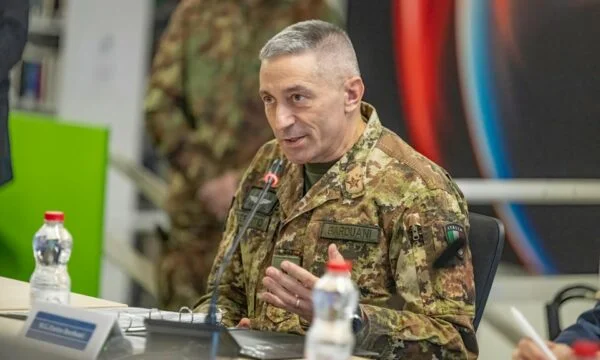
Periskopi(9 months ago)
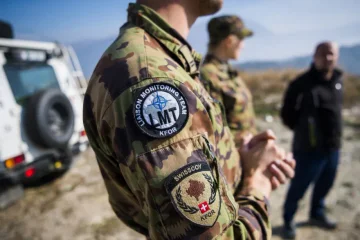
(9 months ago)The command of the Kosovo peacekeeping force, Major General Enrico Bardonini, said closing the bridge in Mitrovica is political and the decision for it must be made through dialogue in Brussels. General Bardonini at the end of his mandate at the helm of the NATO peacekeeping force in Kosovo also speaks of security developments in the part [...]
General Bardonini at the end of his mandate at the helm of the NATO peacekeeping force in Kosovo also speaks of security developments in the northern part of Kosovo and the commitments of the peacekeeping force in maintaining stability and peace. General Bardonini said Serbia has clear “red lines” in Kosovo, which he claims are forwarded to the UN Security Council Resolution.
He made it clear that the leaders of the attack on Banjska and on KFOR forces in 2023 should be brought to justice. “... unfortunately, Belgrade and Pristina have not made visible progress in normalising their relations for a long time. Even during my mandate, I also know the direct impact on security from the current stalemate in dialogue, we cannot rule out that the lack of meaningful dialogue risks turning political issues into security issues”, said in the interview with RTV21, KFOR Commander General Enrico Bardoniti.
Bardonini: The opening of the bridge in Mitrovica-political issues, the solution to dialogue!
General, you received the warrant at a time of tension in the north. A year later it hasn't changed much except disputes over the bridge over the Iber River, which have recently been somewhat “concerned”. What has made KFOR's role difficult today during this one-year period?
General Bardonini: No doubt Kosovo has long been characterised by complex and interrelated challenges, the consequences of which are felt throughout the Western Balkans region. Among these unresolved political challenges are undoubtedly the most urgent, as they undermine the normalisation process between Belgrade and Pristina and affect the security of all communities living in Kosovo. Therefore, KFOR maintains a alert and flexible presence throughout Kosovo, well prepared to respond quickly to any respective development that could jeopardise regional stability and local security. We do this in line with our long-term mandate of the United Nations by contributing to the preservation of a safe and stable environment for all people and communities living in Kosovo at all times, impartially and especially in close co-operation with the Kosovo Police and the European Union's Mission for Rule of Law, in their respective roles, as security providers. Through our presence and daily activities, we also aim to maintain a security framework in support of diplomatic efforts that are ongoing and important.
In general, there are two prospects for the bridge over the Iber River. The first: that it divides Kosovo into two parts. And the other is a protective bridge. You came and the bridge was closed. You're leaving and the bridge is still closed. So is there still a problem there?
General Bardonini: I can also add this: Even during my previous service in Kosovo in 2001 and 2015, the bridge was closed for circulation. And for me, that means that closing that bridge is not just a matter of security, but it's mostly political in nature. To clarify NATO's position on this topic, I can say it was, it was clear, consistent, consistent and transparent throughout: the decision on the Iber Bridge in Mitrovica should be taken through dialogue and in proper co-ordination and effective with local communities, as well as with the international community. Meanwhile, KFOR maintains and continues to preserve, until it receives another directive, its fixed presence on the bridge and conducts regular patrols in surrounding areas until a political solution is found.
General, all attention is, naturally, focused on northern Kosovo, KFOR has increased its presence. But I'm quoting your statement saying: “situation remains calm but sensitive to an unexpected escalation”. Who are you afraid could scale the situation suddenly?
General Bardonini: Let me stress that. Unfortunately, the past but also recent events offer some examples of this confrontation. It may mention the frequent use of stimulating rhetoric. The numerous unilateral actions, the event in Banjska in 2023, and the explosion that affected the Iber Lepenc water channel in November 2024. KFOR's presence has been even more important in these challenging circumstances, helping to preserve stability, prevent escalation through prevention and calming situations that could have led to incidents. By doing so, I consider it especially important to maintain continued and transparent communication with all my counterparts, including representatives of the international community, security organisations in Kosovo, as well as the Serbian armed forces to strengthen bilateral awareness of the situation, to avoid misunderstandings and thus reduce the risk of escalation.
Bardoni: Belgrade respects obligations by UN Resolution 1244
General, Kosovo police forces are there, KFOR is there, EULEX, also there. However, concerns in public opinion in Kosovo are about a further escalation from, as they say, Serbia's trends to destabilise Kosovo. Are those statements based on Pristina in fact?
General Bardonini: As a military professional, I prefer to rely on facts. My role does not allow me to give any personal speculation. What I can say is that Serbia is a relevant factor in the region, and we like NATO expect Belgrade to continue to fully respect its obligations under the mandate of UN Security Council Resolution 1244, 1999, and the military technical agreement attached. And in this way, we expect Belgrade to play a constructive role in the region. From our perspective, we continue to monitor the situation closely, preserve a visible and flexible presence throughout Kosovo, and co-operate with Kosovo's security organisation and the Serbian armed forces. As for Serbia, let me stress that co-operation between KFOR and Serbian armed forces is very professional and at an excellent level, just like my regular contacts with Serbia's Chief of Defence, General Mojsilovic. Once again, I think these efforts are key to maintaining regional stability.
Bardoni: Belgrade knows <x0 red lines” in Kosovo!
Have you made it clear to the Serbian Army and state authorities which are the red lines in Kosovo at your meetings with them?
General Bardonini: Yeah. Let me stress that the red lines you mention are the ones defined in the UN Security Council Resolution and with a special reference to the relationship between KFOR and Serbian military authorities. They are written in the Military Technical Agreement signed by NATO and Serbia in 1999. I can add that our mission remains focused on contributing to a safe and sustainable environment for all people and communities living in Kosovo. That is a key KFOR priority. Of course, our units are present on the ground with the main objective of preventing any major risk of the crossing. But if necessary, we are ready to react to any important security development in line with the UN Security Council Resolution mandate. We have repeatedly testified that we can offer in this regard. The Serbian Armed Forces and all the actors we co-operate with are aware of our responsibility as well as our steadfast devotion. Only to provide full information on this issue, given the existing procedures stemming from the military technical agreement, Serbia has the clear obligation to always announce KFOR to any development and operational activity near the administrative border within the three-mile zone that we call the former ground security zone. This helps prevent misunderstandings that may affect the security situation. In general, this mechanism continues to function effectively and I am satisfied with the high level of professional co-operation KFOR has developed in this direction.
To be very clear, general: KFOR has its troops in Kosovo, especially in the north. Kosovo authorities are talking about the concentration of Serb troops on the border with Kosovo. If that is correct, what is the level of KFOR's readiness to prevent any possible conflict?
General Bardonini: So first, as I said, the Serbian Armed Forces must declare their presence and activities on this administrative border of NATO ahead of time and they have always respected this obligation. In that sense, I can testify that during my mandate, we have not observed significant significant changes in their presence and attitude. Second, KFOR maintains a strong and visible presence in the area. We constantly monitor this situation through a wide range of activities, including regular patrols, surveys, also land and air discoveries and contact with civilians. These measures allow us to maintain an accurate recognition of the situation and immediately identify any abnormal or developing situation that could endanger stability. At the same time, as I mentioned, we maintain regular contact with the Serbian armed forces because communication always helps to prevent misunderstandings and preserve stability. Transparency, communication and co-operation are the most effective ways to prevent any risk of crossing.
General, there have been many discussions and debates in Kosovo why KFOR has limited Kosovo Security Force access to northern Kosovo. You are seeking preliminary co-ordination with the KSF, but in some situations, would that not help boost security, especially in the northern part of Kosovo?
General Bardonini: Thank you for your question because allow me to explain this matter. In line with existing commitments agreed on by Kosovo institutions authorities with NATO in 2013 The KSF can be deployed in Kosovo's north only with the initial approval of KFOR Commander. As KFOR commander, I welcome continued respect from the KSF for this commitment, which has recently been reconfirmed in writing by Kosovo institutions on the issue. As for the possibility of increasing security in the north, I can assure you that KFOR is well equipped and positioned to act on its own. However, relations between KFOR and KSF are of exceptional importance, as was recently proven when the KSF sent the search-up team to Gazivoda Lake under KFOR's authorisation and control. At the same time, co-operation between KFOR and KSF is continuing regularly in full compliance with the regional mandate, and also with the involvement of the NATO advisory and liaison team, which is another important and present in Kosovo. For example, this year we have developed a drill called Golden Sabre, in which a sufficient number of KSF personnel in charge of the annihilation of toxic materials and explosive ammunition, both very important capacities in the current context, participated. I also want to isolate with specific reference the annihilation of dangerous materials that, with KFOR's support, KSF has successfully operated under real circumstances. and more than once in recent months.
Okay. But in this regard, let me ask: It's been exactly two years since that Banjska attack. Many issues remain open, especially regarding Serbia's involvement in the attack. Why is it so difficult to determine what happened when there was a victim and when there was evidence for him? Who are you holding responsible for?
General Bardonini: First, let me stress that the attack on Banjska, as well as the attack on KFOR troops in 2023, are unacceptable and the authors should be clearly identified and brought to justice. I won't speculate or file charges, but NATO has made very clear that this should not happen again. NATO reacted immediately to such unacceptable violence. And in fact, we deployed up to 1,000 additional troops in Kosovo, enabling KFOR to strengthen its position and prevent, especially in the northern part of Kosovo and along the administrative border. And this constituted the largest growth of KFOR personnel in the last ten years and provided that we continue to implement our mandate successfully.
But it was not just the attack on Banjska that shocked Kosovo. There was another attack. And you've mentioned it several times in this interview; in Iber-Lepenc. So, when you refer to sudden escalation, are you afraid that such events could happen again in Kosovo?
General Bardonini: As for a possible escalation, as I said, KFOR remains well trained and alert, ready to intervene and prevent any threats or events that could compromise overall security and stability, not just in Kosovo, but throughout the region. We clearly demonstrated this in the case you mentioned when KFOR immediately secured the area, placing more than 250 soldiers and offering its logistical support, engineering capacities and the annihilation of explosives for institutions in Kosovo. Then, in co-ordination with relevant local authorities, we managed to identify other critical infrastructure in Kosovo that needed monitoring to prevent similar incidents. In such cases, it is important to avoid provocative rhetoric that creates fear and fosters tensions. This is the responsibility of all of us, and especially political actors.
Bardoni: Lack of dialogue risks turning political issues into security issues
You mentioned the dialogue at the beginning of this interview. A period of dialogue between Kosovo and Serbia has been blocked. You've said several times it's important for both countries. How difficult was this even aspect of security in Kosovo?
General Bardonini: It is undeniable that unfortunately, Belgrade and Pristina have not made apparent progress in normalising their relations for a long time. Even during my mandate, I also know that the direct impact of security from the current stalemate in dialogue cannot rule out that lack of meaningful dialogue risks turning political issues into security issues. Saying so, as KFOR commander. I cannot help but repeat once again that the European Union-led dialogue remains crucial to resolving unresolved issues and achieve lasting stability in Kosovo and protect regional security for the benefit of all communities. As noted, the solution is political rather than military after all. In this context, KFOR remains fully committed to supporting this process in close co-ordination with other international community actors present here in Kosovo.
General, elections in Kosovo have not yet produced Kosovo institutions. And how much has this institutional vacuum affected security?
General Bardonini: As you stressed, the political situation could affect local security. And therefore we are closely following political developments following parliamentary elections held in February. In that sense, KFOR will continue to monitor any possible development of the situation, and at the same time, we join the international community by encouraging the parties to seriously move forward.
Let me go back to the beginning. Is Kosovo ready to join NATO, from your perspective, general?
General Bardonini: This question is actually beyond my mandate, this question will be addressed to NATO's political leadership, as all decisions, including those related to membership, are unanimously taken by allies.
General, you are leaving Kosovo, and this is the third time since the early 2000s. This time you were in charge of a multinational force. What are you taking with you from Kosovo this time?
General Bardonini: Let me stress that as I have mentioned on several occasions, Kosovo is a place I feel personally connected to. My career has brought me here to Kosovo three times for a total of two and a half years of my life. And the return as KFOR commander has been a privilege, but also a great responsibility. This region, let me say, is truly unique with many communities, rich traditions and strong desire to advance and improve. What I take with me, above all, is the impression of endurance and determination. I have seen, especially in new generations, commitment to building a more secure and prosperous future. In this direction, let me say that KFOR is privileged to contribute to building that prosperous future through its support for a safe environment for all people and communities in Kosovo. Saying that, I would like to share my personal impression backed in some way by the familiarity gained through my earlier duties in KFOR. I think that all people and communities in Kosovo share a single and strong desire to live in peace, enjoy stability and build prosperity, and the way to achieve that desire is not military but political. KFOR's role is to define the framework for a real and sincere political commitment.
And get back to the subject: In view of developments in the world, can there be a restructuring of NATO's force in Kosovo, taking into account the fact that there have been statements to withdraw American troops from Kosovo?
General Bardonini: First, the United States has clearly reaffirmed their commitment to the alliance and also to KFOR through their long-term contribution, which currently reaches about 600 American soldiers. So I see no sign of U.S. withdrawal. Second, I recently shared my assessment of the security situation and the latest information on KFOR's activities within the North Atlantic Council and NATO Military Committee in Brussels. And a few days ago with ambassadors of all 33 contributing KFOR troops here in Pristina. And it will be the duty of our political leaders to determine the next KFOR trajectory. What I can say is that commitment NATO for stability in Kosovo and throughout the region is stable, and KFOR remains a key pillar of NATO's commitment to the Western Balkans. A successful column. I say yes. /Periscope/