 17 hours ago
Serious Energy Errors
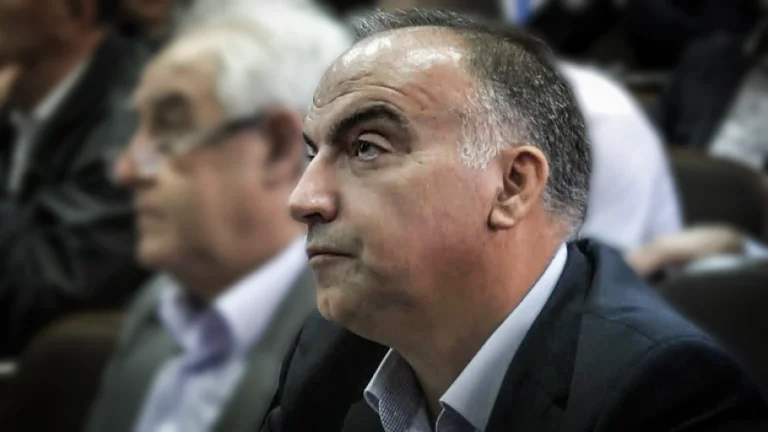
Periskopi(10 months ago)
(10 months ago)It says: Ethem Ceku's process of liberalising the energy market is a development that most European countries have undertaken over the past three decades. The main goal of this process has been to create a competitive market, increase efficiency, cut long-term prices, and integration into regional and international energy markets. [...]
It says: Ethem Ceku
The process of liberalising the energy market is a development that most European countries have undertaken over the past three decades. The main goal of this process has been to create a competitive market, increase efficiency, cut long-term prices, and integration into regional and international energy markets. International experience, however, proves that the results have been different, dependent on national energy structures, the internal security of the supply, and the protection mechanisms governments have set up.
International Experiences
In the European Union, liberalisation began in the 1990s with clear directives requiring gradual opening of the market. Germany represents a successful example, after liberalisation was accompanied by massive investments in renewable energy, transforming the country into European leaders for solar and wind production. Great Britain, as one of the pioneers, first managed to lower prices for consumers, but later the market focused on few large companies. The energy crisis of 2021 clearly showed that long - term liberalisation exposes society to the fluctuations of global markets.
On the other hand, more fragile countries like Greece and Albania offer similar experiences with Kosovo. Depending mainly on imports, they faced uncertainty and unstable prices, which forced governments to intervene with subsidies and compensatory mechanisms to protect consumers and businesses. Instead, Poland followed a more cautious approach. It linked liberalisation to new investments in modern thermal power plants and renewable sources, providing a higher level of energy security ahead of the market's full opening.
Kosovo case
Kosovo, instead of learning from these experiences, took the liberalisation step for large companies without first ensuring new production capacities. This decision has forced the private sector to connect with external suppliers, exposing businesses to the fluctuations of international markets and significantly increasing their costs. Rather than creating healthy competition, instability was generated and increased dependence on imports.
What sets Kosovo apart from most other countries is the extreme politicisation of the energy sector. In Germany, Britain and Poland, energy has been treated as long-term national policy, closely linked to energy security and economic development. In Kosovo, instead, energy has become a political instrument of the next governments. Decisions are not always based on economic and strategic analyses, but often on narrow party calculations. Major projects have either been blocked, or used as a rhetorical element in political debate, hindering the construction of a strong power base.
Therefore, most of Kosovo's governments, instead of viewing energy as the foundation of economic development and national independence, have killed the developing spirit “the country's” by turning it into an area of political clashes. Politisation has hampered the creation of a long-term vision, blocked strategic projects such as “Kosovo C”, and has made the country increasingly dependent on imports. Market liberalisation in such conditions has not been a step towards development, but a step towards further economic weakening and increasing energy uncertainty.
International experiences clearly reveal that liberalisation can only benefit if preceded by the creation of sustainable internal capacities and a depoliticised energy development strategy. In Kosovo, this process has not been treated as a national project, but as an instrument of daily policy, and has therefore produced different effects from targeted ones. Only through a strategy combining the construction of new production capacities, development of renewable resources, and, above all, depoliticisation of the sector, Kosovo can turn energy from crisis to sustainable development engine.









