21 hours ago
Pristina left without hand, tasteless, careless

Periskopi(a year ago)
(a year ago)A city that escaped war but did not escape oblivion. Where young men like Shpend and Progress with large diplomas promised much but left behind only concrete and frustration. It says: Baton Haxhiu Cities are not just construction, they're built up. And Pristina does not feel. It doesn't blow. He does not enjoy the days [...]
It says: Baton Haxhiu
Cities aren't just construction, they're built-up emotions. And Pristina does not feel. It doesn't blow. He does not enjoy the sunny days or the rainy nights. Written in concrete without harmony, disfigured by unlicensed and mind-free construction, Kosovo's capital has become an ugly mosaic that does not speak to the past or the future. He has been released for 25 years, and no hand has left a trace of his name as a civilist. Rather, every hand that came has had an obstacle or an excuse.
After the war, the city was filled with people who fled their burned homes. They filled the city with ecstasy, but without a plan, without a direction. Salih Gashi, the first to receive Pristina's key after the war, was not there with his soul. He was just there to be. The fall passed. It was a dark era, where shadows of war covered the light of vision. Then Rexhep Luci was killed, the architect who would probably have stopped urban barbarity. He died as the last warrior for a city that had not yet been born. Germia Park was banned. And he was killed!
Later, Ismet Beqiri and Isa Mustafa made efforts to stabilise the infrastructure. B Street, Square “Zahir Pajaziti”, new schools, sports fields. But what was missing was the hand that flavors the city. They make it better, but no more beautiful. They built but didn't grow. They made the mall but they forgot the whole thing.
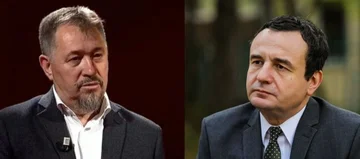
And when the city was finally trusted in a new generation, it thought Shpend Ahmeti would be the difference. He was a young man with foreign preparations, back home from Harvard, determined to speak. But more than governing the city, he got involved in political experiments. His power to make change was minimal and he did not realize that development is not built in an ugly city. Instead of stopping by, he became her companion. Eight years were lost. All hopes that Pristina would become a European city were third among empty words and promises that remained on paper. His weight killed the self - determination and its two political comets set aside for the capital.
When the idea that the capital needs an architect came, Rama's progress came, which will be remembered as another symbolic empty one. With broad support, with the image of the prepared man, he failed to understand that the beautiful vision on paper is not enough in politics. It takes wisdom to turn it into action. And he didn't. He was lonely, arrogant, unbroken by the image of the architect but cut from reality. He promised a city for people, but he didn't even know how to build ways for people. It didn't plant green, it didn't turn into functionality, it created no modern sense of urban life.
Pristina today is a city where construction goes up like mushrooms, where air is heavier than cars, where any road is a temporary solution and every new neighbourhood is an old wound. The peripheral neighborhoods are left as urban corpses separated from the city's body. No infrastructure, no schools, no life. And wandering dogs are the most sincere face of desertion. Pristina is the least flavored city in the region. No identity. No rhythm. No style. Nothing is related to vision, everything is like spontaneous events, every public space is either neglected or full of chiosca that choke any perspective. This is a city that has been built carelessly, without feeling and disrespect for man.
In “mati 1” and “Matti 2”, where the new middle class lives, there are parking buildings in basements that don't work and public squares that don't have any trees.
In “Veceric” the wealthy live in high, but walled mansions, with no connection to city life. In “In “, the Trima Center” children walk down unpaved roads and go to schools that complain and cool winter and roar summer.
In “Ulpin” a memory of Yugoslav orderliness has been preserved, but it has been forgotten as something that does not match the new chaos. While the “Breg of the Sun”, once a live neighborhood, has become a deadlock of traffic and vertical construction.
The city is no longer human. It's of rich mediators, selective permits, untalking architecture, concrete that doesn't look into your eyes. In a capital where sidewalks are luxury, no one sows grass because no one knows what taste is anymore.
And now the question is, can this thing be saved that we call the capital? Maybe. But not with the men we've tried. They have proved to be either powerless or uninterested. With architects silent and uncritical, and sign whatever the owner of a project says.
Maybe it's time the city was tested in the hands of a woman. A woman who feels like her own body. Viewing the road as a space of life, not as a concrete line. Taking care of the house, like a whole neighborhood.
Or maybe an Eddie Rama. A taste maniac, a color mad man, an architect who feels the city not as duty, but as an honor. The one in the midst of the mess did not silence the color of a facade who believed that the city is more than service. It's feeling. It's careful. It's a vivid memory.
Kosovo's capital deserves more than weary officials and soul-free technocrats. You deserve someone who loves town. Because Pristina doesn't need more construction. He needs love. And hand. For a hand that can plant a tree like you plant an idea. And make it grow beautiful.
Tomorrow:
It will be a public invitation to a new chairman who knows Pristina's re-rememberment, not only as a physical city, but as a way of life and collective conscience. Someone who tastes and has political sense.