 17 hours ago
Where are Iran's regional allies and why isn't your voice heard?
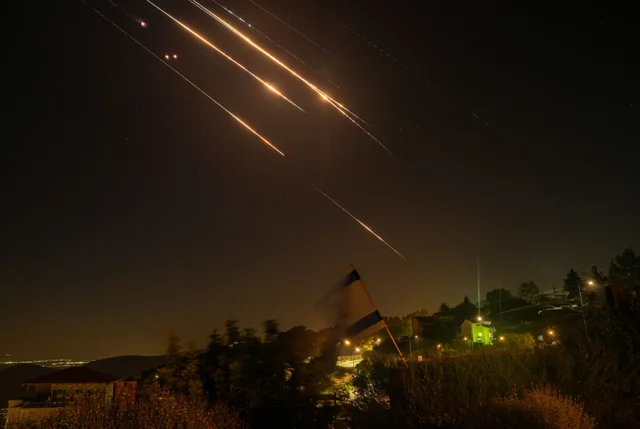
Periskopi(a year ago)
(a year ago)In recent decades, Iran has built a network of allies in the region. In the current conflict with Israel, some of them have so far been spared. Why is that? In recent years, Iran has distinguished above all in one thing: It has rarely been just in conflict. With abundant money, weapons supplies and military training, [...]
In recent years, Iran has distinguished above all in one thing: It has rarely been just in conflict. With abundant money, supply of weapons and military training, Tehran has built a network of Shiite allies in the region in recent decades who have not hesitated to interfere with the so-called Empty Resistance against Israel.
Iran's regional influence stems from so-called “representative”, as Lebanese political commentator Ronnie Chatah explained in Al Jazeera: First of all, the Shiite Hezbollah militia in Lebanon, but also Huth in Yemen, Hamas in Gaza and the Shiite militia in Iraq are on the side of Tehran regime. Not to mention the dictator Assad in Syria, whose powers were recently dependent on Iran, among other things.
Iran's supporters weaken
For several months now, however, the ranks of Iran's supporters have been destroyed, mainly because of Israel, the “New Middle Order” proclaimed by Benjamin Netanyah and changing the balance of power in the region: Hamas has been weakened by Gaza war, although he has not been defeated. Important leaders, such as Ismail Haniya and Yahya Sinwar, have been killed. The nose in Yemen is under fire as a result of their attacks on Israel, and Sanaão Airport and other important infrastructure have been destroyed. Syrian dictator Assad has been ousted by Islamists, and military installations have been bombed by Israel. Even Hezbollah in Lebanon has been hit hard in the fight against Israel at the end of last year, according to politicologist Mustafa Kamel as- Sayed of Cairo University: “Hezballah has weakened dramatically. His leaders were killed, militia had to withdraw from the south, and he continues to be bombarded by Israel to this day. ”
“Hezbollah in existential crisis”
Hezbollah is obviously in a different situation than before, also claims Maha Yahya of the Carnegie Institute in Beirut. “Hezballah must redefine himself now. It's in an existential crisis. ”
Since Hamas' terrorist attack on October 7, 2023, and the start of the war at the Gaza Strip, Hezbollah had provoked a war with Israel to open a second front. After months of clashes, Israel lashed out starting in September of last year, turning Hezbollah's infrastructure into ruins and killing almost all of its leadership, including its early leader, Hassan Nasralah. Since then, Hezbollah has been reorganized. In the current conflict, the militia remains silent. A deep silence, as observers describe it. Is Hezbollah no longer able or willing to fight?
Iran's chances in Lebanon are limited, says Lebanese political commentator Chatah. Hezbollah's ability to react is no longer the same as before the war.” The same front no longer exists. And that will push Iran towards diplomacy, because its possibilities in the region are limited. ”
The noses show willingness to fight
However, Hezbollah remains ready to fight, notes Lebanese journalist Amin Qamourieh. He doubts Lebanon's current care is a strategy: “Hezballu assumes Iran remains strong enough to defend itself. We have not yet reached the point where the Iranian regime will collapse. Meanwhile, Hezbollah remains cautious. ”
As Hezbollah hesitates, the Huth in Yemen clearly shows a willingness to fight. A native of Huthi stated: “Yemen's armed forces welcome the Islamic Republic of Iran for its bold, determined and loyal resistance against brutal syonist aggression. ”
Yet, even in this case, fears of solidarity and rockets were of little importance. Iran currently does not seem to have any interest in activating its remaining allies in the region. In addition, all have their own interests and are much more than merely executioners of orders, according to politicologist Mustafa Kamel as-sayed: “All these groups have a certain autonomy and are under pressure in their countries of origin. ”
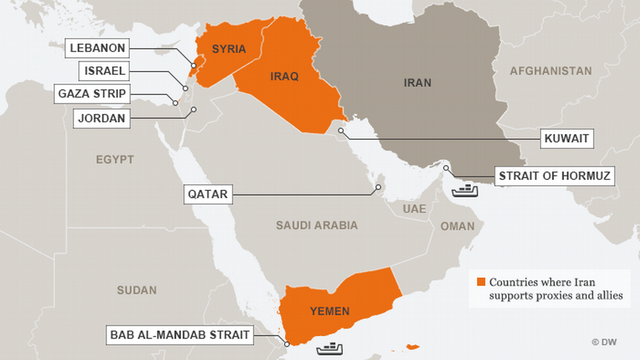
Iran's Regional Allies
Lebanon and Iraq want to stay uninvolved
According to some reports, Lebanon and Iraq have asked Iran to keep out of actual escalation with Israel. If Iran escalates conflict, attacks could occur against US military bases in the Gulf States or Iraq. Iran has built huge structures.
Iran is the most influential country in Iraq and exercises control over several milliseconds. However, attacks on American soldiers would force US President Donald Trump to take military action, something Iran seems to want to avoid.
Thus far, Iran has only used missiles and has not used other means of pressure”, says journalist Amin Qamouriyeh. The Hormuz Strait has not been closed, oil supplies continue and no US military base has been attacked. All of this can happen in a second phase, depending on how events will develop”.
“Rakes do not solve problems”
Observers are cautiously optimistic about the possibility of a negotiated solution between Israel and Iran in the coming days. US President Donald Trump himself has spoken of a possible deal. However, many experts agree that Israel's military forces and power shows will not bring lasting peace to the region. Or, as Lebanese commentator Chatah says: “Rakets do not solve problems”.
/A.Osius/ ARD









