 17 hours ago
Doctor who never retired from Kosovo's sick body
Periskopi(a year ago)
(a year ago)Bujar Bukoshi, a rare man of a land without borders. A doctor who healed only his wounds but patiently endured history. This is my confession of the man who never compromised time or fear. Baton Haxhiu I knew Bujar Bukoshi long before he became a national figure. His brother [...]
Bujar Bukoshi, a rare man of a land without borders. A doctor who healed only his wounds but patiently endured history. This is my confession to the man who did not compromise time or fear
It says: Baton Haxhiu
I knew Bujar Bukoshi long before he became a national figure. His brother had spent the first years of tension in Albania, like many others who saw in Albania a haven of hope and an open window towards freedom. My father and Bujar were old friends.
He united his love for art, for painting, for theater. Along with his wife Zana, a doctor like him, lived Pristina's cultural growth as an intimate need and as a silent resistance to the approaching political emptiness.
When Albania was open in 1979-81 when the Bujar Demons broke out, it watched everything displayed in the art gallery and the sculpture that was displayed in the then-called “art gallery within the “Boro and Ramiz”, a new building that Pristina built with its contribution of citizens.
They loved Albania with a quiet but deep passion. It wasn't just love for a country. It was a commodity for an ideal.
I have often met him while he was a secretary to the LDK. I've seen her keep quiet and busy, quiet and firm. And then, in 1991, when he was forced to leave with his government, he did not give up. He held together those who had declared independence even when the road turned into isolation. Even when hope ran into fatigue. Until the moment he decided to stop waiting. Stop praying. No more understanding. And it began to be organised militarily. With the same firm mind as a surgeon.
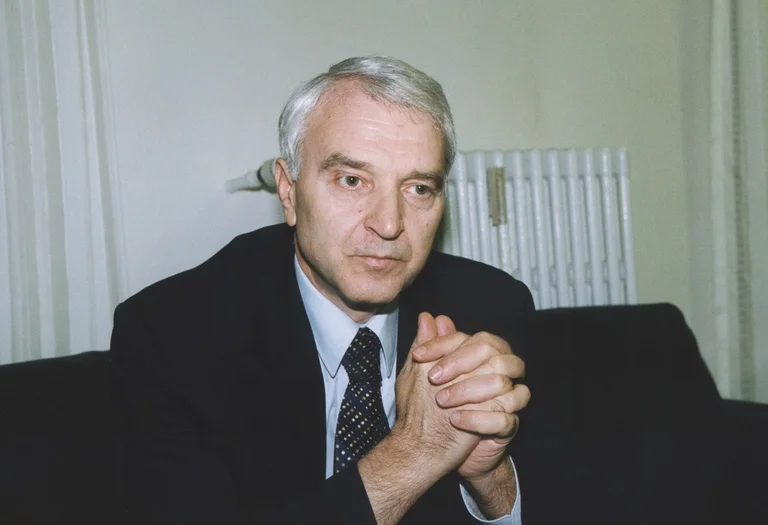
I met him for the first time for a long interview in 1996 for the Yavore era. Back then, few dared to speak clearly. Bujar Bukoshi did. His already-white hair was not a sign of age, but a sign of courage -- a surgeon trained in Germany, acting with the same cool, precise and also located as Kosovo prime minister in Exill.
In that interview he talked about everything. Even for his friend Ibrahim Rugova. He criticized him for cutting off funding, for his unwillingness to face what was coming. Not to hurt it, but to wake it up. He had begun preparing people for war. No rhetoric, no shouting. Simply as men who know what happens when a nation tries to survive simply lacks clarity.
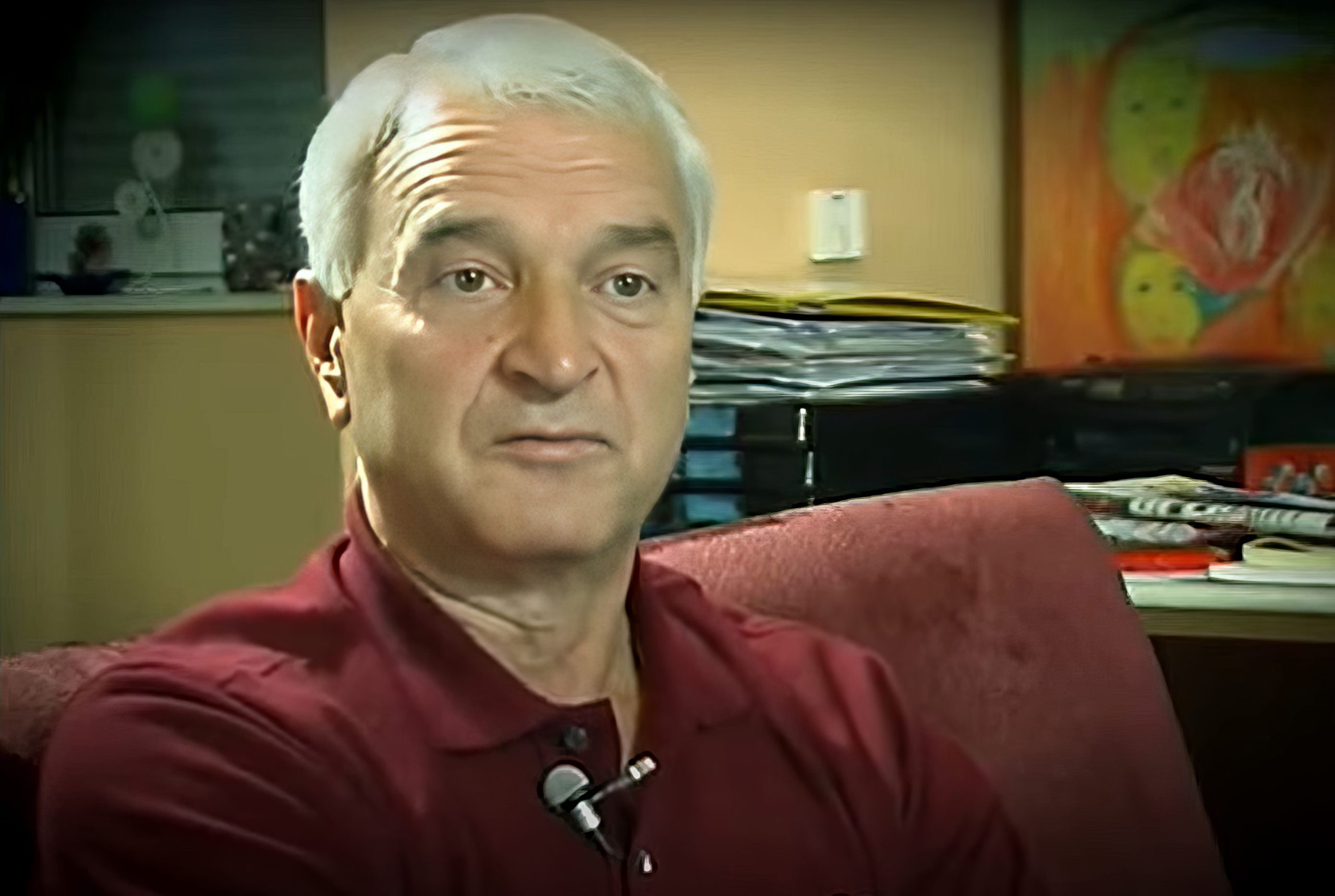
I met him again in 1997, in Ulm. He lived with his friend Abdel Krasniqi and Doctor Selvette Krasniqi, as well as with his wife Zana and their children. She told me how narrow the space was in a small night - sleeping house where they laid mattresses on the ground to live the modest life of a prime minister and an existing foreign minister.
Zana and Selvetje, two women who bore the burden of two men who risked the entire family for Kosovo freedom.
He expected the agreement with the KLA to introduce the Army inside the country. I came from a meeting with Serbian mediators, who through their threatening and undaunted language had said there would be no peace. I told him and Nick Hill what was coming.
When I told him that we were going to war, Dr.”, he looked me right in the eye and didn't speak right away. There was everything in that silence - a feeling of guilt that was his, a pain that did not require justification and a decision taken in itself. He knew everything was late. But he had no intention of leaving what he had started.
He realized that freedom cannot come into the hands of people who show wounds for mercy. That is why he decided to distance himself from a handful of journalists who converted Kosovo into a confession of handed down pain, not of the dignity he resists. He had chosen Migen Kelmendi to give voice to a Kosovo seeking relief, not mercy. And this was not just a political choice. It was a moral operation.
In April 1999, when we went with a group of friends to meet Yoschka Fischer in Bonn and then Robin Cook in London, Brad welcomed us calmly. He was the same man. Loaded in responsibility, but without resentment. He joined us quietly, fully devoted. He knew that telling the truth about Kosovo was not enough just for the word. The gravity of character was also needed. And he had it.
When I worked the documentary for a quarter century, it was natural to include his confession.
In that documentary interview, Bujar confessed a crucial moment. He told me how, three days before his appointment, he was called by Rugova to a cold little office.
Mr. Rugova told me we had offered some others the post of prime minister, but were refusing. He asked me what I thought. All I said was, should it be done? And he answered, a little painful: Yeah, but... like you're hurting me. ) It was very human”.
He did not know what a prime minister did. But he knew what needed to be done for a spiritual people.
I later realized what the government meant on the island. I only knew I had to get out of Kosovo. And two hours after I left illegally for Skopje, the police came to my apartment to arrest me. I had saved for two hours”
Brad described that time without any sense of protagonism. In fact, with a sense of snoring at <x0).
I hated the idea that people should eat something. We weren't there to calm people with illusions. We had an assignment to do”.
He never separated his confession from responsibility. He Admitted that they had engaged agencies PR to infiltrate CNN. He accepted it sincerely. But one sentence sums it all up:
If I had the power, I would start the war immediately. I didn't. But I knew it was coming”
It wasn't confession that made noise. But he was strong. He said one sentence left:
By the time I was prime minister, I had no office, no official flag, but I had a people who believed they were coming tomorrow. And that's enough for me”
Where others sought formal recognition, he built real content. There was no need for political cover. There was clinical logic to understand the illness of our society and a surgical ethics to prevent it from spreading further.
Today, when he's no longer among us, I don't feel like serious news. It comes as a turning point in a confession that has already been written with honor. He was not just an institutional resistance figure. It was a principle in itself. He never asked for applause. You never ask for position. But in the darkest of times, it was there. Not to be made light, but to prevent darkness from becoming a habit.
Bujar Bukoshi never sought death with heroism. But he refused to accept life without purpose. He remains one of the rare figures who never connected power with privilege but with responsibility. And when I remind him today, I'm not talking about a man I met. I'm talking about a man I honored. And that will always remain as an example of what we needed to be: clear, silent when needed, determined when it could no longer be spoken.
Post Script
This scripture is not to complete his life but to keep him from leaving.
On the eve of a great silence remains a personal account of Bujar Bukoshi, friend, doctor, and the man who never shared responsibility from devotion.
For a man who never asked for glory.
This is not an epitaph. It's a reminder of a life that did everything to keep us from being forgotten before it ever came back to history.
This confession is of Bujar Bukoshi, as I knew him: before he was honored, before they forgot.
On the border between pain and honor.
A letter about a friend who never asked for any of these two.
In honor of a man who never left office.









