 19 hours ago
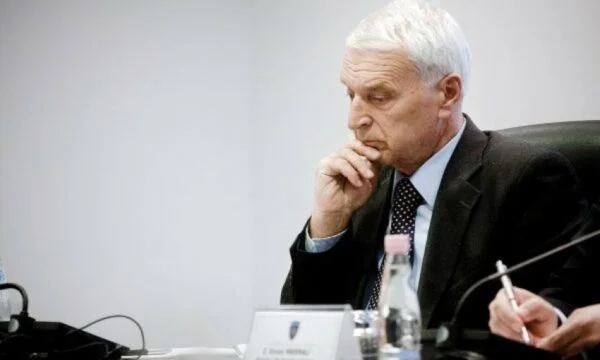
Bujar Bukoshi é doctor who took over Kosovo's fate
Periskopi(a year ago)
(a year ago)It says: Merro Base Bujar Bukoshi has been separated from his life this morning, after an illness with which he fought so long. Two days ago I visited him at his home in Pristina and I hope he recognized me. This morning at 5:00 he's been separated from life. My friendship with him has [...]
It says: Merro Base
Bujar Bukoshi has been separated from his life this morning, after an illness with which he struggled a long time.
Two days ago I visited him at his home in Pristina and I hope he recognized me. This morning at 5:00 he's been separated from life.
My friendship with him started in the 1990s, when I was engaged in the Kosovo press, and went on as a human report.
It is this reason that I feel obliged to write about Kosovo every time I write, to remind everyone of how it started and what generations later have to respect, among other things, those sacrifices that have been made for Kosovo's citizenship and independence.
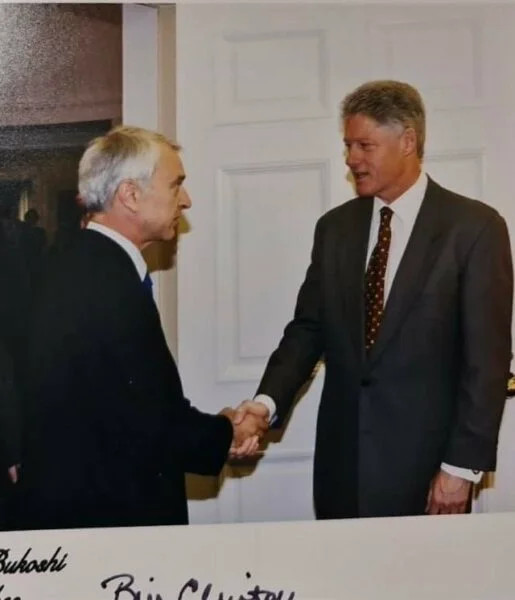
The surprise of Albanians in the West after 1990 was the way Ibrahim Rugova followed to save Kosovo from the first fatal blow he could take along with the collapse of Yugoslavia. Directionality from the West and peaceful resistance justified the birth of the KLA and Western military intervention.
The big truth is that the road to Kosovo's independence could be long and hopeless if it did not give birth to the KLA and provoke NATO's international intervention. But on the other hand, that day would never come if Kosovo's problem did not enter Western Chancellors as the problem of a Western-oriented society fighting for its fundamental rights on a peaceful path.
Shortly before facing trial at The Hague, Kosovo President Hashim Thaci, once Ibrahim Rugova's former fierce political rival, said, honouring his memory:
“Our fight was our attempt not to fail peace in Kosovo!”
First Prime Minister
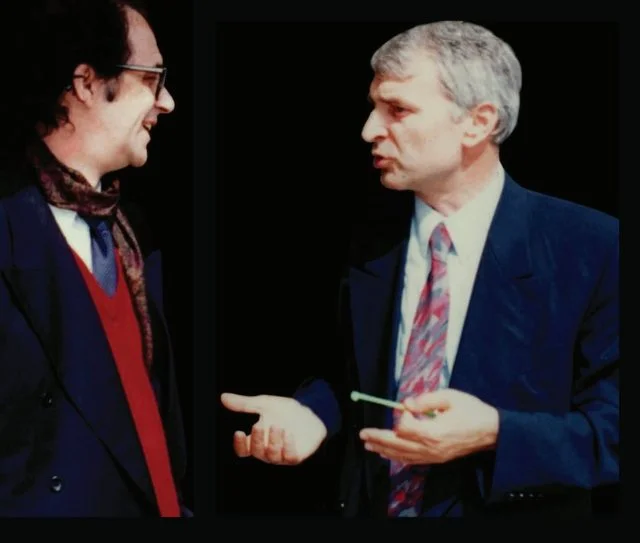
Friday, October 12th 1991, Ibrahim Rugova decided to call one of Kosovo's most famous doctors at the time, urologist Bujar Bukoshi. As a physician at the peak of his career, educated in Belgrade and then specialised and doctored in Germany, he was popular in the large extent of Kosovo citizens.
He never thought of a political career even though he joined the LDK founders and was one of its leading figures, after Rugova the charismatic.
Bukoshi, the moment of conversation in his office that morning in October, describes Ibrahim Rugova as embarrassing.
He didn't use matches, he lit the next cigarette with what he was finishing. He had to finish his cigarette and start the next one, to complain that no one was refusing to become Kosovo Prime Minister.
Everyone's scared of this post and turned it down...
He asked me if I would.
It sounded like something strange, like any stranger in those times”. 10,000
And Bukoshi accepted it without debate, without hesitation, without fear, and without any emotion of responsibility that the post was in fact more mission than duty.
I didn't ask him any questions. I just accepted it. ”
Ibrahim Rugova felt liberated.
He rushed the other cigarette and said I must leave Kosovo.
Somewhere outside... Let's talk about it. Two governments in one territory cannot stay, for conflict breaks out. He said”.
Bukoshi's description at this point has a soft hand of humor, when trying to describe Rugova's care for not having conflict.
He... he was a fanatic against conflict”
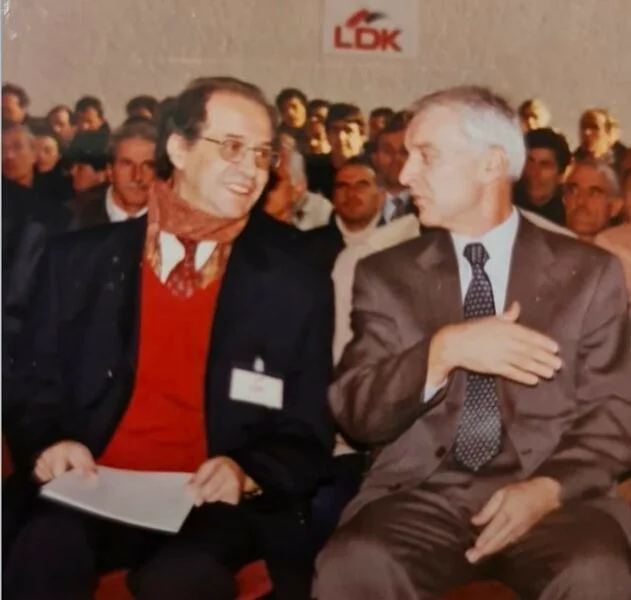
The next day of his conversation with Rugova, Bujar Bukoshi packed his travel bag of necessities; pajamas, toothbrushes and a Fan Noli book, “Bethoven and the French Revolution”.
On the evening of October 13, he did not sleep at home because the police had surrounded him in a distance. He had cut tickets along with his wife and girls on the Skopje-Zyrrich line and then Zurich-Bon on October 14th.
Slovenia was chosen as a secure location. In June, he had declared independence, and a year earlier he became the main supporter of Kosovo's demands through the forum the Slovenian opposition organised in Cankajev Dom, the Ljubljana cultural centre.
MPs who had declared the Constitutional Declaration and Kosovo as Independent Republic in the Kacanik Assembly in September 1991 had been declared in search of police. They were together in exile with the new Kosovo government team, for the first time, hoping to return as triumphists. But that would not happen as quickly as they thought.
Their government was paternal. It would function far from the state it represented, there would be no budget provided by economic activity, but by solidarity. After all, it was conditioned by a mission, not by a normal mandate. It was a temporary government, and as it happens, temporary things last indefinitely.
Who was Bujar Bukoshi?
Bujar Bukoshi was educated in medicine and served in the 1970s in several areas of Kosovo in Drenica, and in Prizren.
By 1980 he had been able to provide further specialization in Germany. After learning language at the “Gate” Institute in Koblenc, the deepening specialization began right there.
The DAAD Stock Exchange was 1200 marks a month, enough for him and his wife, Zana, to continue their studies.
After a brief experience at the Pristina hospital in 1984, he leaves for Berlin to protect his doctorate for urology and oncology. For about sixteen months, he stayed in Berlin, near Prof. Bauer, with whom he got very close in the years to come.
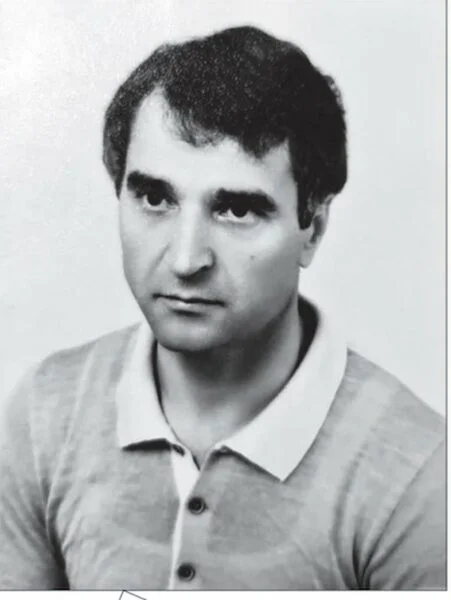
At the time, there was an irresistible offer of employment as his assistant in Munich. But he returned, not Kosovo, and after 1985, began to be more active in public life. But what was conceived there was a new resistance, not based on national community, but on Western-led models. It was this new policy trend in Kosovo that actually saved him.
Bujar Bukoshi became part of this new Kosovo political story. He became originally known as the organiser of the signing of the two hundred and fifteen intellectuals, a week before the removal of autonomy in March 1989. Then, in 1990, together with the famous Dutch physician Barend Cohen, he documented and popularized students in Kosovo. Educated in Germany and connected to the German world mainly through the activist of Freedoms and Human Rights, former publicist Christine von Kohl and Barend Cohen became reference to the Western press at the beginning of democratic processes among Albanians in Kosovo.
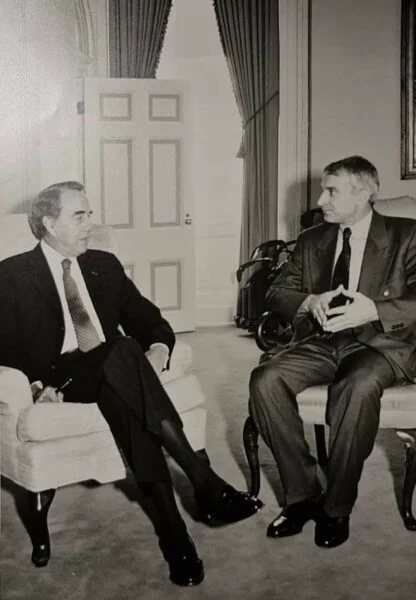
He is among the founders of the LDK, in December 1989, very active in consolidating structures after its first place, even its secretary-general.
On October 12th 1989, Ibrahim Rugova offered him the post of Kosovo prime minister, a government he had for political support the Albanian Political Party Co-ordination Council in the former Yugoslavia following the September 1991 independence referendum. After that, he moved to the West, first to Ljubljana, and later to Germany, in a village near Ulmit, where he led the government into exile.
The government initially hoped for international legitimacy and began to think of itself as a complete government with all ministries. In October and November 1991, through an agreement with the Tirana government, two groups of volunteers, led by Sali Cekaj, came to United School.
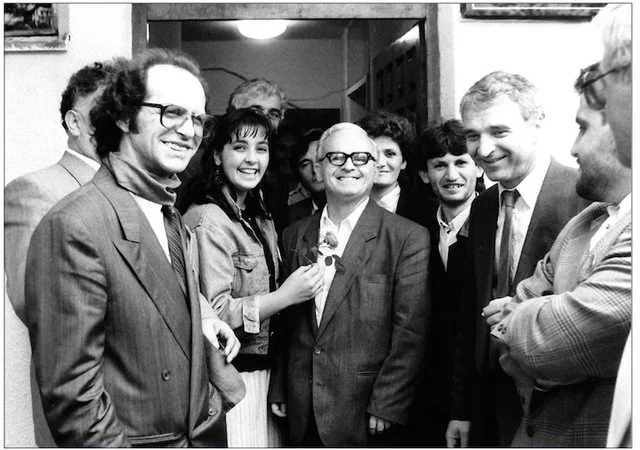
But apparently, the information soon flowed and the Albanian government was forced to discontinue the practice, ending their training. Then he opened a gathering camp for youths removed from military service in Kosovo that took them to a village near Labinothi, but that centre degraded in misery, lack of discipline and lack of funds until it was closed.
Even though it was called Kosovo Prime Minister Bujar Bukoshi has practically worked more as her foreign minister, as all his activities were in terms of diplomatic contacts with the West.
Bujar Bukoshi made a lot of trouble with an interview in early 1995, where he declared that there are 300,000 Albanians in the West ready to fight in Kosovo, alerting international diplomacy that calmed Ibrahim Rugova to build full confidence that he had no mind for war.
Until the Dayton Conference, they continued to have a political cohesion about international positions. After Dayton, Bukoshi and Rugova are two different voices. Bukoshi requires mobilization for war, is at the side of any voice for radicalism, in support of the NLA's first public appearances, even supporting new political forces in Kosovo that are pro-KLA, wanting to be a strong pressure pole on international politics.
Further exciting events on the ground, Serbian offensive and creation The KLA left no room for internal debate.
Bujar Bukoshi, alone, made efforts to unify with the KLA and merge with them, attracting to compromise the official appointment of the government-wing army FARK, and prioritizing only to the KLA name. He financed some of the KLA units on the ground, of Llap-Dukagjin-Suhareka, Brigade “Agim Ramandani” in Kostunica, as well as directly assisting KLA leaders, providing a considerable fund. But the events of September 1998 -- the murder of former Defence Minister Ahmet Krasniqi and the assassination of several former LDK officials, such as Sabri Hamiti -- and then the murder of Enver Malokut -- created a strong climate of division. The man who had been the greatest supporter of The KLA, on the official wing, now became their biggest enemy and threatened to kill him during a trip to Tropoj, in the midst of the bombings, as if Prime Minister Pandeli Majko had not taken the helicopter there to get and avoid waiting.
In the first week of his liberation, he entered Kosovo alone, without guards and soldiers and devoted himself to investing in about four hundred schools from the remaining education fund at the foundation in Germany.
He then continued his non-active political life, co-operating with Ibrahim Rugova while he was alive and through a new party he created but who did not have the success he expected. More successful was his return as LDK deputy in 2007, and then his stabilisation and reconciliation with political rivals, primarily Hashim Thaci, with whom he created positive reports.
For ten years it was Kosovo's portrait in the West, knocking on doors that were not opened and facing incredible survival stories, mobilization and human values of a people who managed to be accepted by the West as peaceful and persuaded the West to fight for its freedom.
Co-existence Bukoshi Rugova has been a colorful, often gray and dark story, but in its entirety a combination that managed to keep Albanians' confidence that they would emerge.
I once saw that I had violated it with my statements, constantly hard to contradict inaction. I said:
Ibrahim, am I overreacting to these statements, or am I wasting more work?
Annie, you're right! You hot, I cold, something hot comes out. He replied not so unhappily”
And so together, both as monks of a road that didn't know the end, they managed to build the First Republic of Kosovo, a state with letters that did not recognise the West, but recognized Albanians and believed more than any other then free Kosovo government. It was the only Republic without armies, without territory and without international recognition.
His faith in freedom was sustained!









