 19 hours ago
Is World War III at Hand?
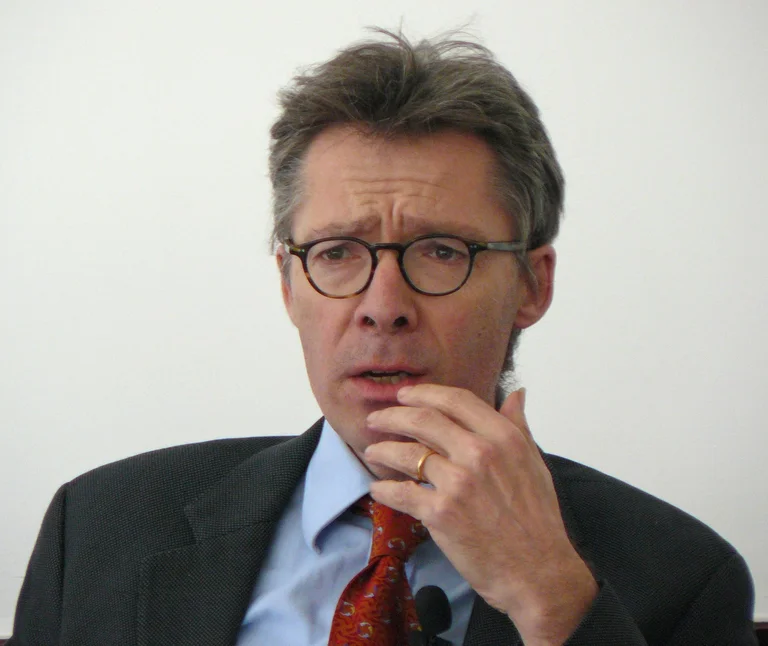
Periskopi(a year ago)
(a year ago)The rule-based world order is on the retreat and violence is on the rise, forcing countries to review their relations. From Patrick Wintour two weeks after the former allies, in an increasingly divided world, recalled separately the 80th anniversary of the end of World War II in Europe, the feeling of an unstoppable slide [...]
From Patrick Wintour
Two weeks after the former allies, in an increasingly divided world, recalled separately the 80th anniversary of the end of World War II in Europe, the sensation of an unstoppable slide into a Third World War is becoming increasingly vulnerable.
The debacle of the Pax Americana, the combination of conflicts, the new willingness to use sponsored state violence, and the failure of world rule institutions are all evidence of an era of brutality. From Kashmir to Khan Younis, from Hodedah to Port Sudan and Kursk, the only voice is that of explosions and the only lesson is that old rules are no longer worth.
British politician and adviser Fiona Hill, engaged in the strategic review of the United Kingdom protection, argues that the Third World War has already begun just because we haven't understood it yet.
Fear of a world where no one is in control anymore because of science or globalisation is not new. That was the theme of two Reith lectures: one in 1967 by anthropologist Edmund Leach, and the other in 1999 by political philosopher Anthony Giddens. But it has rarely been clearer that the world order created in 1945 is in rapid setbacks.
Former Laburist Foreign Minister David Miliband clearly summed up last week in a speech in Chatham House, when he said: “E know people always say the world is changing, but this seems like a real geopolitical shock moment as significant as 1989-90, when the world moved from the Cold War to a uniform order. For me, the Trump administration was both a symptom and a cause of these changes. The problem is it's much clearer than we're leaving a world where the U.S. was at the center of the global system but it's not clear where we're going. Many speak of a multipolar world that reflects a reshape of power, but that idea seems very calm, very certain of a reality that is much more troubled. ”
His former mentor, Tony Blair, in a speech in California said: “everyone has been removed from their comfort zone. The noise you hear from politics is panic to find new opportunities. People are reviewing their position in the world and in international relations. This is, of course, the greatest geostrategic shock I remember in relation to America and the world. ”
According to former US Secretary of State Antony Blinken, Donald Trump's lack of interest in preserving alliances is a <x0ukt vandalism.” He said diplomats around the world were asking: “What the hell is going on?”
Blinken said that America has spent 80 years building trust, strong economic partnerships, and the military and political alliances, and if all of this was destroyed within 100 days, it would be extremely difficult to rebuild.
“That means countries are looking for ways to co-operate among themselves, bypassing the US,” he said. The “Ide that is said today will be overturned tomorrow, and then changed again, means that they can't rely on America anymore. Joe Biden once said it was never a good idea to bet against America. The problem today is people don't bet on America anymore. ”
The grim effects of America's withdrawal have become evident in recent weeks. We may not be in a world war, but the world is at war.
In Gaza, the world has witnessed a blockade on food, aid and medical supplies, contrary to the binding orders of the International Court of Justice (ICJ), which has entered the third month.
Israel has been shelling Yemen, Lebanon, Syria, and Gaza for the past month in search of security. Every day, he asks the US for permission to bomb Iran.
Former President Donald Trump has little right to complain, when Bezalel Smotric, Israel's ultra-right Finance Minister Donald Trump, shared his vision of the Gaza Belt last Tuesday, predicting that within six months, the population of that territory will be tightened only in a narrow area, while the rest “will be completely destroyed. ”
Smotric was simply repeating a version of Trump's plan to empty Gaza by Palestinians, a plan entirely contrary to the terms of the ceasefire, which his envoy had negotiated.
In a speech during a <x0ference for settlements”, Smotric also stated that Israel would implement sovereignty “over the West Coast within the mandate of the current government, ending in October 2026. “Brent several months, we could say we won. Gaza will be completely destroyed,” said Smorich. After six months, Hamas will no longer exist as a functional ent. ”
With Trump silenting, he had Europeans answer. The time has come for the European Union and the entire international community to wake up,” said Belgian Foreign Minister Maxime Prévot, calling the blockade an absolute “turp. ”
It's not acceptable to deliberately stop humanitarian aid, access to food, health care, water, electricity as a war strategy. This is completely unacceptable. ”
French President Emmanuel Macron stated: “If we condemn Russia for violating Ukraine's sovereignty, we cannot remain silent when the same happens in Gaza. Hamas must be fought, yes, but not at the expense of any rule. ”
He called for a reaction from Europe, but at a meeting of foreign ministers in Poland, the 27 ministers failed to agree either for a joint statement, leaving it to take joint action as the suspension of the free trade agreement with Israel .
Meanwhile, in Port Sudan, the main road to humanitarian aid in Sudan, the Fast Support Forces (RSF) destroyed the underground infrastructure, just as Israeli bombings have destroyed Hodeidah, the main point of the Yemen aid entry.
On May 5th, a Sudanese government effort to hold the United Arab Emirates accountable at the International Court for conducting arms towards RSF failed. The EBA, like many other states, is a signatory of the Convention on Genocide, but has established a legal reserve that says that respecting its convention is not subject to the ICJ trial.
The court cautiously acknowledged that there was a clear lack of jurisdiction. Only one judge, Abdulqawi Ahmed Yusuf of Somalia, voted against.
Thus, the United Arab Emirates come up with positive images as a country that has signed the convention, but will not be tried for its respect.
It has been left to United Kingdom Foreign Secretary David Lammy to convince the parties of a ceasefire, but so far without success. The United States, on the other hand, calls RSF leadership genocide, but does not take concrete diplomatic action.
In Kashmir, where two countries with nuclear weapons last week fired each other's planes, the United States seems to have brokered a ceasefire. It remains to be seen whether the agreement, mediated by US Secretary of State Marco Rubio and Deputy Chairman JD Vance, will hold a sharp twist from Vance's attitude 48 hours ago, when he said the US would not intervene in the Indian-Pakisan conflict because it is “out of our interests. ”
In previous clashes between India and Pakistan, US intervention has been crucial to lowering tensions on both sides.
In July 1999, in Washington, Bill Clinton forced Pakistani leader Nawaz Sharif to withdraw, in what an official described as the most important meeting of the Clinton presidency with a foreign leader. Former Secretary of State Mike Pompeii discovered in his memories how close the two states were to a nuclear conflict in February 2019, something he prevented from a hotel room in Hanoi.
India did not present the conflict as a terrorist act last week, but as a clash between the two states, declaring the basic problem is that “Pakistan acts as a shield for terrorism. ”
These conflicts may seem disconnected from each other, except when it comes to a common topic: lack of American leadership and permanent instability.
But in Ukraine, according to Fiona Hill, the structural elements of a world war are joining. The number of victims may be different from that of World War II, but according to the British Army, Russia has suffered some 900,000 casualties, far more than in its wars in Chechnya and Afghanistan.
Furthermore, these wars are, according to Hill, “conflicals that change the system, with many countries involved in different ways. ”
The Chinese flagfisher and Russian crew that destroy underwater cables in the Baltic Sea are only part of the global war of Vladimir Putin.
China, North Korea and Iran are all in favour of Russia, some in more material ways, such as building drone factories or sending soldiers.
Many other states have been willing to keep Russia economically standing, in ways that question their neutrality.
India, with which Britain concluded a trade deal last week, has bought $125 billion from Russia since the beginning of the war, as well as Russian weapons.
The conflict has been presented by Russia and its allies as a war against American hegemony. Trump had a plan to get the US off the lines of fire and establish relations with Russia on a new basis -- a wish he has been feeding since the 1980s.
He sees the world in a way similar to Putin's some sovereign powers that share the world in influential areas. His dream is to rekindle Yalta's 1945 Conference, along with Putin and perhaps Xi Jinping, with Europe as a spectator and broken Ukraine. But organizing such a betrayal has resulted in more difficult than expected.
At the White House, Trump told Zelensky: “You should be grateful. You don't have a card. ”
But Trump played the cards that many of them had rejected with his self-destructive customs policies. Meanwhile, it turned out that Zelensky had several cards, which he cleverly used: offering a 30-day ceasefire, a mineral deal with the US and placing Ukraine as a strategic value to Western security.
The meeting between Trump and Zelensky at Papa Francescu's funeral (photo posted by Zelensky's chief of staff, Andriy Yermak) had the smell of reconciliation, but fed Trump's ego.
A mood change in Washington is remarkable. Even Vance, who was once Zelensky's fiercest critic, acknowledged last week that Russia “is demanding a lot of” and that Europe and the US are now “on the same team. ”
European leaders would welcome this, but now it is clear across Europe not only in Paris that despite the security Vance gives, Europe should be able to operate independently from the US.
Trump is clearly incredible, and his tender appreciation for Putin's intentions is not shared by others.
Planning for a European security force in Ukraine has already started, as has planning for a possible Russian attack on Europe. Since February, France and Britain, through a common force, have formed the nucleus of this planning. But this involvement has already expanded, with new political leaders coming from the four countries of the Weimar+ group: Poland, France, Germany and Great Britain.
The leaders of Britain, France, Germany and Poland for the first time went together to Kiev this weekend to strengthen the call for a 30-day ceasefire, which they said was due to begin Monday.
But a post on social networks from Trump, insisting that Ukraine should start peace talks with Russia immediately, broke them down and probably jeopardised careful plans determined to convince the US to impose sanctions on Moscow, due to Ukraine's refusal to submit to Trump's proposal for a 30-day ceasefire, according to European diplomats.
Zelensky had no choice but to accept Putin's invitation for talks in Istanbul this week, for fear he might offend Trump, according to diplomats.
Putin made the offer not to oust the American president, and to avoid ever greater European pressure on Trump, to impose tougher sanctions.
In a speech in the German Bundestag to mark Victory Day ( V Day) last week, German President Frank-Walter Steinmeier stressed the dual need for Europe to be prepared for war.
“Russia's aggressive struggle has destroyed the European security order, fuelled by the imperial fraud that the war in Ukraine could be compared to the great patriotic fight”.
He added: the fact that now even the United States, which did so much to create and shape this order, is turning away from it, is a shock of a completely new level. So I'm talking about a double age difference between fighting Russia's aggression and removing the US from its values this is what marks the end of this 20th century. ”
Europe, he insisted, must decide for itself what will happen next. / The Guardian
* Autori, Patrick Wintour, is a British journalist and diplomatic editor of The Guardian.









