 20 hours ago
head without city '% Pristina's rethink
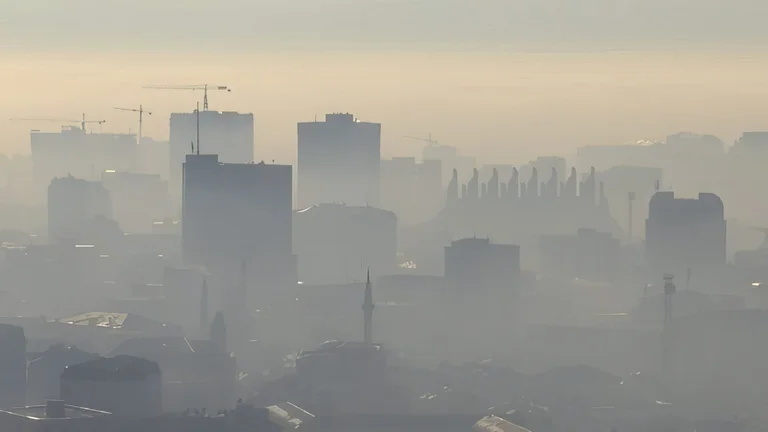
Periskopi(a year ago)
(a year ago)It says: Baton Haxhiu City does not need another term. He needs another start. This is a city that no longer needs a choice. He needs awake. Not another mandate, but another way to live radically differently the culture of the wall. Heartless neighborhood. Road without foot. Home [...]
It says: Baton Haxhiu
The city doesn't need another warrant. He needs another start. This is a city that no longer needs a choice. He needs awake. Not another mandate, but another way to live radically differently
Wall culture. Heartless neighborhood. Road without foot. Beautiful houses hidden behind public ness. Consumptions conquered. Kids without space. Women locked up after concrete. No name for the road. Burned memory. A town that doesn't talk. A city you don't feel.
These are not metaphors. They're diagnosis. And Pristina is the patient.
And maybe everything we need to know about Pristina, we understand from the hotel that dominates the center: Grandie. A 25-year-old ruin, which is no longer a symbol nor a shame, but just an ugly normal that nobody asks. Kosovo's capital has a quarter century without a five-star hotel. There are small hotels hidden in the side streets, which look like soulless, tasteless, and tomorrow. They're to sleep, not to stay. To leave, not to stay.
In this city hospitality has also become a procedure. There's no international hotel brand. Nobody wants us in this collapse. Because you can't invest in ugly. You can't stay in chaos. You can't build experiences in a tasteless city. Just watch Grand. And you realize that even the city itself doesn't know if it's living or waiting for correction.
There are cities that are poor but clean. There are cities that are small but with great pride. There are cities that don't have much, but they love what little they have. And then it's Pristina.
Pristina is the city that after 25 years has not built an identity, nor a vision, nor a sense of self. He built only buildings. And a lot of shit.
I was in Kigali the capital of Rwanda. The site of the worst violence and genocide ever experienced in Africa in the past century. I've gone with prejudice. But I came out of there with shame. I haven't seen a city cleaner. Greener. More relaxed. More careful. Not because they have more money. But because they feel more about their country. Their city is the inner mirror of their soul. And “was ruled” by the women men lost in the war.
Where are we in Pristina?
In Pristina, houses are clean and balconies have flowers, but the alleys below are of bag, bottle, waste, dust and visual insults. Residents washed the front stairs but threw the shit across the sidewalk. Because this is where the idea is educated that the republic is not mine”. It's like that ship that sinks slowly because everybody thinks the hole's not under his feet.
The city has become a elaborate scene. On behalf of security, houses in Veternik, the Mujaharis, in Vranjevci or Tophane are surrounded by high, cold walls, allowed by unmovable architects. They're not green walls. They're not soft fences with life. They are fortresses to protect fear, to hide women, not to see others. Anyone who wants walls has to pay a lot of taxes on ugly.
And when the walls capture the view, even the city loses its sensitivity.
There are still ways that don't have names. Way to go, not to stay. School closed after official time. A burned - out sports hall since 2000 has remained in ruins with parking functions for futures. The memory is gone. The legacy is forgotten.
Therefore, Pristina's resumption is no longer luxury. It's an emergency. The city needs to stop growing and start repairing. No more construction. No more permission. No more expansions. But one way back, to see what we've lost and what we can't forget.
The neighborhoods must have hearts. Space should be cared for. Trees must be shaded. The kids must have cars-free roads. Women must have a city. The raids should be for the legs, not parking. The city must be to live, not to pass.
And for that, it takes someone who loves the city more than himself in the mirror. That doesn't do show urbanism. Which does not view the city as power but as caution.
Pristina needs a taste madness like one that once brought Edi Rama to Tirana. Or for a woman who views the city as her own body. Not to look, but to feel. Because the city is not built by campaigns. It's built by sensitivity.
But beyond all these shortages, Pristina has another disaster: politics that deliberately destroys it.
When the municipality and government are from different parties, the city returns to the battlefield. Not for an idea. But sabotage. The state gives it permission to build where it shouldn't, but it stops development where it needs to be. In the name of some <x0) laws about the city's history” that no one has seen or approved or implemented. They're just guns to block the other one. Not to build the city.
This is the city where hatred of the adversary is greater than love of the city.
Pristina does not suffer only from lack of urban culture. But from a silent project to keep it undeveloped. And that's more than tragic. It's criminal.
In this battle, the citizen is just the figure. He votes for vision, but remains hostage to a fight among parties. So Pristina is a forbidden city. Abandoned. It's ugly. Undeveloped. And, unfortunately, hopeless unless a cultural turn of events takes place.
So it takes more than sensitivity to make the city feel again. We need to free the city from small politics. The city should be no longer a hostage to parties, but a temple of citizenship.
Only then will Pristina be able to become. And feel. And be for everyone./Periscope/









