19 hours ago
Education in Kosovo: To engage, equality and digital readiness
Periskopi(a year ago)
(a year ago)Opinion by Finland's Ambassador to Kosovo Matti Nissinen, U chief NICEF in Kosovo, Veronica Washington in today's rapidly developing world, equal access to quality education is not only a necessity. Kosovo, with a population of 1.6 million and the newest demographic in [...]
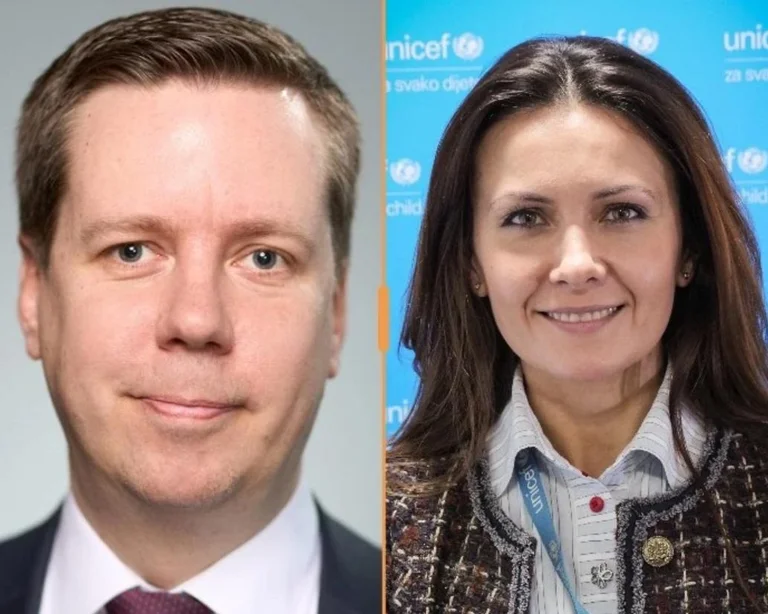
Opinion by Finland's Ambassador to Kosovo Matti Nissinen, U chief NICEF in Kosovo, Veronica Washington
In today's rapidly developing world, equal access to quality education is not just an aspirin. Kosovo, with a population of 1.6 million and the newest demographic in Europe, has the opportunity to reform its future by investing in its educational system. However, with the current state of Kosovo's education system facing a series of critical challenges threatening to leave behind the most vulnerable children.
Kosovo's educational crisis
Kosovo's education system faces a terrible situation. According to the Human Capital Index, a child born today will achieve only 57% of his potential due to insufficient investments in education and health care. Kosovo's PISA results are constantly below the OECD average, with only 15% of students demonstrating basic math skills.
The crisis exceeds statistics. While 96% of children are registered in elementary school, their participation decreases significantly as they grow up, especially among marginalised communities, such as Roma children, Ashkali and Egyptians. Only 84% are registered in elementary school, with participation in higher secondary education, down to only 31%, compared to 87% across the country. This educational division threatens Kosovo's long-term social and economic progress.
Digital division makes the crisis worse. Despite high internet penetration in Kosovo, Kosovo ranked before-end among 35 educational systems (35 participating countries) at the International Study for Recognitions on ICT (ICILS). Kosovo's digital performance is an absolute contrast compared to the 520-point average achieved by high performance countries. In a world where digital education is essential to success, Kosovo students, especially low-income ones, are being left behind, unable to access the technological resources needed to achieve it.
Also, Kosovo's educational system continues to fail for disabled children, many of whom experience functional difficulties, but lack the support needed to succeed in class. This directly affects about 8% of children aged 2-17 who face the challenges of functional difficulties, underlining the urgency of a comprehensive educational system that accommodates all children.
Learning Based on Finland's Successful Education Model
However, this does not have to be so. Kosovo can take lessons from successful educational models and use internationally taught speeches to transform a troubled educational system into a successful system. Finland often named the country with one of the best educational systems in the world offers a guide that Kosovo should follow. Finland's success is based on three main pillars: early digital education, comprehensive teaching training and equal access to technology. By adopting these principles, Kosovo could begin to close gaps in its education system.
First, early digital education should be integrated into curriculum from an early age, thus allowing students to acquire basic digital skills in a structured and appropriate way of development.
In Finland digital education is integrated into all subjects from primary education, focusing on coding, media education and digital citizens responsible. This approach helps students build a solid foundation on digital skills for academic success and work. Kosovo can adapt a similar model, including digital skills in key subjects and ensuring a gradual development of digital skills at all levels of education.
Second, teaching teachers must become priorities because effective use of digital tools in class depends on the trust and ability of educators. In Finland teachers provide continued professional development through research-based training programs, digital professorial workers and co-operation with universities to keep up with the latest technological developments. In addition, schools have TIC professors offering continued support for teachers. In Kosovo many teachers still do not have the training needed to effectively integrate technology in their teaching. In Kosovo many teachers do not have the training needed to harness the power of technology in class. By investing in teaching skills-building programs, creating digital learning networks, and including digital teachers in pre-editorial training and while serving as such, Kosovo can equip educators with the skills needed to create an attractive, interactive, and technological-enhanced educational environment.
Thirdly, equal access to technology is essential. In Finland, every student, despite their socioeconomic background, has access not only to digital equipment, but also to high-quality digital and highly trained teaching sources that can effectively integrate technology into education. Kosovo should ensure that all students benefit from a comprehensive environment of digital learning by investing not only in equipment procurement, but also in teaching teachers, digital professors and quality insurance systems. Sustainable investments in these areas will help overcome the digital gap and ensure significant use of technology in class.
The implementation of the guide will require considerable investment in digital infrastructure, but it is an investment that will bear fruit in the long-term plan. In 2022, Finland shared approximately 5.5% of its GDP for education, while Kosovo's public spending on education included about 4.7% (2020) of its GDP. These investments highlight the importance of sharing sufficient resources for education to support growth and economic development.
What should the Kosovo education system prioritise?
Kosovo's educational system is currently characterised by the declining results of PISA, deep educational inequality and a digital gap. If Kosovo is to unblock its full potential, it should give priority to comprehensive education, early childhood education (EFH) and digital learning. These are not optional investments they are necessary for Kosovo's future.
Strengthening education in early childhood (EFH) is essential for building a solid educational base. Since 2023/2024, only 36.8 percent of children aged 3-5 are registered at EFH in Kosovo, compared to the EU standard of 9 to 10 children (or 96 percent). Despite significant investment growth in the EFH in line with the priorities set out in the Kosovo Education Strategy 2022/2026, inequality is evident in the census of children of Roma, Ashkali and Egyptian communities, children living in poverty and disabled children.
Therefore, fact-based budget planning and effective exploitation is necessary to achieve the census target of 45% by 2026, as envisioned in the Kosovo Education Strategy 20222026, focusing on equal access to marginalised communities and children with limited abilities. In addition, to ensure meaningful integration and quality teaching for disabled children, education infrastructure in early childhood, learning materials and professional capacities must continue to be strengthened, in line with strategic priorities. Integration of digital tools in support of child holistic development and achievement, by adjusting to the needs of different age groups, is also essential to preparing children for an increasingly digital future.
Kosovo's future prosperity depends on its ability to equip its young people with the skills they need to succeed in a globalised and digital economy. Education is the key to unlocking this potential. Giving priority to sweeping education, early childhood development and digital learning, Kosovo can create an educational system that prepares its young for success in an increasingly digital world, ensuring that no child is neglected. /Periscope/