 18 hours ago
When the leadership crisis is disguised as a national threat
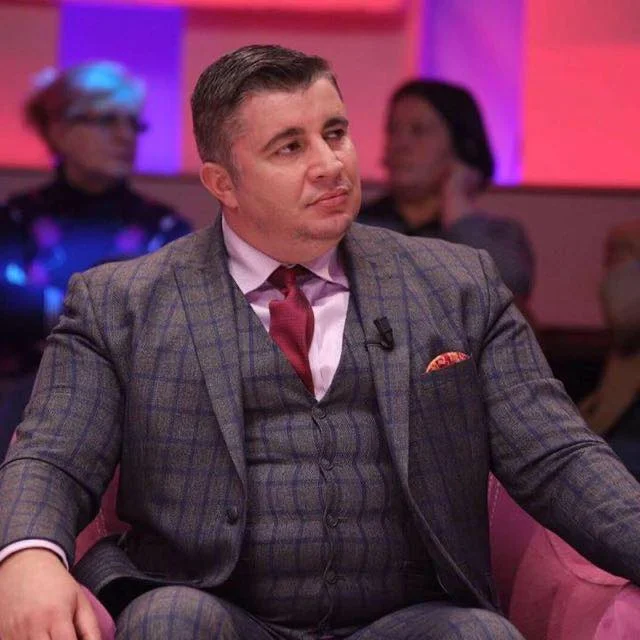
Periskopi(a year ago)
(a year ago)It says: Ardi Nurellar at a moment when Kosovo needs caution, institutional co-operation and strengthening of democratic consensus, Prime Minister Albin Kurti has chosen his preferred path: instrumentising security issues for political gain. The Security Council's final call, not for any real threat to the country, but to cover up the failure [...]
At a moment when Kosovo needs caution, institutional co-operation and strengthening of democratic consensus, Prime Minister Albin Kurti has chosen his preferred path: instrumentising security issues for political gain. The Security Council's recent call, not for any real threat to the country, but to cover the failure to form a new ruling coalition, marks another disturbing chapter of the use of institutions as weapons of power.
As non-Serb minority parties refuse to co-operate with him or have legitimate demands that he refuses to address this political situation as a national security crisis. So his inability to co-exist with plurality and to build institutional consensus becomes national alert.
His failure to build political consensus is consciously being presented as “security crisis”, exceeding any acceptable borders in a functional democracy.
This is an authoritarian and extremely dangerous practice: instrumentising security institutions to pressure potential partners, only to ensure its political survival. It is not the first time Kurt uses security as a weapon to drown any debate and hide the total lack of results in other areas.
It is part of a clear model where security has become a propaganda tool, to replace lack of concrete results in other areas. Throughout his mandate, Kurti has not built roads, advanced reforms in education and health, brought no major investments or new job openings, and failed to fulfil any electoral promises. The only point in which he's focused his rhetoric is “the control of the north” and “the extension from Belgrade's grip”.
It's the same prime minister on the one hand, with propagandistic publicity, announced that the north was “unscrew” and is under full control, and on the other hand, the Banjsca terrorist attack took place and a year later that one in the Iber-Lepenci Neural Channel. Both were unprecedented attacks that denied Kurti's every claim of stability and control.
On the one hand, Kurti sends cameras to film the closure of Serbia's positions in the north, and on the other hand, asks NATO for 1,000 additional troops to preserve what he calls “full control”. On the one hand, it declares the opening of Albanian businesses in the north as a sign of the return of normality, while on the other hand, elections there are held in improvised containers, not in schools or public institutions as before, thus violating any minimal democratic standard.
This is the picture of a government that knows no institutional boundaries, that avoids accountability and that turns any challenge into crisis to retain power. And the most tragic is that, despite the rhetoric for the “extension from Belgrade”, it is now emerging that Belgrade itself has not only left Kosovo, but has enough influence to condition even non-Serb parties' positions in the Kosovo Assembly.
But this behavior is not just a political strategy to draw attention to failures ʹ is a sign of a totalitarian mentality that refuses pluralism and that any interest or thought otherwise treats as an enemy, whether it comes from international allies, trade unions, civil society, independent media and whether it comes from other political parties, as in this case. Instead of dialogue, exclusion is preferred; rather than co-operation, labelation; instead of reforming, propaganda.
When you don't have a vision for development, when you don't have results to show, and when you don't have the courage to build institutional dialogue, there's only one tool: propaganda and fear. Finally, what do we have today? A controversial prime minister talking about “complete control sovereignty”, but wants foreign troops to support it; he talks about principles and values, but does not accept legitimate domestic requirements from minority parties; he speaks of democracy, but uses security institutions to pressure on voices differently.
So at the end of the day, this is no longer a security issue. This is a deep leadership crisis.









