 19 hours ago
Tombs like protests have long history in Albanians
Periskopi(a year ago)
(a year ago)It says: Faton Abdullahu, when funerals at Albanians take on great proportions, when they become a threat and revolt, they actually return to a resurrection of a mission. Haxhi Thaci's burial (out institutional defence) 1. The burial of Hadzi Thaci's father, Hashim Thaci, should be seen as a collective disagreement and revolt with a devised tina injustice [...]
It says: Faton Abdullah
When burials at Albanians take on enormous proportions, when they become a threat and revolt, they actually return to the resurrection of a mission.
Haxhi Thaci's burial (out institutional defence)
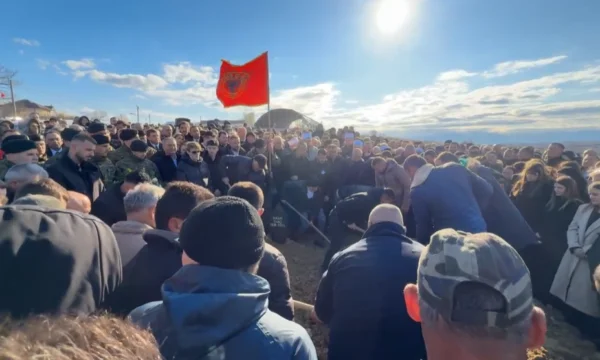
1. The burial of Hadzi Thaci's father, Hashim Thaci, should be seen as a collective disagreement and revolt with a long-standing devised tinza injustice against the foundations of our state and the KLA war. Not only should it be reduced to a boy's inability to throw a handful of dirt the day he buried you. Not this burial was a collective defense, but outside institutional, from attacks on history that are not being made by institutions, the story that the guy who didn't give you a chance to throw a fist and wrote with a willingness to sleep and work on the building.
Murat Hajrizi's burial (inbred grave)
2. Renowned demonstrations of 1968 on November 27 received a victim of Pristinaist Murat Hajrizi. News spread to Pristina that day that tomorrow at the funeral hearing there will again be a big protest in Pristina. The ruling Albanian Communists put great pressure on the Hajriz family. It is said that late at night Fadil Hoxha will go home to ask his family to have Murat's burial taken place early in the morning or all night late. The reason was that the burial <x0... enemies of the people” so the 68 protesters will turn it into a big protest and there will be new victims. After intense burial pressure, it is done with very few participants. It has been set to spend 13 years again in protest in Pristina by 1981.
Halli Gecit's burial (resurrecting)
3. Lausha (Skenderaj) teacher Halit Geci 28 November 1997 was one of the most extraordinary. That funeral of the most massive to remember was Kosovo protest, was organised revolt, above all calls to get ready for war. This burial remains in memory even as a resurrection, a return to walk in fundamental history, because there the KLA is first publicly represented. This burial divides the ages in two before and after the KLA.
Our story has many similar examples of protest burials, burials as solidarity for missions, or expressions of revolt for something. However, they are in the culture of a nation that has lived long in captivity and has found various forms to fight for freedom.









