 19 hours ago
Death of a Scandal
Periskopi(a year ago)
(a year ago)Bob Bauer as President Donald Trump continues with his unhindered attacks on democratic laws and norms, many of the questions have been asked: What will change the course of events? It may be imagined that conditions are ripe for a major scandal a serious offense, previously concealed but then []
Bob Bauer
As President Donald Trump continues with his unhindered attacks on democratic laws and norms, the question to many has been asked: What will change the course of events?
It may be imagined that conditions have matured for a major scandal a serious offense, previously concealed but then discovered, so scandalous and out of bounds that it would mobilise those on the other side of the political spectrum.
In the past, this very function has been scandalized. The discovery of serious abuse of power by officials, which is the essence of scandals, created space for reform. No matter how bad these scandals were and often were very serious they contained the seed of change within them. But today traditional scandals are increasingly difficult to achieve.
Watergate is in many ways the classic example of a scandal and its reform potential. It contained everything: secret and illegal actions by a president, contrary to laws and standards, the discovery of these scandalous activities and, in the end, a two-party agreement on corrective measures and reforms. These reforms included regulations on policy financing, protection against misuse of the power of surveillance to spy on American citizens, and the establishment of authority for independent investigations into possible criminal wrongdoing of the executive branch.
This cycle of scandal and bipartisan reform is almost unimaginable today. In the Trump administration, what could have been considered a scandal in another period, in another presidency, is actually a governing programme.
The elements of this programme -- <x0-radical constitutional claims” on presidential power, the use of the White House to orient investigations against political opponents, abandoning restrictions on personal benefits from the post -- have been declared openly and followed openly. What was hidden and discovered during Richard Nixon's years, today in Trump's era, is presented as a show of presidential determination and as the legitimacy of an election mandate.
Nixon had resigned and left the post before he could say to a journalist that, by definition, no presidential action can violate the law. Trump expressed the same stance that a president cannot violate the law if he is trying to save the country since the first weeks of his second term. He is redefining the presidency, reforming expectations for the post.
Death of the scandal is a blow to the mechanisms of protecting a democracy. Besides being periodically useful in uncovering corruption, the scandal is an essential element of liberal democracy. As sociologist John Thompson writes, he is certainly the most common “ [in these systems] than in authoritarian regimes, or in states with one party. ”
This is because, in democracy, the scandal is possible only because strong electoral competition, a free press and protections against the revenge of media organisations, the political opposition and others denouncing and often exposing the corruption of the ruling government.
But when democratic standards are damaged or broken down, the scandal collapses with them. Thus, eliminating the scandal is the cause and the result of the collapse of democratity: It makes reform more difficult and reveals the erosion of conditions that made it possible to detect it at the very beginning.
Trump is attacking these conditions directly. He is continuing and, in some cases, is intensifying indictments against media organisations. He has fired general inspectors serving as <x0 thinkers” into 17 executive branch agencies. Trump has also dismissed the head of the Special Council Office, whose duties include implementing the laws for signal protection (Whistleblowers), and replaced it with a former Republican Congress member who is also Secretary of Veterans' Affairs, practically turning it into a partial position.
He is exploiting a divided and polarised media environment to create alternative realities, making it very difficult for a common curse on a scandal to form and spread. A clear example of this is the re-dimension of the attack on Congress on January 6th, which he has called “a love day,”, forgiving most of the convicts for their involvement.
The scandal's corrective force had already weakened during Trump's first term. In those years, he did not hide his desire to take personal advantage of the task and tried to control the Justice Department for his personal and political purposes, even though not on the scale we are seeing today. These and other actions of that period caused serious controversy and led to two dismissal processes, but none of them included discoveries of actions he denied.
He called “perfect” his call with Ukraine's president, which was at the centre of his first dismissal process, while in the second, his collection and video communications regarding the attack on Congress were completely public. After Trump left the post, a host of reforms were proposed to limit his presidency version, but none of them were approved.
Even when a scandal does not lead to legal reform, it can serve to revive weakened rates. One example that may seem distant today is the anger caused by the dismissal of nine federal prosecutors during the administration of George W. Bush in the middle of his term.
The dismissal was public, but the motive had elements of the scandal: it turned out that the White House had been deeply involved in these evacuations, acting on the basis of concerns that these officials were not committed enough to fight the so-called “electoral fraud” from the Democratic Party. The attorney general denied that there was any suspicious motive and acknowledged that “would be unacceptable to dismiss a prosecutor, to influence or complicate a specific issue for party political gain. ”
However, the Justice Department General Inspector's Office and the Office of Professional Responsibilities reviewed the case and concluded that “the prosecution of prosecutors and the controversy it created severely damaged the Department's credibility and cast doubts on the integrity of its decisions on prosecution. ”
The General Inspector's Office also estimated that there were key “evidence that party political considerations had been a significant factor” on these dismissals and that Justice Department officials had the responsibility to ensure that criminal prosecution decisions were based on law, evidence and department policy, rather than on political pressure. ”
Partly as a result of this scandal, Attorney General Alberto Gonzales resigned.
But that wasn't all. A special adviser was appointed to consider whether these dismissals had violated any criminal law. Its conclusion was that there had been no legal offense, but that the law prohibited certain forms of political interference in the implementation of justice. It also confirmed the Justice Department principles against “excessive political influence. ”
The Obama administration informed Congress of these findings and strongly highlighted the point: Its general prosecutor was committed to “garaning that political party considerations do not play any role in the decisions of the Department for law enforcement. ”
There is little reason to imagine that we will see a “scandal” that is linked to the “excessive awareness of politics” in this presidency. Standards at the centre of the federal prosecutors scandal are no longer formally respected because their violation has turned into state politics.
As lawyer Jack Goldsmith noted, (and my associate in the Executive Functions bulletin in Substack), the declared politics of the White House of Trump to avoid “) the appearance of inadequate political influence in implementing law” is a double language, which in reality justifys a serious political influence on justice organs.
Senior officials, including the federal prosecutor in Washington, D.C., the FBI director and its newly appointed deputy director, have appeared very eager to investigate those involved in investigations against Donald Trump.
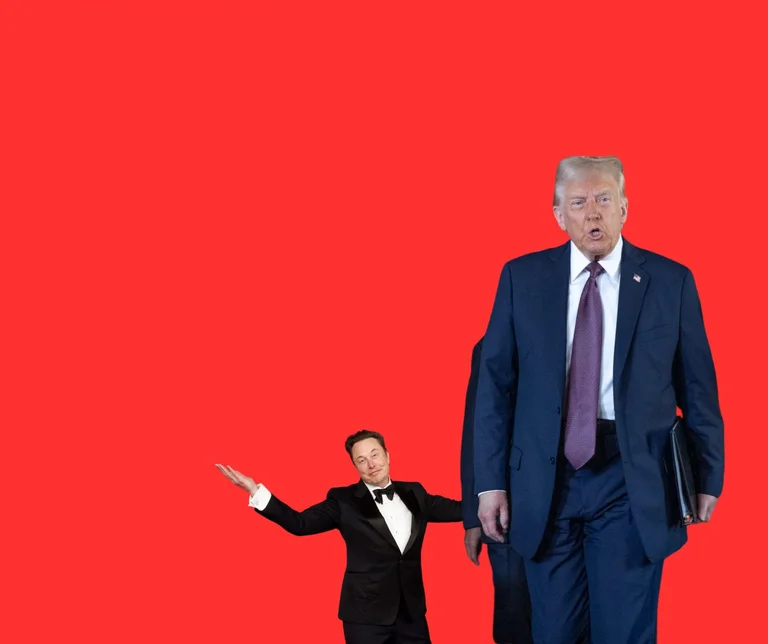
In this environment, there seems to be only one option for an old-fashioned scandal: the role of Elon Musk. In this case, some of the elements of a classic scandal are present. A businessman, located both inside and outside the government, has been endowed with obvious but undefined authority. It is never clear whether Musk speaks in his name, his business or his government.
The administration has provided various versions of his role in the Government Efficiency Department. Musk himself has made an extraordinary statement, suggesting voters are, at least indirectly, the source of his authority. Last month, he re-entered a post in X (former-Twitter) that read: “Democrats continue to say no one picked Elon Musk. ) Yeah, we did. Elon was very present with Trump, and we chose Trump to use Elon. ”
Polls show that even among the Republicans, Musk remains a contour figure. It is not impossible to imagine at a certain moment that a reform is undertaken to establish restrictions, or at least more accountability and transparency, on how a president can use a private citizen to take over large government functions.
Perhaps the prospect for reform, even without the driving force of a scandal, will become more possible if the administration fails to meet those issues that concern most ordinary voters and if they become less tolerant of a presidential leadership of the king-style <x0). ”
Monarchic aspirations may fail in the face of the price of eggs and ham. They can also clash with a defining element of American political culture: distrust of the government, the belief that it is, as historian Garry Wills wrote, a necessary “that we should live by but that we always oppose it. ”
Trump's aggressive claim that the president is the law is completely new and is quickly imposed on the electorate. Perhaps, in this short period, voters are waiting and looking. Trump and his allies may not realize they are testing and perhaps will not be able to triumph over the American anti-government tradition.
After all, they're the government now.
· Bob Bauer is a professor of practice and a prominent resident at the Faculty of Justice at New York University (NYU). He served earlier as White House adviser during the Barack Obama administration.









